Black, Native Youth Disproportionately Charged As Adults
Black, Native Youth Disproportionately Charged As Adults In Washington State
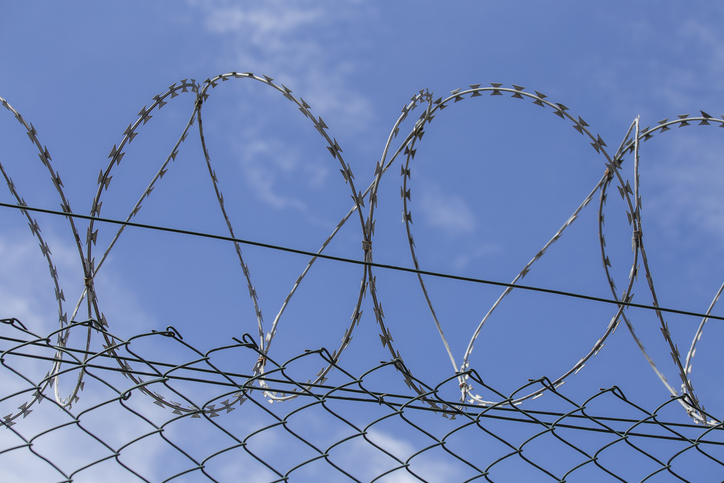
Despite passing a law in 2018 aimed at reducing the number of youth charged as adults, recent data revealed that Black and Native youth disproportionately make up the number of kids still being charged as adults.
According to AP, data from the Washington Department of Children, Youth, and Families found that 83% of kids charged as adults in 2023 were not white. “All that’s left are youth of color,” state Rep. Roger Goodman (D-Kirkland), chair of the House Community Safety Committee, told AP. As nonprofits and researchers from the University of Washington pored through the data, they came to a simple yet deeply problematic conclusion: Black, Native American, and Latino youths are overwhelmingly subjected to adult courts, face harsher sentences, and are left with records that follow them into adulthood.
This issue has greatly affected Native American youth in the state of Washington, as hundreds are serving time in adult prisons for crimes they committed before they turned 18. For some, this is because they were simply children charged as adults, and for others, this is due to their sentences automatically being extended due to crimes they committed when they were children.
From AP:
The racial disparities exist both in cases where state law mandates the crime be charged in adult court and when it’s left to a county prosecutor’s discretion. A 2024 University of Washington report, commissioned by the King County Department of Public Defense, found that the disparities were present even with other factors accounted for.
For example, out of 28 cases in which a white child was charged with first-degree assault or second-degree assault with a deadly weapon, zero were charged in adult court. But 28% percent of the same kinds of cases involving Black and Latino youths were charged in adult court, the report shows.
“For both time periods … analyses examining the association between race/ethnicity and decline to adult court indicate that the racial disproportionality is a result of systematic bias, not random chance,” the report said.
“There’s no other reason for it than just straight racism and intentional systems issues that we’ve never corrected,” Washington state Sen. Yasmin Trudeau (D-Tacoma), the vice chair of the Senate Law and Justice Committee, told AP. “We can bury our heads in the sand, but the data is pretty clear,” she added.
Jimmy Hung, a juvenile prosecutor with the King County Prosecuting Attorney’s Office, didn’t entirely agree with that notion, as he pointed out that certain statutes require 16 and 17-year-olds to be charged as adults in homicide cases.
“Even if a young person commits a homicide and I don’t want to try them as an adult, the law doesn’t really allow me to do that right now,” Hung told AP. “If they kill somebody, I can’t charge a non-murder.”
Violent crimes, such as robbery, rape, and murder, are eligible to be transferred to adult court. Juvenile court largely focuses on preventive and rehabilitative measures, often involving a parent or guardian. While kids may be sentenced to juvenile detention, the hope is that they participate in programs aimed at preventing them from reoffending once they reenter society. Advocates have argued that subjecting teens to the adult system causes severe, lifelong trauma that makes them more likely to reoffend once they’re out of prison.
“There’s so many things wrong with a young person being in the adult system,” Michaela Pommells, executive director of Youth First Justice Collaborative, told AP. “These are young people who are not fully developed.”
Additionally, data shows that many of the kids who commit violent crimes are themselves victims of sexual, physical, or emotional abuse. Human Rights for Kids, a nonprofit advocating for the protection of human rights for children, recently released a report about Washington’s incarcerated youth. They found that of the children who have been sentenced as adults, 90% reported experiencing physical abuse, 85% reported emotional abuse, and 51% reported sexual abuse. The average age of abuse onset was only five years old.
“When kids have a hardened life, they mature — it doesn’t mean that they are mature,” Rep. Trudeau told AP.
The idea of outright banning children from being tried as adults and resentencing those who have been has received much pushback in Washington from law enforcement and state legislators who feel that the move doesn’t consider the impact it would have on victims and their families.
“That sentence is the only thing the State of Washington ever gave that family, and the family receives that as ‘Now they’re going to take away that too,’” Democratic state Rep. Lauren Davis told AP. “Now we’re going to basically make you relive the worst thing that’s ever happened to you again.”
Sadly, this is not a problem exclusive to Washington. Despite violent crime continually trending downward nationally, Black and brown youth continue to make up a disproportionate number of children sentenced as adults. In Maryland, Black children make up 80% of the youth who have been charged as adults. The gap between white children and Black children being incarcerated is only widening, and considering who’s running the federal government, it doesn’t look like the problem is going to be solved anytime soon.
SEE ALSO:
Group Fights To Keep Teens Out Of Angola Prison