‘Sinners’ Surreal Montage: The Walk Is A Threshold
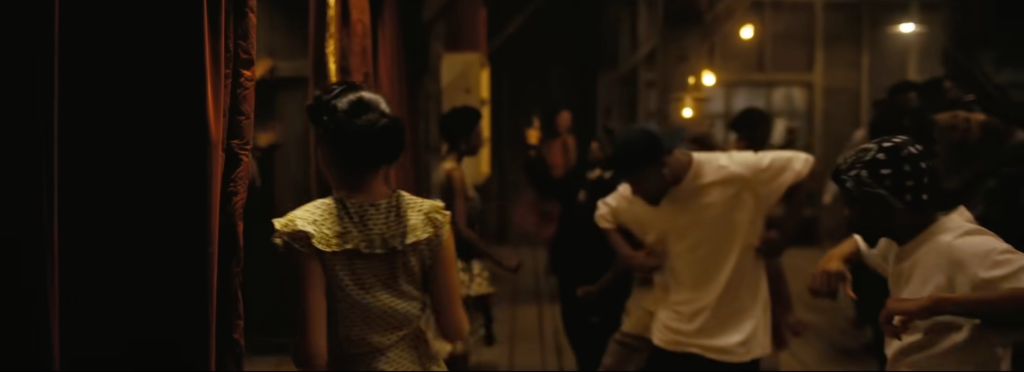
When Sinners shows C walking inside the Juke Joint, the movement arrives with a charge that cannot be reduced to entertainment. The feet are smooth, precise, coded. The body moves like it is carrying more than rhythm. It is carrying memory, territory, grief, pride, and the names of people who are no longer here.
That is what I felt at Davenport Park in Long Beach with Deshawn, known online as @thaeastcidewalkr. He pushed back against the easy language. People may call it dancing, but for him, he is walking.
And walking means something. It is not just a step pattern. It is a declaration. A way of holding down the Crips, yes, but also holding down Blackness, neighborhood, lineage, and the people who made the walk matter before him.
Watching him made me think of the Haka, not because these traditions are the same, but because both understand the body as a force of address. A war dance. A memory dance. A challenge. A prayer. A way of saying: I am here, my people are here, and you will not pass through this space without feeling us.
But the circle at Davenport Park also showed me something more complicated.
Larry the Clown of Watts and Rocco the Clown, both featured in Rize, helped open up the meaning of Klown Walking. Klown Walking is not simply Crip Walking by another name. It came from people in the community who wanted to dance without being locked into gang affiliation. When pressed, they could say they were just clowning. Over time, that became its own language, still of the community, still carrying the flavor, but not claiming Blood or Crip. A kind of truce in motion.
Rocco stood there in a bright red L.A. hat across from Deshawn in blue, and the circle held them both. That mattered. He said that, in another context, people from their different areas were not supposed to be around each other. Without the dancing, the walking, the struggle, that circle might not have existed at all. Or it might have become something else entirely.
But here they were.
Talking. Laughing. Correcting history. Remembering the ones who came before. Moving their feet.
In Compton, at Magic Johnson Park, Boomer Da Clown said it plainly: “We ain’t have no studios out here. We is the studio.” That line stayed with me. Because it names the genius of the thing. The parking lot becomes studio. The sidewalk becomes classroom. The party becomes archive. The body becomes the record.
Then his son Messiah danced.
At the end, this little boy lifted his chest to the sky with such openness, such supplication, that the whole frame changed. All the talk about territory and battle suddenly widened into vulnerability. Into inheritance. Into a child standing inside something bigger than himself.
The walk is not only defense; it is also hope.
A way to keep moving without disappearing.
SEE ALSO:
‘Sinners’ Surreal Montage Connects Ancestral, Modern Black Music, Dance
Masquerade Is Not Disguise; It Is Wearable Art And Wearable Altar
The Beat Did Not Die. It Found Another Body
Release As Ritual: New Orleans Bounce Is More Than A Party