Abortion Prosecution Highlights Damage Caused By Extreme Ban
Georgia Abortion Prosecution Highlights Damage Caused By Extreme Ban
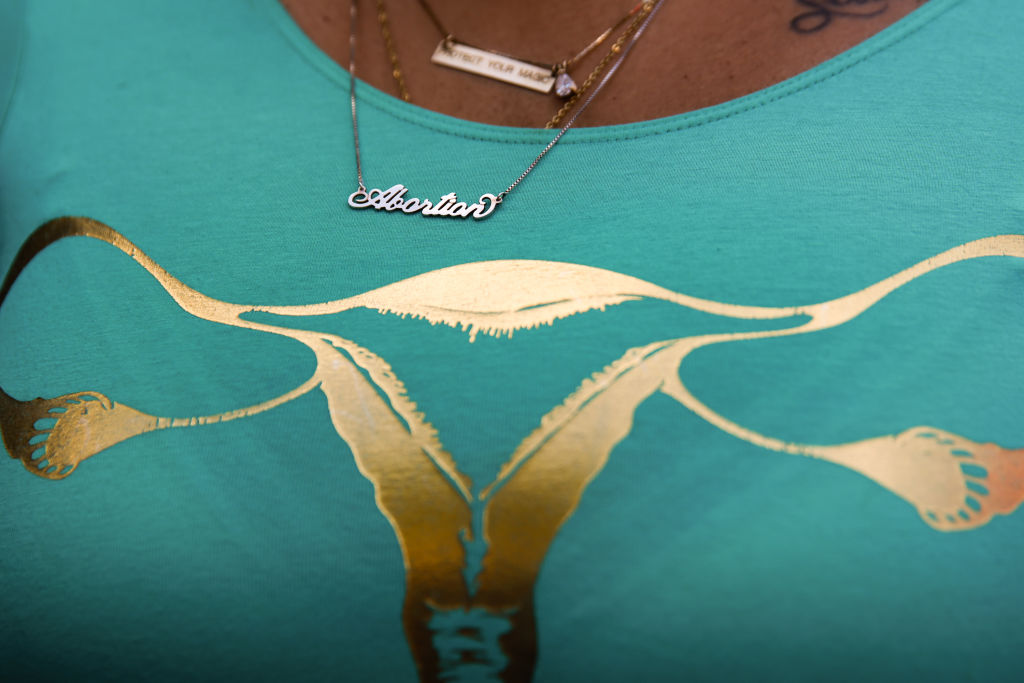
Black women continue to pay the cost of Republican extremism and obsession with denying bodily autonomy, nearly seven years after the passage of Georgia’s extreme abortion ban. Beneath the sensationalized headlines about Alexia Moore, a south Georgia veteran accused of having an “illegal abortion,” lies a stark reality for Black women and others in Georgia and states that deny the fundamental right to bodily autonomy and self-determination.
Reporting from The Current GA highlights competing accounts, which raise questions about whether or not Moore even attempted a self-managed abortion. While her family awaits the prosecutor’s decision, we don’t actually know what happened to Moore, or how she was feeling, or what she was going through.
According to reports, prosecutors are considering charging Moore with attempted murder under Georgia’s extreme abortion ban. News reports also indicate prosecutors have alleged she possessed a “controlled substance.”
But it’s unclear what that refers to, as misoprostol, is not a “controlled substance” or inherently illegal. It is also used in treating ulcers caused by some pain medications.
The limited information available in various news reports stems from comments made while Moore lay in a hospital bed recovering from a distressing event and assumptions by hospital staff. Her mother called Moore “a patriot and a good mother,” in an interview with The Current.
“As a mother, and me talking as a grandma, she’s an excellent mother. I believe her children are her life. She has been a good provider for her children,” she told the outlet.
The Current’s reporting also noted that while one friend shared a medicine bottle containing misoprostol with officials, another said Moore only took pain medication. But simply having a medication doesn’t mean someone took it.
And despite efforts to the contrary, self-managed abortions are not illegal in Georgia, at least not yet.
The news comes amid reports of two Black women in Florida being forced to have c-sections against their will. As ProPublica outlined, the decision raises equal protection concerns as “pregnant women in some states have fewer rights than other mentally competent adults to refuse medical treatment, including surgery.”
Georgia’s abortion ban has perpetuated a system of criminalization, harm, and trauma
When Georgia’s Republican controlled legislature passed HB 481 in 2019, it was considered the most extreme ban in the country. Given the wording of the law, many feared it would lead to prosecution and harsh criminal penalties for those who sought or performed what was determined to be an “illegal abortion.”
Gov. Brian Kemp and former Lieutenant Gov. Geoff Duncan—who is now running for governor as a Democrat—vigorously supported the law with no concern for the testimony of doctors, advocates, and other impacted groups. The current scenario is what many advocates warned about, including those who testified and litigated against Georgia’s law.
A six-week ban, HB 481 operates essentially as a near-total ban on abortion. It went into effect in July 2022 after the Supreme Court dismantled the fundamental right to abortion in Dobbs v. Jackson Women’s Health Organization.
As lieutenant governor, Duncan served as president of the Senate and actively supported the law’s passage. Despite HB 481 having no basis in medicine or science, Duncan told Georgia’s PBS affiliate that he thought the science and technology were “in our favor on the pro-life side.”
Most people do not know they are pregnant at six weeks, which is really only four weeks of gestation, forcing them to carry an unwanted pregnancy or cross state lines to receive necessary care. And as a result of the ban’s inherent criminalization of abortion, many people are likely to avoid even inquiring about abortion care.
The harm caused by Georgia’s near-total abortion ban has been outlined in several investigations and reports, particularly after the deaths of Amber Thurman and Adriana Smith.
Smith’s family was forced to keep her on life support long enough to allow her fetus to gestate and be delivered. Emory Hospital claimed it had to keep her alive until the baby could be delivered due to the near-total abortion ban.
Again highlighting the complexity and harm, the state’s attorney general released a statement saying the law did not require such action. But most people don’t have time for a legal opinion before they get life-saving care.
In April 2025, Sen. Jon Ossoff released a report finding that people were delaying care because of the confusion and fear stemming from the egregious law. The report also contained accounts from OBGYNs about the traumatic impact of people delaying care.
From serious complications to unnecessary procedures like a hysterectomy to death, the law has not protected anyone. But it has made a lot of white Republican men and their handmaidens quite happy.
Former Georgia state Sen. Renee Unterman, who carried Georgia’s forced birth law, praised Duncan and Kemp for their support “on this arduous journey.” Imagine emphasizing the difficulty of depriving people of their bodily autonomy and freedom.
A previous poll of registered Georgia voters conducted by the Amplify Georgia Collaborative, a reproductive freedom collective, showed that nearly 80% of Georgians not only supported abortion rights but were against criminalization efforts. The group recently launched an educational campaign aimed at ending the policing of pregnancy.
Commenting on the poll last September, the Feminist Center for Reproductive Liberation’s Executive Director Kwajelyn Jackson called for those who experience pregnancy to receive care and, when necessary, time to grieve —not criminalization.
“Georgia voters have every reason to be concerned about the investigation and criminalization of miscarriage,” she said. “We see every day in our health center how punishing people for pregnancy outcomes does nothing to make our communities safer. Policymakers should take note of these findings and align state policy with the will of the people.”
Georgia’s abortion ban reflects a broader attack on health care and bodily autonomy
Information reported by various news outlets only offers a mere glimpse into Moore’s likely distressing situation and elevates the trauma of a woman questioned while in recovery. Also, the competing accounts of what actually occurred reflect the chaos and complexity of these situations, almost seven years after Georgia Republicans took a fundamental healthcare decision away from people.
In February, the Amplify Georgia Collaborative released a report examining the impact of HB 481 on delays and even denials of care. “Delayed, Denied, and Deficient: How Exceptions Fail to Ensure Critical Care Under Georgia’s Abortion Law” highlighted the many ways women and other pregnant people who should have qualified for abortion care under exceptions to the law but were otherwise denied care.
Completed in partnership with researchers from the Center for Reproductive Health Research in the Southeast at Emory University, the report also emphasized the ongoing trauma caused by the criminalization of patients and providers.
“Participants in our study described a pattern of harmful delays, denials, and deficiencies in care resulting in life-threatening medical emergencies, unnecessary burdens, and lasting trauma for patients, their families, and providers,” said Anna Newton-Levinson, Ph.D., MPH, lead study author, Investigator with RISE Center at Emory, in a statement released last month. “Our research suggests that, even with exceptions, the current law often leaves pregnant people, including those experiencing emergencies, life-threatening conditions, pregnancy losses, and pregnancies resulting from sexual assault, unable to get the critical care these exceptions are meant to protect.”
In connection with the “Delayed, Denied, and Deficient” report, Amplify Georgia Collaborative’s Director of Strategic Growth, Roula AbiSamra, MPH, shared that HB 481 and the many abortion restrictions before it caused “the most harm to those who can least afford it.”
She stressed the need for real access to care without exception.
“Every pregnant Georgian deserves timely access to quality healthcare, including abortion, without police or politician interference,” AbiSamra shared. “Exceptions in abortion bans don’t work as safeguards; they only serve as window dressing for cruel measures that put all pregnant Georgians at risk.”
Despite the current legal landscape, reproductive freedom and reproductive justice remain core requirements for a so-called democratic society. We all deserve to have the right to decide for ourselves how and when we will have a family, expand our family, or get other necessary care.
That’s gender affirming care. And it must be provided without fear of criminalization or stigma.
Commenting on the crisis created by HB 481 during last month’s report release, Amplify Georgia’s State Campaign Director Allison Glass
“HB 481 has made the crisis more visible, and it’s just the tip of the iceberg,” Glass said. “We need Georgia legislators to pass expansive protections, including the Reproductive Freedom Act, to end the criminalization of pregnant people and those who care for them, and truly make care possible for all of us. When people can make decisions throughout pregnancy that are best for their lives, families thrive, and we build communities where each of us can participate with dignity.”
SEE ALSO:
States Must Hold Line Against Trump’s Election Subversion
Trump Admin’s Focus On Fertility Is All About Social Control