Donald Trump Exists In His Own Version Of Reality
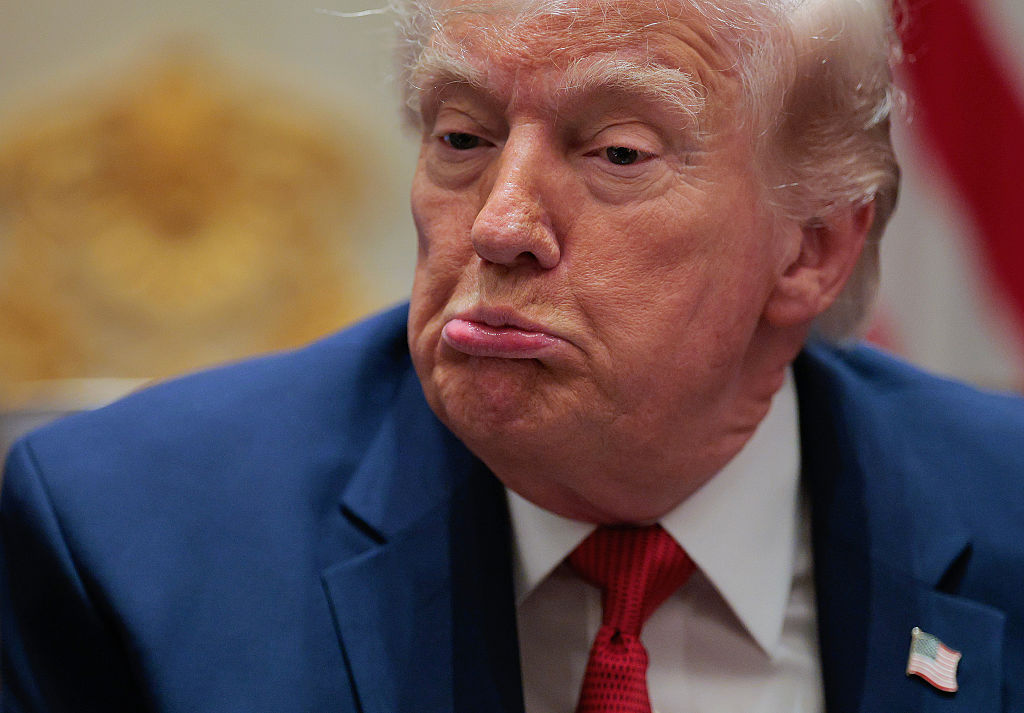
There are two versions of Donald Trump that exist at the same time. One lives in polling data. The other lives in Donald Trump’s head.
The one in the data is…struggling.
As of this week, Trump’s approval rating has cratered to around 36%—a new low for his second term, according to a Reuters/Ipsos poll. That’s not just bad; that’s historically bad. We’re talking “group project where nobody answers your texts” bad. And it’s not just general dissatisfaction; his handling of the economy is polling even worse, with approval hovering below 30%.
But the version of Trump that exists in Trump’s head? Oh, he’s beloved. Practically carved into Mount Rushmore already. Possibly twice. This disconnect would be funny if it weren’t attached to nuclear-adjacent foreign policy decisions.
Because while Trump is busy insisting everything is “going very well,” the American public is looking at the Iran situation like, “Sir…what exactly is the plan here?” A majority of Americans—around 59%—say U.S. military action against Iran has gone too far. Even more telling: only about a third of Americans actually approve of how he’s handling the conflict.
Meanwhile, this is Trump inside the White House:
Gif of cartoon dog sitting in burning house
And yet, here we are—weeks into escalating conflict, gas prices higher than Willie Nelson at a Snoop Dogg concert, and the U.S. inching deeper into what is starting to look suspiciously like another forever war. Iran has already disrupted the Strait of Hormuz, a chokepoint for about 20% of the world’s oil supply.
Translation: your wallet is about to feel every decision made in the Situation Room.
Which brings us back to Trump’s governing style—if we can call it that.
Trump doesn’t just ignore bad numbers; he actively rejects them. When polls show him underwater, they’re “fake.” When economic indicators wobble, they’re “rigged.” When allies raise concerns, they’re “weak.” It’s less leadership and more Yelp review: if he doesn’t like it, it must be wrong.
But here’s the thing about governing in the real world: reality does not care about your branding. Markets react. Voters react. Gas prices react. And right now, all of them are reacting in ways that suggest the vibes are, in fact, terrible. There’s even a literal “pressure index” on Wall Street tracking Trump’s political and economic stress levels—and it’s spiking, driven largely by the fallout from the Iran conflict and rising fuel costs.
When Wall Street invents a metric specifically to measure how much trouble you’re in, that’s not subtle. What’s especially striking is that this isn’t some sudden collapse. Trump’s approval has been remarkably consistent—in the worst way. He’s been hovering in the high 30s to low 40s for most of his presidency, making him one of the least popular presidents in modern history. Even military action—something that historically gives presidents a temporary “rally around the flag” bump—hasn’t helped much.
That’s almost impressive, in a perverse way.
It suggests that the issue isn’t just one decision or one crisis. It’s the throughline. The chaos. The improvisational governing. The sense that major military moves are being made with the same level of planning as a late-night tweet.
And that’s where the incompetence argument stops being partisan and starts being structural. It’s literally baked into the orange cake. Because competence in leadership isn’t about never making mistakes. It’s about responding to feedback—adjusting course when the data, the public, and reality itself are all telling you something isn’t working.
Trump doesn’t do that. He’s never done that. Trump lives in Trumpland, the fictional space in his head in which female reporters who ask questions about his policies are called “ugly,” “stupid,” and “piggy.” He declares victory while conflicts are ongoing. He hints at negotiations that other countries say aren’t even happening. He treats perception as if it can substitute for policy.
And it would all be abject theater if his “psychophants” didn’t eat it all up. It’s governing by lying, and Trump is nothing if not a world-class liar. In fact, stealing taxpayers’ money and lying might be the only thing that Trump is good at. His disconnect from reality and the consequences of that disconnect are not theoretical. They show up in higher gas prices, global instability, and the very real possibility of deeper military entanglement (no Jada Pinkett Smith.) They show up in polls where Americans are increasingly uneasy—not just about the war, but about the decision-making behind it.
Even among Republicans, there are signs of discomfort, particularly around cost-of-living issues tied to the conflict. Because it turns out, ideology has limits when the price at the pump starts looking like a car payment.
So what we’re left with is a presidency defined by contradiction: a leader who insists he’s winning, while the metrics—every single one of them—suggest otherwise.
And that might be the most dangerous part.
Not the low approval ratings themselves, but the refusal to acknowledge them. Because if you don’t believe you’re unpopular, you don’t see a need to change. And if you don’t see a need to change, you keep making the same decisions.
Even the ones that lead you into war. Or deeper into it. Or keep you there long after everyone else has realized it was a mistake. In Trump’s world, the numbers are always wrong. In the real world, they’re trying to tell you something.
But Trump won’t listen to anything but the stubborn sound of his own voice, that must sound to him like a soccer mom yelling, “You’re doing great, sweetie,” despite the world crumbling around him.
SEE ALSO:
What’s Happening In The US Right Now Is Entirely White People’s Business
When The World Ends, Will You Be Able To Afford ‘California Forever’?