An Open Letter To WNBA Commissioner Cathy Engelbert
Dear Cathy,
First and foremost, I’m sending you, Adam Silver, and the entire league my congratulations as you enter into the WNBA’s historic 30th season.
As a fan, I attended my first WNBA game in the late ’90s at Madison Square Garden, rooting for the New York Liberty. One of my most cherished memories as a journalist will always be the day I got to work out with the Los Angeles Sparks on the court at the Staples Center.
I’m amazed by how much the league has grown since then.
Now, Cathy, this is where things are going to get a little less celebratory. So let’s take a moment and take a deep breath together. We can do this.
In fact, if we were in the same room right now, I’d gently reach for both of your hands and repeat what Academy Award-winning actress Whoopi Goldberg said to Demi Moore in the movie, Ghost, “Molly, you in danger, girl.”
Let me be very specific. Cathy, your job is in danger. Or, it should be. Your leadership approach isn’t working. I’d hoped that in the off-season and once the new collective bargaining agreement had been signed, you’d return with a new resolve and amend your communication and leadership styles.
For many WNBA fans our last memory of you before last week’s draft day was you being booed as you presented the Las Vegas Aces with their championship trophy last fall. Inasmuch as I understood the strong emotions behind each boo and jeer, I’m not sure you understood them in that moment or even now.
I know it’s easy from where you sit to assume being booed just comes with your job and that, of course you, as the league’s commissioner, would be unpopular during a year when contentious negotiations for a new agreement were taking place.
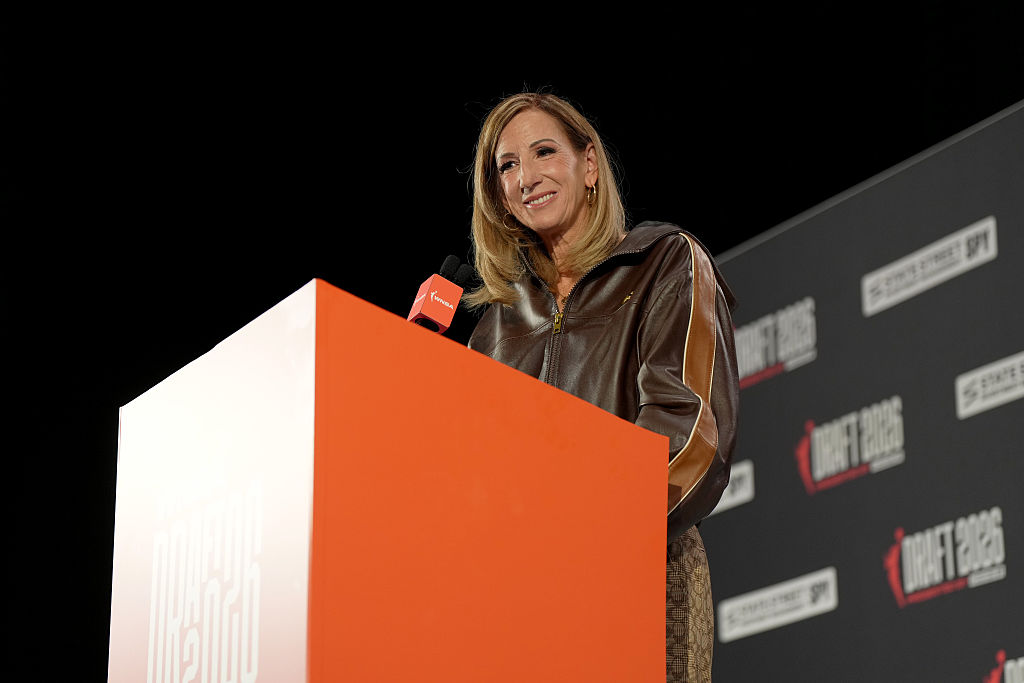
After watching your most recent press conference, it became clear that not only did you not learn from past mistakes, but that had you had an audience of fans instead of press in the room with you, you’d have been booed with even more fervor this year.
I was befuddled that part of your answer about what your future might look like with the league was to snap at a reporter by questioning whether she would have asked the same question to a man.
In my estimation, it was a question any good reporter would have asked any commissioner who had been booed by fans at the end of last season, gotten into contentious, not to mention well-documented, heated exchanges with players, and who is now putting the finishing touches on a new collective bargaining agreement. Even the existence of just one of those realities would have been enough to warrant asking the question.
When asked about whether your tense relationship with some of the players had eased up, you zeroed in on Nneka Ogwumike and an exchange you had with her in passing before pivoting to celebrating her return to the LA Sparks. There were no signs that a real conversation or repair had happened between the two of you.
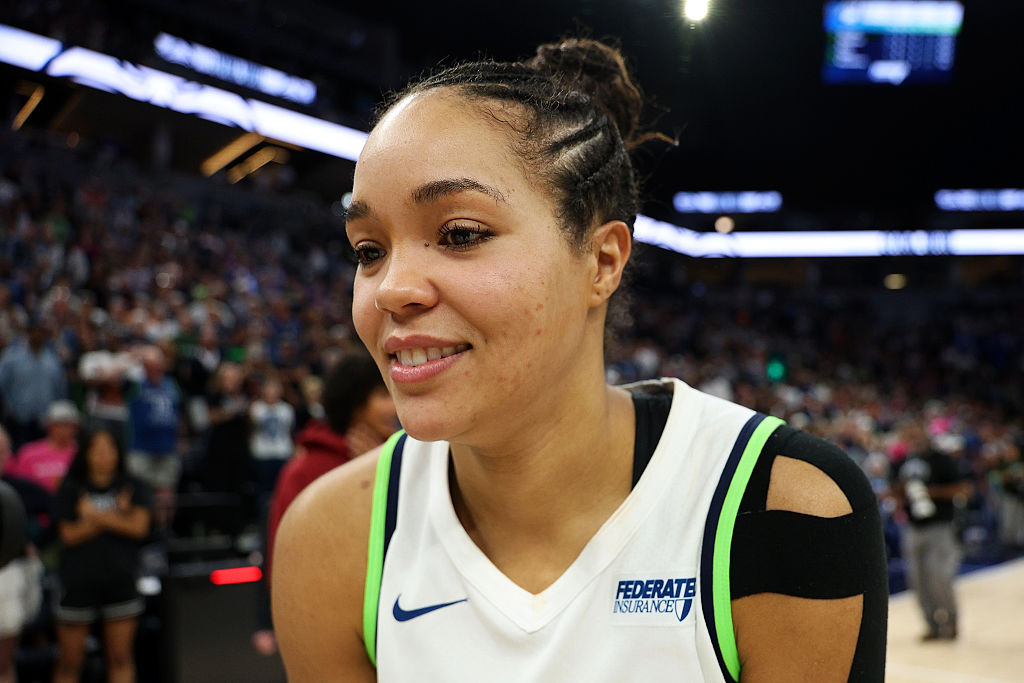
Absent, too, was any mention of the current nature of your relationship with Minnesota Lynx star Napheesa Collier, which was the most talked-about division. Also absent was any mention of WNBA star Natasha Cloud, who claimed you had maligned her from WNBA marketing campaigns. These relationships may exist mostly behind the scenes, but they matter to us as fans.
After occupying top leadership positions at major media companies for the past two decades, I have learned that being a leader often means making hard, sometimes unpopular decisions, often centered on what’s best for business. It is possible to center business while also treating everyone you work with with respect, dignity, and care. It’s also important to pay close attention to your blind spots regarding diversity. Because diversity, too, is good for business.
Diversity is an umbrella, and under it also sit political views. When we look at the league you helm, it’s at least 64% Black. We know from national data that close to 93% of Black women in the league you oversee likely have different political views than you do. I know, I know. Who you vote for is not our business.
But we do know which politicians you’ve donated to in the past. We know that in 2012, you donated $2,500 to Mitt Romney’s campaign, and then in 2014, you donated $1,000 to Mitch McConnell’s. Both are politicians who have decades-long histories of voting against policies that protect and further the basic civil rights of Black and LGBTQ people. This raises serious questions about your ability to effectively work with and advocate for women who don’t look like you or who face discrimination based solely on their race or who they love.
I recently wrote about the microaggressions Black women in the workplace often experience in ways that are unique when compared to all other races. I’ve since heard from Black women all across the country, some of them celebrities and others who occupy senior leadership positions in politics and in Fortune 500 companies, who told me that what I wrote about and what Dawn Staley experienced reflected their experiences. They felt seen and their experiences acknowledged.
More practically, we see that this is an area where you are struggling based on your response to a question you were asked just this week about what surprised you the most during negotiations for the new collective bargaining agreement. You said it was how “emotional” many players were about ensuring the league provided housing for them. You added that you “just assume, having two children in their 20s, who pay for their own housing, that once they were making these much-increased salaries, that that wasn’t something they would need or want.” You subsequently repeated that the issue was an emotional one.
I found that characterization peculiar, given that the request from players was a structural baseline request. One of your competitors, Unrivaled, is a basketball league that provides both housing and daycare support for its players. You turned what is very clearly a labor issue and couched it as an emotional issue. It’s hard not to want to ask you a variation of what you asked the reporter during your press conference: If these players were men, would you have couched it as an emotional issue? I doubt it.
Nonetheless, your comment reminded me of Shonda Rhimes, who years ago left her fairly lucrative contract at ABC when an executive allegedly tried to put a ceiling on her legitimate request for an additional ticket for her sister for a family trip to Disneyland. According to reports, Rhimes called an executive to assist with her request. He allegedly said to her, “Don’t you have enough?” It should be noted that Disney tickets are a perk enjoyed by all Disney employees. Seems that an employee like Rhimes, who had made the company an estimated $2 billion, could be provided with one extra free ticket on the company’s dime.
Your response to the players about providing housing was to give the same energy, Cathy. My point here is that both you and the unnamed Disney executive seemed to be operating under the (I hope) unconscious presumption that what are pretty standard, reasonable entitlements and perks are discretionary rather than standard when requests are made by women and/or Black women. There’s a feeling that seems to be driving it that we are being paid enough and not worth any more than what you’ve agreed to give us. That we should sit in gratitude rather than continue to push for equity and what we are worth.
It feels like kismet, then, that the 30th anniversary of the league happens to fall on Black Women’s History Month, when we should all be spending some time learning about the Black women who are the backbones of this league. This gives us an opportunity to look at what Black women have contributed to the league over the years.
Later this year will mark the 30th anniversary of Sheryl Swoopes becoming the first player to sign a WNBA contract. In 2002, Lisa Leslie became the first W player to dunk in a game.
There has also been a history-making off the court. In 2005, entrepreneur Sheila Johnson became the first Black woman to become an owner of a WNBA team when she led the ownership group that purchased the Washington Mystics.
There’s so much history to be proud of. Another sign of the league’s success is that there are now books that chronicle this magnificent history in greater detail. Jordan Ligons, who is a sports journalist and co-host of the Queens of the Court podcast just co-authored a beautiful book called Court Queens.
Many current WNBA players are also authors. A’ja Wilson and Brittney Griner are authors. D’earica Hamby and her daughter Amaya have a children’s book. And, last but not least, one of the league’s most cherished players, Alysha Clark, has a forthcoming children’s book that aims to help children navigate grief to bring healing to all who have lost someone near and dear to them.
And if you haven’t already, I’d suggest you read books written by now retired WNBA players like Maya Moore, Lisa Leslie, and most recently, Dawn Staley’s powerful memoir, Uncommon Favor. All provide you with more insight into who these women are and their unique contributions to the league. They all are a part of the fiber of this league.
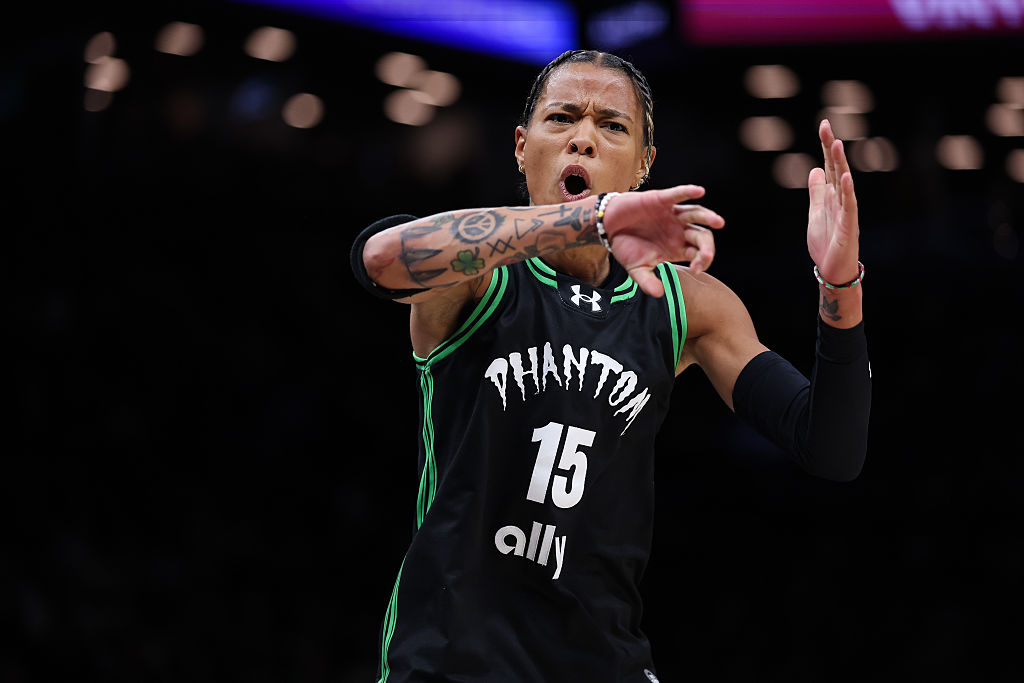
WNBA veteran Natasha Cloud said something directed to you last year that still stands true today. You have an opportunity to be the ultimate girl’s girl. Yes, there’s a lot of repair that needs to happen with players and also fans.
I think I can speak on behalf of all Black women and say, yes, our memories are long, and we are not quick to forgive, but more than those realities, we are fiercely loyal, we support the players unwaveringly, and we cheer executives who respect them. You yourself mentioned today that one way in which the league stands out from its peers in other sports is that it has fans who are avid, rabid, and loyal and all the ways the league is able to capitalize on that financially.
Last year, Coach Noelle Quinn, a former WNBA player herself, was the only Black woman head coach in the league. With her departure from the Seattle Storm last season, the league will enter into its 30th year without a single Black woman at the helm of any team. That needs to change and you have the power to change it by urging owners to consider the importance of having coaches that reflect the players on their rosters.
So, as you prepare to kick off the first preseason games at the end of this month, educate yourself, make those calls, and start putting in the work to repair relationships with players and fans. The league’s next 30 years, and your job, depend on it.
SEE ALSO:
Bayou Barbie Got Her Dream House: Now We Pray No Black Woman Catches A Fever
On Dawn Staley, Black Women, And Disrespect In The Workplace


