Supreme Court Rulings That Impacted Black Americans This Week
Every Supreme Court Ruling That Impacted Black Americans This Week - Page 3
- Voting rights law enforcement restricted in 7 states, weakening protections for minority voters
The U.S. Supreme Court issued several major rulings this week that could have significant implications for Black Americans, spanning religious rights in prison, police encounters, and further limitations on the enforcement of the Voting Rights Act. Here’s a breakdown of the three key rulings and what they mean.
1. Rastafarian Inmate Barred From Suing Over Forced Haircut.
Landor had not cut his hair for 20 years as part of a Nazirite vow, a deeply held religious practice, according to NBC News.
“I am disappointed but not defeated. What happened to me violated my faith and my dignity. I will continue pursuing accountability. What happened to me should not happen to anyone else,” Landor said in a statement released by his lawyers.
2. Supreme Court Declines Case on Race and Police Encounters.
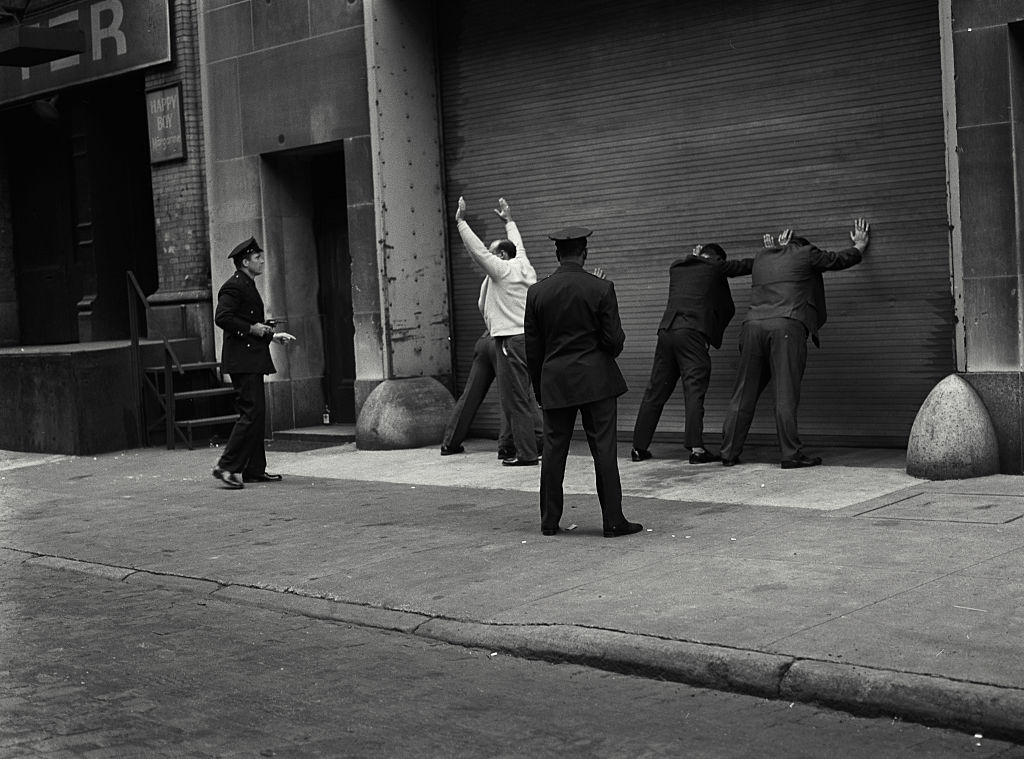
On June 22, the Supreme Court declined to hear a case involving how race may influence a person’s perception during police encounters, allowing a lower court ruling to stand. According to Courthouse News, the case, United States v. Donte J. Carter, involved a 2020 stop in Washington, D.C., where police searched a Black man named Donte Carter and recovered a stolen firearm.
The D.C. Court of Appeals previously ruled that the stop was unlawful and threw out Carter’s conviction. However, the Department of Justice petitioned the Supreme Court to reverse this ruling, arguing that the court improperly factored race into its legal analysis. The department argued that the decision conflicted with federal precedent.
During Carter’s case, the appeals court considered how a “reasonable Black man” might perceive police encounters differently due to historical and social realities, rather than relying solely on a race-neutral standard. Under the Fourth Amendment, courts typically apply a “reasonable person” standard to determine whether someone would feel free to leave a police interaction.


Ultimately, the Supreme Court declined to intervene, but Justices Samuel Alito and Clarence Thomas dissented.
“It is dangerous to allow an individual to be treated differently based on statistics, studies, or expert testimony that purports to show that members of the racial or ethnic group to which he belongs are more likely to act in a certain way than are members of other groups,” Justice Alito wrote in part.
3. Voting Rights Act Tool Limited in Seven States.
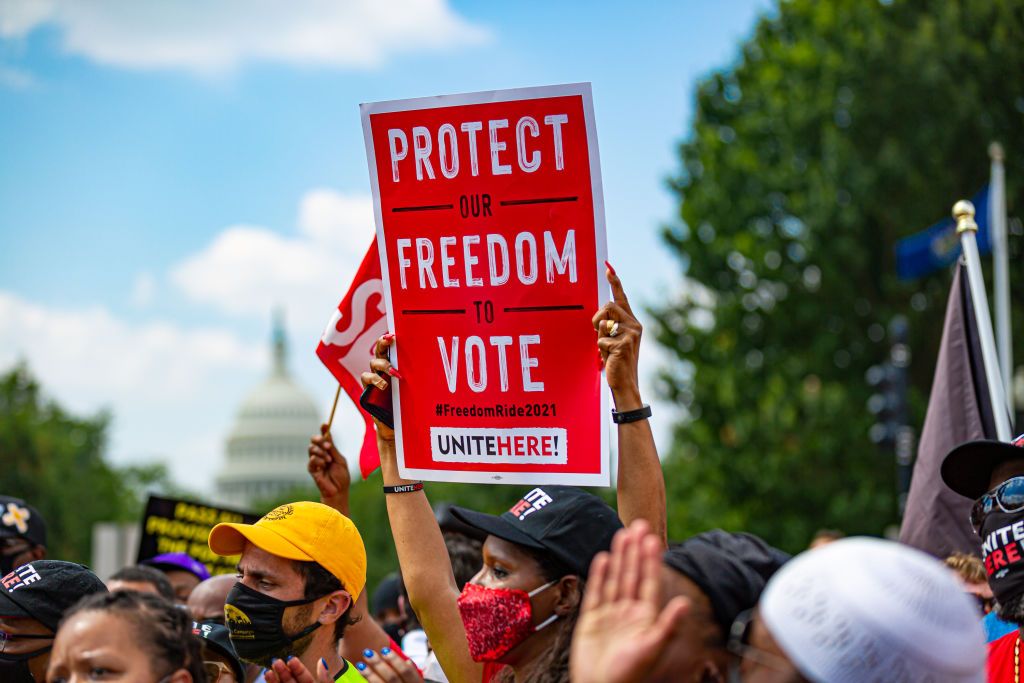
On Monday, the Supreme Court also declined to hear an appeal from Arkansas, leaving in place a lower court ruling that significantly limits who can enforce parts of the Voting Rights Act in several states.
The case involved Arkansas United, an immigrant advocacy group that provides Spanish-language interpreters at polling sites for voters with limited English proficiency. The group challenged a state law restricting how many voters a non-poll worker could assist, according to NPR.
A federal judge initially ruled the law violated Section 208 of the Voting Rights Act, which protects the right of voters with disabilities or language barriers to receive assistance of their choice.
However, after an appeal, the 8th Circuit Court of Appeals ruled that private groups like Arkansas United cannot sue to enforce Section 208 because the law does not explicitly include a “private right of action,” meaning only the U.S. Department of Justice (DOJ) can bring these types of lawsuits. Private groups cannot sue under Section 208 in the 8th Circuit under this interpretation.
By declining to take the case, the Supreme Court allowed that interpretation to stand. Now, the ruling effectively limits enforcement power in seven states under the 8th Circuit’s jurisdiction: Arkansas, Iowa, Minnesota, Missouri, Nebraska, North Dakota, and South Dakota.
Because enforcement would now fall primarily to the Department of Justice, voting rights advocates warn that protections for minority and disabled voters could weaken due to limited federal resources.
SEE MORE:
The Supreme Court Rules ICE Can Engage In Racial Profiling
These Southern States Are Redistricting After Supreme Court Ruling


