Everything We Know About The Capture Of Nicolás Maduro
Everything We Know About The Capture Of Venezuela’s Nicolás Maduro
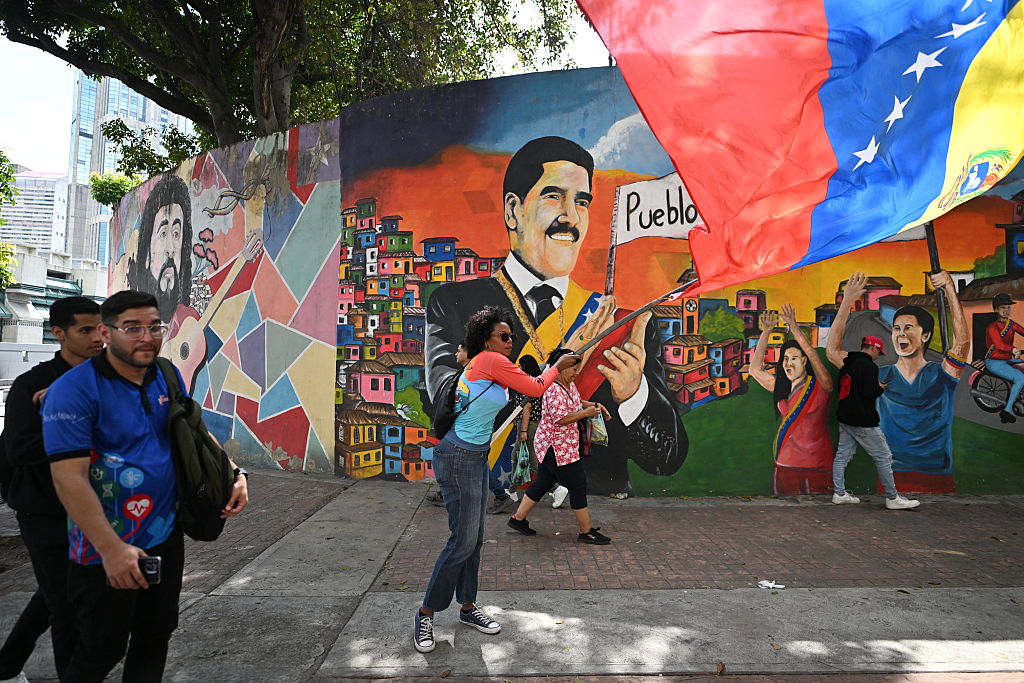
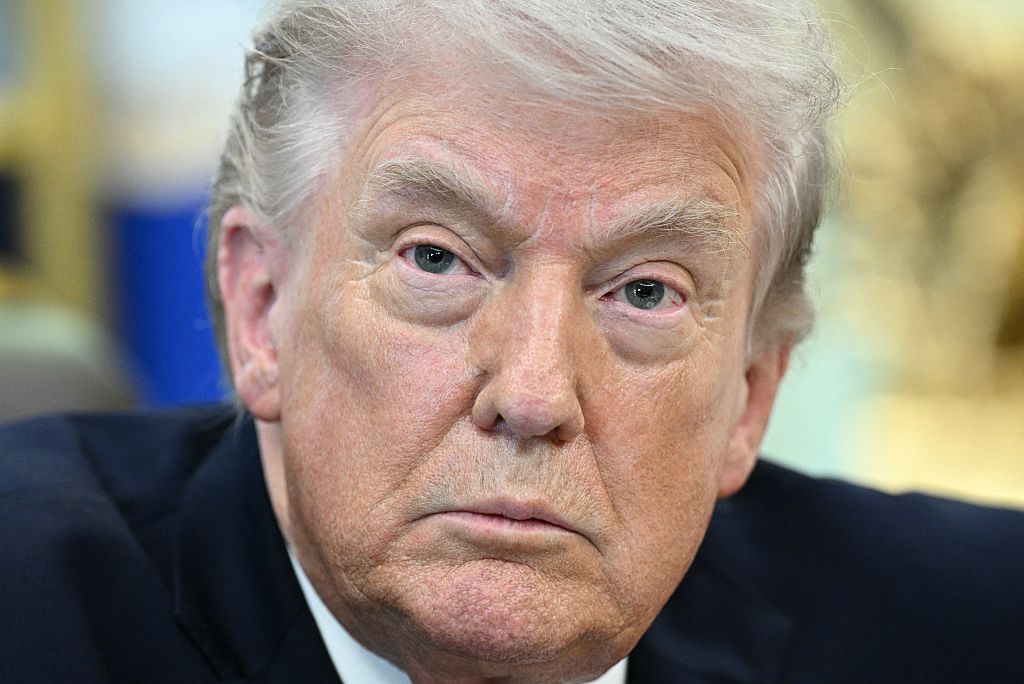
The new year got off to an unhinged start when President Donald Trump launched a surprise military strike to capture Venezuelan President Nicolás Maduro and his wife. Here’s everything we know that led to Maduro’s arrest and the aftermath.
What Led To His Capture?
According to The New York Times, the Justice Department indicted Maduro on federal drug trafficking charges during Trump’s first term in 2020. Maduro raised further controversy in 2024, after his win in Venezuela’s presidential election was widely disputed. The ruling party declared Maduro’s victory hours after polls closed without disclosing the numbers to the public. A group of independent election experts verified ballots that proved Maduro lost the election. Throughout the summer and fall, the Trump administration has gradually intensified military strikes against boats it claimed carried drugs from Venezuela. On Jan. 2, the United States military conducted strikes on the city of Caracas to capture Maduro. Venezuelan officials said the strike killed at least 80 people.
The outrage surrounding Maduro’s arrest isn’t due to him being a great or just leader. We can acknowledge that Maduro is a shady figure, to say the least, but the way in which the United States government went about capturing him is very much in a legal gray area. Venezuela did not prove a meaningful threat to national security, and the Trump administration has more or less said the quiet part out loud when they said America will be overseeing Venezuela’s oil exports.
What Is Maduro Being Tried For?
According to Reuters, Maduro and his wife, Cilia Flores, were indicted on charges of cocaine importation conspiracy, possession of machine guns and destructive devices, and conspiracy to possess machine guns and destructive devices. He made his first court appearance on Monday morning in New York. “I’m innocent. I am not guilty. I am a decent man, the president of my country,” Maduro said when asked by the judge how he pleads.
AP reports that Maduro’s lawyers are expected to argue that he cannot be tried in an American court as he is a sovereign head of state. Maduro’s next hearing is scheduled for March 17.
What Happens In Venezuela?
That is the biggest question mark of this whole situation. During a press conference announcing Maduro’s capture, Trump said that the United States “is in charge” of Venezuela. Since this is Trump, there were very few details given on what that exactly means. According to CBS News, Maduro’s Vice President Delcy Rodriguez was sworn in as Venezuela’s acting president over the weekend and initially criticized the Trump administration’s actions. She quickly changed her tune and called for “respectful international relations” between Caracas and Washington.
Secretary of State Marco Rubio told CBS News that the U.S. government doesn’t recognize Rodriguez as the legitimate president, and that will only come from a free and fair election. “Ultimately, legitimacy for their system of government will come about through a period of transition and real elections,” Rubio said. “It’s the reason why Maduro is not just an indicted drug trafficker — he [was an] illegitimate president. He was not the head of state.”
It’s unclear what, if any, autonomy Venezuela will have with Rodriguez in charge. “If she doesn’t do what’s right, she is going to pay a very big price, probably bigger than Maduro,” Trump said in an interview with The Atlantic.
What Is The International Reaction?
It’s been mixed to say the least. No one is arguing that Maduro was a good guy who’s being unjustly punished, but historically, regime change through U.S. military action has not led to positive outcomes for the affected countries. One need only look at Iraq to see the long-term effects of U.S. interventionism. According to Politico, leaders in several South American countries understandably expressed concern about Maduro’s capture.
“The strikes on Venezuelan territory and the capture of its president cross an unacceptable line,” Brazilian President Luiz Inácio Lula da Silva wrote on X. “These acts represent a grave affront to Venezuelan sovereignty and an extremely dangerous precedent for the international community.”
AP reports that ambassadors from several countries were also critical of the strike during an emergency meeting of the United Nations Security Council on Monday. “Democracy cannot be defended or promoted through violence and coercion, and it cannot be superseded, either, by economic interests,” Colombian Ambassador Leonor Zalabata, whose country requested the meeting, said during the session.
Even Russia, a country with little respect for other countries’ borders, was critical of the strike.
Vasily Nebenzya, the Russian ambassador to the U.N., called Maduro’s capture “a turn back to the era of lawlessness” by America.
“We cannot allow the United States to proclaim itself as some kind of a supreme judge, which alone bears the right to invade any country, to label culprits, to hand down and to enforce punishments irrespective of notions of international law, sovereignty and nonintervention,” Nebenzya said.
Is Any Of This Legal?
While I’m not a legal scholar by any means, many legal experts have argued that Maduro’s capture violates international law.
“Trump has baldly violated the U.N. charter, with no valid claim of self-defence, and engaged in an illegal extraterritorial arrest that will be vigorously contested in a US court,” Harold Hongju Koh, professor of international law at Yale Law School, told the Financial Times. “All on the pretext of stopping drugs, when his transparent goal is profiting from oil.”
Rep. Jim Himes, the top Democrat on the House Intelligence Committee, told CBS News on Sunday that Maduro’s capture was “clearly illegal under international law,” and establishes a chilling precedent.
“Think of what Russia and China just learned,” Himes added. “Russia and China just learned that all you need to do if you want to go into Estonia is to say that the leader of Estonia is a bad person. You don’t even need to make a particularly good case.”
So yeah, folks. This is a wild and constantly evolving situation. We’ve got a Republican administration potentially violating international law and destabilizing a country all for oil. It really is 2003 all over again.
SEE ALSO:
President Trump Confirms Venezuelan President Nicolas Maduro’s Capture
Trump Admin’s Lawlessness On Full Display In Unhinged Venezuela Attack