What Does Venezuela’s Oil Mean To The United States?
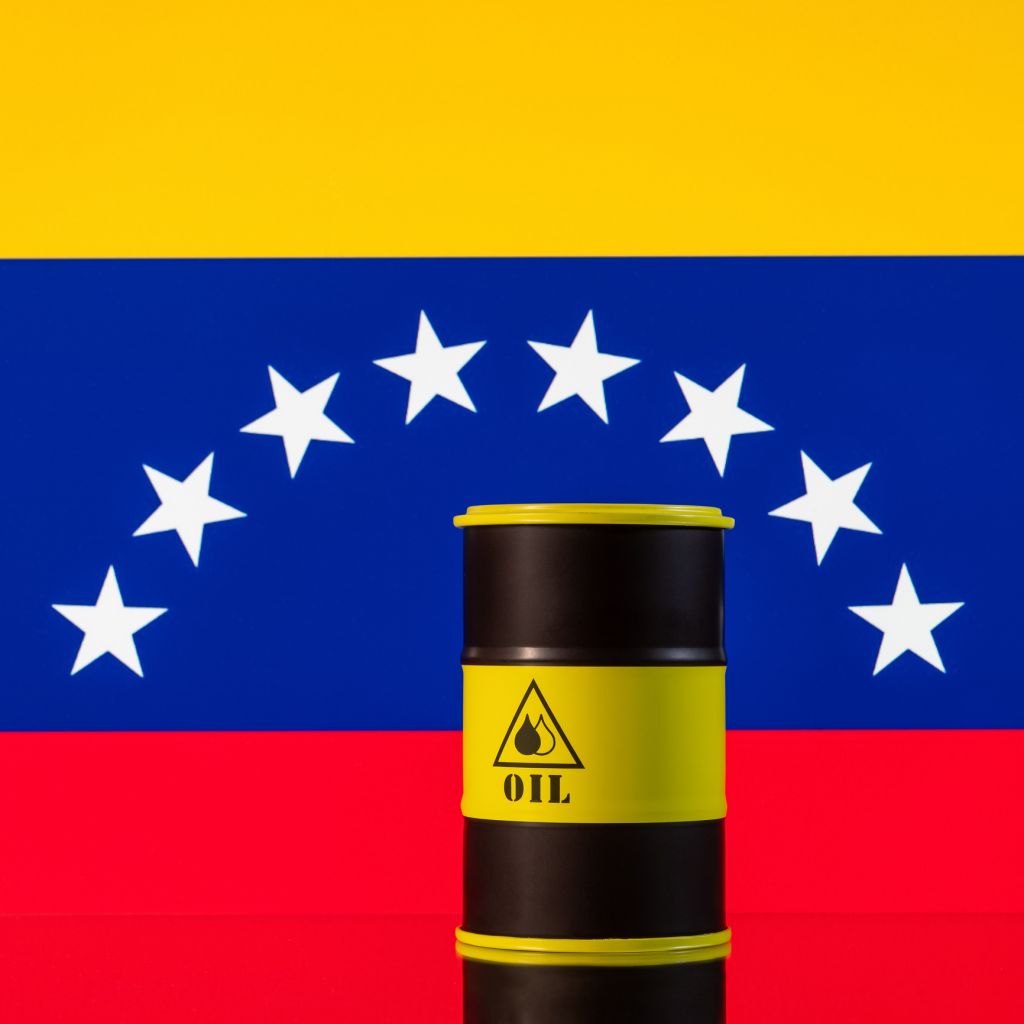
The capture of Venezuelan President Nicolas Maduro has created countless questions about its legality, who will fill the power vacuum in Venezuela, and how much involvement the U.S. will have in stabilizing the country. The Trump administration has not provided straight answers for any of those questions, though it’s been abundantly clear about its intentions to control the nation’s oil industry. So what does that mean for Venezuela and the United States?
Let’s get into it.
How Big Is Venezuela’s Oil Industry?
By all accounts, Venezuela’s oil industry has been in disarray in recent years. This is partially due to the sanctions President Donald Trump placed on the country in 2019. The neglect and corruption that were endemic to Maduro’s reign as president also didn’t help matters. Many of Venezuela’s oil refineries are in disarray, as many of the skilled workers needed to operate the facilities have fled the country.
“A rapid recovery in Venezuelan oil production in the short term is highly unlikely,” Jorge León, the head of geopolitical analysis at Rystad, told the Guardian. “Years of chronic underinvestment have severely eroded oil infrastructure, much of the skilled workforce has left the country, and ongoing political instability continues to undermine operational confidence.”
Don’t mind me just taking a long, deep sigh at the fact that we triggered a regime change to take over the oil equivalent of a rundown Church’s Chicken.
Who Does Venezuela Ship Oil To?
According to the Guardian, Venezuela was a robust oil shipper in the late 1990s, with exports reaching about 2 million barrels of oil a day. Shipments of Venezuelan oil to the U.S. fell drastically during Maduro’s reign. Last year, the country only shipped 135,000 barrels a day to the U.S. According to AP, those sanctions were lifted on Tuesday after the U.S. seized two Venezuelan oil tankers. Secretary of State Marco Rubio has said that the seized ships will be sold.
“One of those ships that was seized that had oil in the Caribbean, you know what the interim authorities are asking for in Venezuela?” Rubio told reporters. “They want that oil that was seized to be part of this deal. They understand that the only way they can move oil and generate revenue and not have economic collapse is if they cooperate and work with the United States.”
Before Maduro’s capture, most of Venezuela’s oil was previously shipped to Asia. It ultimately raises the question: Was this move made to benefit America or simply hurt China?
How Will The United States Control Venezuela’s Oil?
According to the New York Times, that’s still a big question mark. Energy Secretary Chris Wright was adamant that the U.S. would control Venezuela’s oil exports for the foreseeable future. “Going forward, we will sell the production that comes out of Venezuela into the marketplace,” Wright said at a Goldman Sachs energy conference near Miami. NPR reports that Trump said on Tuesday that Venezuela would provide 30 million to 50 million barrels of oil to the U.S.
The thing is, no oil company has actually committed to maintaining the oil exports in the country. Very few American companies have an established presence in Venezuela, with Chevron the sole remaining U.S. firm with operations in the country. Even if the Energy Department can convince American oil companies to establish a foothold in Venezuela, there’s no guarantee this endeavor is going to work out in the long term.
Rystad Energy, a global consultancy firm, estimates that getting Venezuela’s oil production back to 3 million barrels a day would require 16 years of work and an investment of $185 billion, with at least $30-35 billion needing to be committed in the next three years to make that scenario even plausible.
So you can see why oil companies are apprehensive about establishing a foothold in a politically unstable country, given that the industry requires a ton of investment to even be viable.
Who Benefits Most From This?
Based on the information we currently have, it appears that oil refineries in the U.S. will stand to gain the most from this shift in control. Venezuela’s oil is a stickier, more tar-like substance than the shale oil produced in America’s heartland. This means it has to go through a refining process to make it suitable for everyday use.
“Most of Venezuela’s crude supply is heavy, sour oil, which if you’re a U.S. refiner is one of the most ideal grades of crude you could ask for,” Janiv Shah, a vice president at Rystad Energy, told the Guardian.
As a result of Trump putting big business interests over those of the average American, it may be taxpayers who draw the short end of the stick. In an effort to convince reluctant oil companies to invest in Venezuela’s oil industry, Trump has implied that he would reimburse them for any money they spend to get Venezuela’s oil industry back on track.
“A tremendous amount of money will have to be spent, and the oil companies will spend it, and then they’ll get reimbursed by us or through revenue,” he told NBC on Monday. Didn’t this dude run on reducing government spending? We can’t afford to pay federal workers, but we can drop billions on a long-shot effort to get Venezuela’s oil industry up to par.
“Even if you can pull off this plan, I don’t see how this benefits the American people,” Amos Hochstein, managing partner at the investment firm TWG Global, told the Washington Post. “If anything, we may have an oversupply, which is why oil prices are in multiyear lows and declining. Nor do I see how this helps the people of Venezuela.”
It’s actually insane that the Trump administration triggered regime change over oil without first getting commitments from oil companies to invest in Venezuela’s oil industry. It’s almost like none of this was actually thought through, and both Venezuela and the United States will have to bear the consequences of a bunch of weak men needing to appear strong on the global stage.
I love it here.
Is Venezuela Just Gonna Let This Slide?
Considering that the president of the United States made a unilateral decision to straight-up kidnap their admittedly shady leader, they don’t really have much of a choice. Trump has already threatened Acting President Delcy Rodriguez with a fate “worse than Maduro’s” if she doesn’t operate within U.S. interests. It’s clear Trump is going to impose his will on Venezuela, though it’s still not entirely clear what that looks like.
I tell ya, the more I write about this situation, the more I want to punch a wall. I’m not arguing that Maduro is a good man; by all accounts, he was an autocrat who undermined Venezuela’s democracy. But dog, if you’re going to make a move like this, you can’t just play it by ear and hope for the best. There are real-life consequences to these actions, and unfortunately, the Venezuelan people will likely pay the price.
SEE ALSO:
Everything We Know About The Capture Of Venezuela’s Nicolás Maduro