Don Lemon’s Arrest Is A Warning Shot At Black Journalists
Don Lemon’s Arrest Is A Warning Shot At Black, Independent Journalists
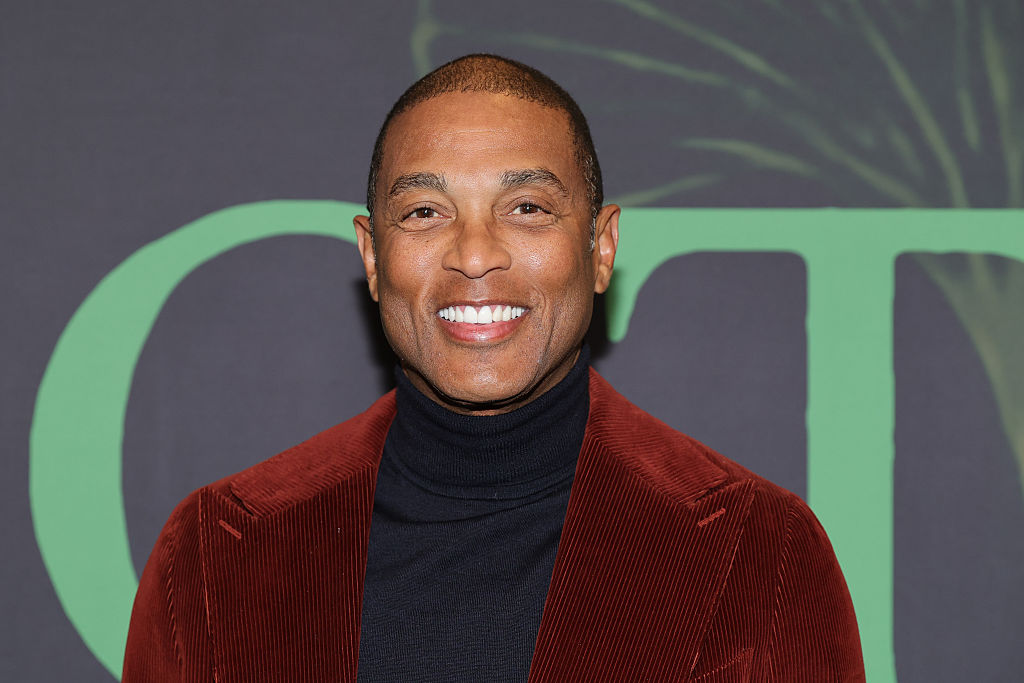
Don Lemon was arrested.
A Black journalist now operating independently, Lemon was taken into custody by federal agents in connection with a January protest at a church in St. Paul, Minn., where he was livestreaming opposition to federal immigration enforcement. Lemon was arrested nearly two weeks later, far from the scene itself, in a move that feels less like routine law enforcement and more like state choreography.
The government alleges violations involving interference with a place of worship. Lemon’s legal team says he was doing his job. Civil liberties groups are alarmed. The media is “asking questions.” But the real story isn’t procedural. It’s psychological. It’s symbolic. And it’s dangerous.
If you squinted at the headlines, you’d think this was just another “controversy” or yet another muddled debate about whether journalism magically turns into activism the moment a reporter’s shoes touch real pavement. You’d think this was about decorum. Or rules. Or some narrow procedural line that the former CNN anchor supposedly crossed.
It wasn’t.
Most of the early coverage snapped into the same tired reflex almost immediately. Is this about press freedom? Did Don Lemon cross a line? Was he a journalist or an activist? That’s the script. Safe questions. Small questions. Questions that keep the conversation polite and contained.
The Associated Press leaned into the procedural back-and-forth, foregrounding the government’s claim that Lemon interfered with a church service, while dutifully quoting his attorney and civil liberties groups warning that this could endanger journalists covering protests. The Washington Post did much the same by treating the arrest as a constitutional debate with DOJ arguments on one side and the First Amendment on the other, never really grappling with the power move underneath it.
People framed it as a professional boundary dispute: a journalist versus federal prosecutors, press freedom versus enforcement. The Guardian amplified media watchdogs calling the arrest an attack on the press, slotting the story neatly into a familiar civil-liberties box.
The conversation has largely been boxed around one narrow question: Does Don Lemon technically count as press? And that’s the tell. As long as the debate stays there, credentials, classifications, and legal lines, then the deeper implications of Don Lemon’s targeting and arrest stay safely out of reach.
But the deeper story is what it means when the state decides it can put hands on a Black journalist whose public identity has already been disciplined, downgraded, and pushed out of “respectable” media space. When the government snatches Don Lemon, it’s testing a boundary and asking a quiet, dangerous question: What happens if we stop pretending Black journalists are press at all?
Lemon is no longer a CNN anchor. He doesn’t have a corporate logo wrapped around his body like armor. He doesn’t have a network legal team hovering nearby, quietly negotiating on his behalf. He’s independent now, which in this moment means exposed. And that exposure is the point. Because when the state decides it can arrest a Black journalist, especially one no longer wrapped in the protective bubble of a major network, it is testing the perimeter of power.
Don Lemon is not some rookie freelancer who wandered into the wrong situation. He is a nationally recognizable journalist whose face once beamed nightly from CNN screens into millions of American homes. He is credentialed, experienced, and unmistakably legible as “press.” And yet the moment he stepped outside the institutional fortress, outside the corporate logo, the legal department, and the quiet backchannel calls between executives and officials, he became touchable.
That’s the real shift, y’all.
America has always maintained a two-tier system for journalists: those protected by institutions and those protected by nothing but the First Amendment, which history reminds us becomes very fragile when power becomes nervous. When journalists are attached to legacy outlets, the state negotiates. When they’re independent, the state experiments. And when they’re Black and independent? The state rehearses for what it can get away with.
There’s a long American tradition of granting Black journalists visibility until they step outside sanctioned lanes. As long as you’re reading the teleprompter, moderating the panel, and asking the “approved” questions, you’re tolerated. But the minute you put your body in the same physical space as the people being targeted (Black folks, immigrants, protesters, the unwanted) the state collapses the distinction between covering power and challenging power. Suddenly, your press credentials don’t matter, your camera doesn’t protect you, and suddenly, you’re just another body they can touch.
This arrest isn’t about what Don Lemon did at a church. It’s about what he represents now: a Black journalist who no longer belongs to an institution the government respects. He’s a Black man with a platform, a camera, and an audience without permission.
Here’s the part folks don’t want to say: The state is signaling that Don Lemon was arrested because a Black journalist’s independence is a criminal offense.
Because when the state arrests an independent journalist, it doesn’t have to win a conviction to win the moment. The spectacle does the work. The image goes viral, and the message lands. We can reach you anywhere. We can reclassify you whenever we want. Journalist, protester, agitator. It doesn’t matter. It’s all the same if we decide it is.
That’s why this should chill every reporter who thinks their press badge is a magic talisman. Badges are only respected when power feels secure. When power feels threatened, the state stops explaining itself and starts snatching folks and letting the courts sort it out later.
Their goal isn’t a conviction. It’s compliance and to make journalists hesitate before showing up. To make cameras feel heavier. To make proximity feel risky. And to make people ask, “Is this worth it?” before they ever press record. They don’t need to win in court if they can win in the body, if they can produce caution, retreat, and second-guessing. If they can turn witnessing into something that feels dangerous and optional.
For Black journalists, there’s an added layer. Our history shows that we already know how quickly “truth-teller” becomes “troublemaker.” How easily “witness” becomes “participant.” How fast the state reaches for force when narrative control starts slipping. Lemon’s prominence makes this arrest more alarming, not less. Because if he can be reclassified this easily, the message to lesser-known journalists is unmistakable: your press pass is conditional. Your safety is negotiable. Your independence is a liability.
This is all happening at a moment when independent journalism is booming precisely because trust in institutions has collapsed. People want reporters who are embedded, transparent, and present. They want livestreams, real-time witnessing, and unfiltered access. And the state knows that kind of journalism is harder to manage, harder to spin, and harder to contain.
So it does what states always do when narratives start slipping: it reasserts control over bodies. And Black bodies are always the testing ground.
What makes this moment especially chilling is how quickly the conversation slid into respectability traps. Was he too close? Was he neutral enough? Should he have kept more distance? These questions are familiar because they’re designed to distract. They turn structural intimidation into individual judgment. They ask the journalist to shrink instead of asking the state to explain itself.
But journalism has never been safe. It has only ever been selectively protected. And when those protections erode, they don’t disappear evenly. They collapse first around the people already deemed disposable, suspicious, or unruly.
So no, this isn’t just about Don Lemon. It’s about whether the government is laying the groundwork to decide that some journalists, especially Black, independent ones, don’t count as press at all. Whether witnessing power from inside its discomfort zones will now be treated as interference. Whether the line between “journalist” and “target” is being intentionally smeared.
Because once the state starts deciding who counts as press based on proximity, posture, or perceived sympathy, journalism doesn’t die all at once. It fractures. It retreats. It becomes timid.
And that’s the real danger here. Not the arrest. The precedent. Not the charges. The message. Don Lemon was not just detained. He got reclassified.
Once the state starts deciding who counts as press and who doesn’t, journalism doesn’t collapse all at once. It contracts. It quiets. It learns to stay back. Which is the point. So folks shouldn’t be asking whether Don Lemon crossed a line. They should be asking how easily the line moved.
And everybody watching should be asking themselves. . .who’s next?
Dr. Stacey Patton is an award-winning journalist and author of “Spare The Kids: Why Whupping Children Won’t Save Black America” and the forthcoming “Strung Up: The Lynching of Black Children In Jim Crow America.” Read her Substack here.
SEE ALSO: