DCHA: Budget Limits Ability To Address Safety Complaints
DCHA Says Budget Limits Its Ability To Address Resident Safety Complaints
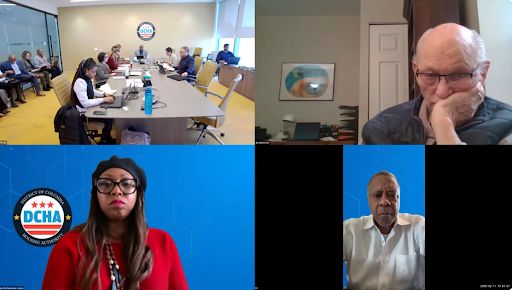
Washington, D.C., residents told housing officials they are living with toxic chemicals, mold, rodents, and untreated hazards during a recent D.C. Housing Authority board meeting. Some residents said the conditions have contributed to serious illness and long-term health problems.
“It was crystal clear DCHA was in a lot of trouble,” said Kenneth Council, a D.C. resident.
Council called into the meeting to express concerns about inadequate inspections and a lack of urgency regarding what he described as an incident involving decomposed bodies in a public housing unit, which he said reflected broader inspection failures. Many residents said they are seeking accountability, while board members said budget constraints and laws limit what actions they can take.
“I have no trust and faith in no one on that board,” said Patricia Malow, former Resident Council President in Lincoln Heights.
DCHA Executive Director Keith Pettigrew opened Wednesday’s board meeting with his executive report before residents described mold, rats and safety hazards in their units.
DCHA, which oversees public housing and voucher programs serving thousands of District residents, is still waiting to receive its full budget allocation from the U.S. Department of Housing and Urban Development, according to officials. Federal cuts could further strain maintenance and repair capacity across DCHA properties, officials said.
“We still have not yet received our budget from HUD,” Pettigrew said. “There are going to be budget cuts; how much, we just don’t know.”
Many residents said conditions in their rental units are harming their health.
“I am in here now, stage three lung cancer, and a lobectomy, I had to get my lung removed,” said D.C. resident Pamela Germany. “But I’m living on a property that you say you have the best interest for the financial wealth of.”
Germany, an elder member of the Housing Choice Voucher Program (Section 8), criticized the board during her address, which extended over her allotted time. She said she believes there has been a pattern of negligence in how her concerns have been handled and connected that to her worsening health.
“Every time I reach out to housing, seemingly, they want to create a narrative that ‘we tried to help Ms. Germany,’ nobody has tried to help me,” Germany said.
She said her health has worsened due to fumes in her apartment.
“I have to get out of here, I have suffered from inhalation of toxic chemicals,” which she said were coming from the property. “I should not be forced to live in this situation and breathe in toxic chemicals.”
Chris Otton raised similar concerns, saying mold and rodents in common spaces were entering his unit and crawl space.
“There’s a theme here I’m hearing today: we can’t get help. My neighbor died of a weird cancer. My other neighbor got real sick, I am unwell. I feel better when I leave the unit,” he said.
Multiple residents raised similar concerns during the meeting, repeatedly citing mold, pest infestations, delayed maintenance responses and difficulty getting help through official channels. Several speakers said they had previously raised complaints but felt conditions had not improved. Some residents described the problems as long-running, saying they had dealt with housing conditions and repair delays for months or longer while continuing to report concerns to housing officials and property managers.
Board members said that because some residents are not in public housing directly owned and operated by DCHA, there is limited action the agency can take. Officials said complaints involving privately owned properties that receive voucher payments must first be addressed by the property owners or managers.
Housing officials said the agency’s authority is strongest in properties it owns and operates directly, but more limited in privately owned buildings that accept housing vouchers. In those cases, officials said property owners are primarily responsible for maintenance and repairs, though DCHA can take action in certain cases if properties fail program standards.
Most housing in D.C. is privatized. DCHA directly controls about 6,600 rental units out of roughly 226,947 total rental units in the city, or about 3%, according to District housing data presented during the meeting.
“Your lease is with them, not with the housing authority, so that is their responsibility,” said Nicole Wycliffe, DCHA’s deputy director.
Housing advocates and residents have long raised concerns about oversight gaps in voucher-supported housing nationwide, where local housing authorities rely heavily on private landlords to maintain safe living conditions.
Officials said some complaints may require coordination with property owners, inspectors or other city agencies before action can be taken. Residents said they plan to continue raising concerns at future board meetings and through housing complaint channels.
SEE ALSO:
As Black History Faces Erasure, 1619-Inspired Exhibit Lands In Nation’s Capital