A $1.25M Settlement For Fred Harris’ Murder Is Not Justice
The Cost Of Doing Business: Why A $1.25M Settlement For Fred Harris’ Murder Is Not Justice
The $1.25 million check recently approved by the Harris County Commissioners Court to settle a federal lawsuit over the death of Fred Harris is not an act of justice. It is, instead, a receipt that documents the cost of doing business for a rapacious carceral machine that views the lives of disabled Black boys as line items in a budget of inevitable loss.
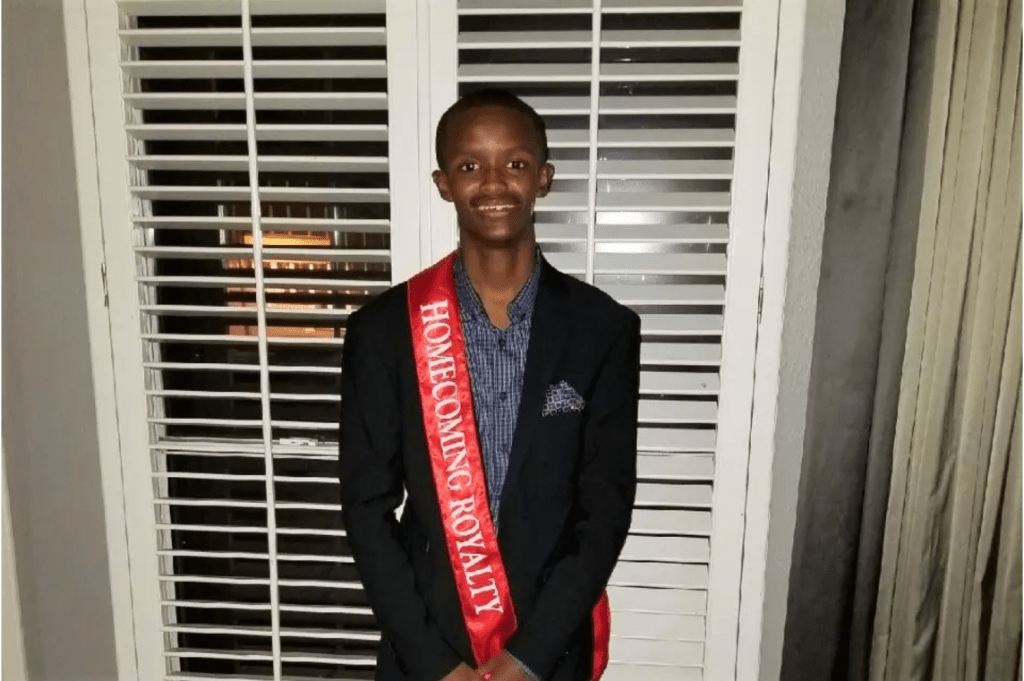
Fred Harris was not a “threat” or a “hardened criminal”—he was a 19-year-old Black man with an IQ of 62 and weighing a mere 98 pounds. He was a teenager with severe intellectual disabilities who functioned at the level of a small child, yet Harris County chose to treat him with the same cold indifference it applies to every other body it warehouses.
When I first read that Fred—known to his family as “Fearless Fred”—was beaten to death inside a Harris County jail cell, I felt an all-too-familiar tenseness in my body. This feeling wasn’t tied to the shock of a sudden tragedy, but instead to the heavy, bone-deep recognition of a system functioning exactly as it was designed to.
Surprise is a luxury for those who aren’t familiar with the daily violence of the U.S. prison-industrial complex. For the rest of us, Fred’s death represents the chilling, surgical precision of a system built to fail him and everyone in its grasp. He was a child in a man’s body, swallowed by a machine that never intended to keep him safe.
This grief feels devastatingly familiar.
Over a decade ago, one of my first writing assignments as a professional journalist was responding to the murder of Trayvon Martin. At the time, I hoped that by now, I wouldn’t still be using my pen to document the senseless murders of Black boys. I hoped we’d have moved past the need for these elegies. Yet here I am, still tracing the outlines of a stolen life, word by word.
We are caught in a cycle where the ink of our stories is constantly competing with the blood of our children, and the toll of that repetition is an exhaustion that settles deep in the marrow of our collective community.
As a mother, my heart also breaks for Dallas Garcia, Fred’s mother.
Garcia made the mistake many of us make: she called the police during a mental health crisis, hoping that doing so would help her get the specialized care Fred needed. Instead of a lifeline, this mother was handed a death sentence for her son. I can feel the weight of the impossible guilt she must carry—the kind that keeps you awake at night, wondering if there was one more door to knock on, some different choice to make that would have kept Fred alive. It’s a weight no parent should have to bear, especially when the “safety” we’re promised from the police is what ultimately stole her son’s life.
But there is a deeper tragedy here: the death of a child should not be a Black mother’s entry into advocacy and activism. We have normalized a reality where Black women are forced to transform their private grief into a public movement just to be heard.
We have seen this script play out far too many times with the “Mothers of the Movement”—women like Sybrina Fulton, Gwen Carr, Lesley McSpadden, and Samaria Rice, whose names became synonymous with struggle only after the state took their sons. Dallas Garcia shouldn’t have to join this club of “revolutionary” mourners; she should just be a mother with a living son, continuing to find support for him.
For Black families, calling 911 for a mental health crisis is often a roll of the dice with lethal stakes. We are told the police are here to protect and serve, but Black people are three times more likely to be killed by police than white people.
When you add disability or a mental health crisis to the equation, that danger spikes. Individuals with untreated mental illness are 16 times more likely to be killed during a police encounter than other civilians. In Harris County, this reality is exacerbated by a system that has essentially outsourced social work to armed officers. When the state’s only tool is a hammer, every crisis starts to look like a nail.
Fred Harris’ story is a haunting echo of Kalief Browder’s. We remember Kalief—the Bronx teenager who spent three years on Rikers Island without a trial for a crime he didn’t commit. Kalief made it home, but the violence he endured in jail never left him.
Kalief eventually took his own life, becoming a delayed casualty of a system designed to break his body and his spirit. Fred Harris never even got the chance to go home. A negligent jail system executed him before he could ever face a judge. Like Kalief, Fred was caught in the gears of a machine that values the efficiency of a cage over the sanctity of a human life.
Houston Public Media reports that Fred was booked on a high bail he couldn’t afford, despite having no prior convictions. Not to mention that in Texas, the criminalization of disability seems to be a feature, not a flaw. State officials, through their policies, have made the Harris County Jail the largest de facto mental health facility in the state.
Fred’s death wasn’t just an accident; it was the result of skipped protocols and systemic disregard. A detention officer testified that she had ordered Fred to be isolated for his own safety due to his size and vulnerability. Instead, that order was ignored, and Fred was placed in a cell with Michael Ownby, a man twice his size who had attacked a guard just days prior.
The protocol for “face-to-face” checks every 30 to 60 minutes—a mandatory state standard—was abandoned. State inspectors have documented instances in the jail where the incarcerated went over five hours without observation. It took only 36 minutes for Ownby to pummel Fred until he was brain-dead. The jail knew Fred was disabled, and they knew his cellmate was violent. They chose to look away. This negligence is compounded by chronic overcrowding and understaffing. Harris County has been forced to outsource over 1,200 people to other states at a cost of $50 million annually because it cannot safely house its own population. In 2025, the jail saw 20 in-custody deaths.
The $1.25 million settlement is no victory. It allows the county to bypass true accountability—the kind that would require dismantling the current pretrial detention system—and instead offers a payout that effectively silences those grieving. It’s a way for the state to buy its way out of a moral reckoning.
As a taxpayer living in Harris County, it sickens me to know that my tax dollars are being used to pay for the lives we allow to be destroyed, rather than used to prevent their destruction in the first place. True safety cannot be found in the same structures that kill our children, which is why abolitionists call for building the infrastructure of care that would have kept Fred Harris safe.
Instead of pouring millions into litigation and outsourcing prisoners to Louisiana, we must invest in 24/7 community-led crisis intervention. We need Mobile Crisis Outreach Teams (MCOT) to provide non-police responses to mental health crises so mothers like Dallas Garcia have someone to call other than an officer with a gun. We must also fund Supportive Housing and Peer Respite to provide wrap-around services that help disabled individuals thrive in their own communities. And finally, we must End Pretrial Detention for Vulnerable Populations. No person with a documented intellectual disability should be held in a general population jail cell. We need immediate diversion programs that move people from the court system into community-led care.
We have to stop pretending that “reform” will fix a system that finds it acceptable to cage a disabled child with a potential killer. The memory of Fred Harris demands more than our head-shakes and pity. It demands our rage and the relentless pursuit of a world where no one is considered disposable. Only then will we move toward a justice that doesn’t come with a price tag, but instead with the guarantee of life.
We owe it to “Fearless Fred” to ensure his death is the catalyst for the end of this violent cycle. We must choose to build a country and a world that cherishes our sons, rather than settle for the price of their absence.
Josie Pickens is an educator, writer, cultural critic, and abolitionist strategist and organizer. She is the director of upEND Movement, a national movement dedicated to abolishing the family policing system.
SEE ALSO:
Why Repairing State-Sponsored Theft Isn’t ‘Discrimination’
When The Government Starves Us: How SNAP Cuts Target Black Survival