US Votes Against Labeling Slavery 'Gravest Crime Against Humanity'
US Votes Against UN Resolution Labeling Chattel Slavery ‘Gravest Crime Against Humanity’
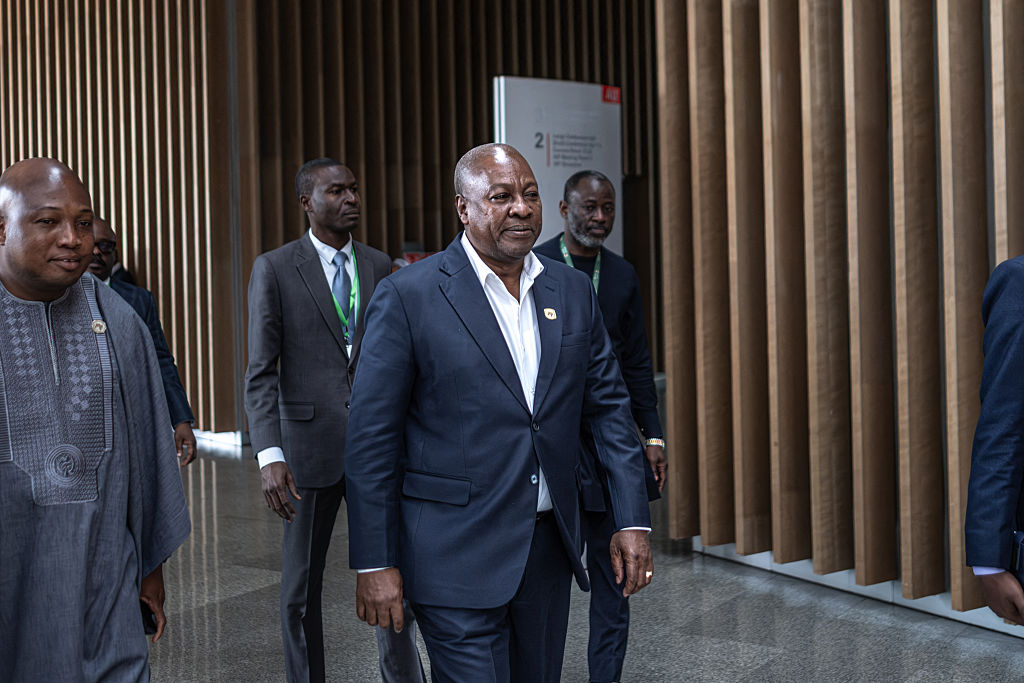
On Wednesday, the United Nations (U.N.) voted on a resolution introduced by Ghana calling the trans-Atlantic slave trade the “gravest crime against humanity.” With the exception of Argentina, Israel, and, shocker, the United States, 123 nations voted in favor of the resolution.
According to the New York Times, the resolution also calls on the U.N.’s member nations to formally apologize for slavery and contribute to a reparations fund as “a concrete step towards remedying historical wrongs.” Ghana’s President John Mahama specifically called out the Trump administration’s attempts to whitewash the horrors of slavery before the resolution went to a vote. Mahama called the resolution “a safeguard against forgetting.”
One of the first steps President Donald Trump took upon taking office last year was signing an executive order explicitly designed to change how history is taught in national museums and parks. Upon signing the order, Trump said that the Smithsonian Institution focused too much on “how bad Slavery was” and not enough on America’s “brightness.” In the year since he signed the order, the U.S. government has tried to remove exhibits teaching about slavery from national parks and museums, while also reinstalling toppled Confederate monuments.
So teaching about slavery is bad, but celebrating those who fought to maintain it is totally fine.
Dan Negrea, the U.S. ambassador to the United Nations Economic and Social Council, issued a statement explaining why the U.S. voted no on the resolution. “The United States has defined, long-standing objections to the framing of ‘reparatory justice’ and the ‘duty of reparation’ for historical wrongs,” Negrea wrote.
“As stated at the outset of these negotiations, the United States also strongly objects to the resolution’s attempt to rank crimes against humanity in any type of hierarchy. The assertion that some crimes against humanity are less severe than others objectively diminishes the suffering of countless victims and survivors of other atrocities throughout history.”
Negrea closed by pushing back on the notion that President Trump doesn’t care about Black people. “President Trump has done more for Black Americans than any other president,” he said. “He’s working tirelessly to deliver for them.”
I mean, he’s certainly delivered higher prices for gas and food, made health care more expensive, made it harder for Black students to get into good schools, and lifted environmental regulations that were designed to protect low-income Black communities. Honestly, I would prefer it if Trump delivered a little less to the Black community at this point.
The Guardian reports that, in addition to three no votes, there were 52 abstentions, including the UK and EU members. James Kariuki, the UK chargé d’affaires to the U.N., also issued a statement explaining that the UK abstained because it was “firmly of the view that we must not create a hierarchy of historical atrocities.”
“No single set of atrocities should be regarded as more or less significant than another,” he added.
Kyeretwie Osei, the head of programs of the economic, social, and cultural council at the African Union, pushed back against the idea that the resolution establishes a hierarchy of atrocities. “The main point is not to introduce a hierarchy of crimes,” Osei said. “It is rather an attempt to properly situate that particular chapter in history … how it was so world-breaking in its impact that it essentially created the platform for every atrocity and crime against humanity that then followed.”
While the resolution passed, it’s still unclear what “repertory justice” will look like and what, if any, next steps will follow.
SEE ALSO:
Donald Trump Purges National Parks Of Slavery Exhibits
Courts Still Cite Cases Enforcing Enslavement Of Black People
Elon Musk Wants Children To Thank ‘Whites’ For Ending Slavery