Bayou Barbie Angel Reese Is Headed To The Atlanta Dream
Bayou Barbie Got Her Dream House: Now We Pray No Black Woman Catches A Fever
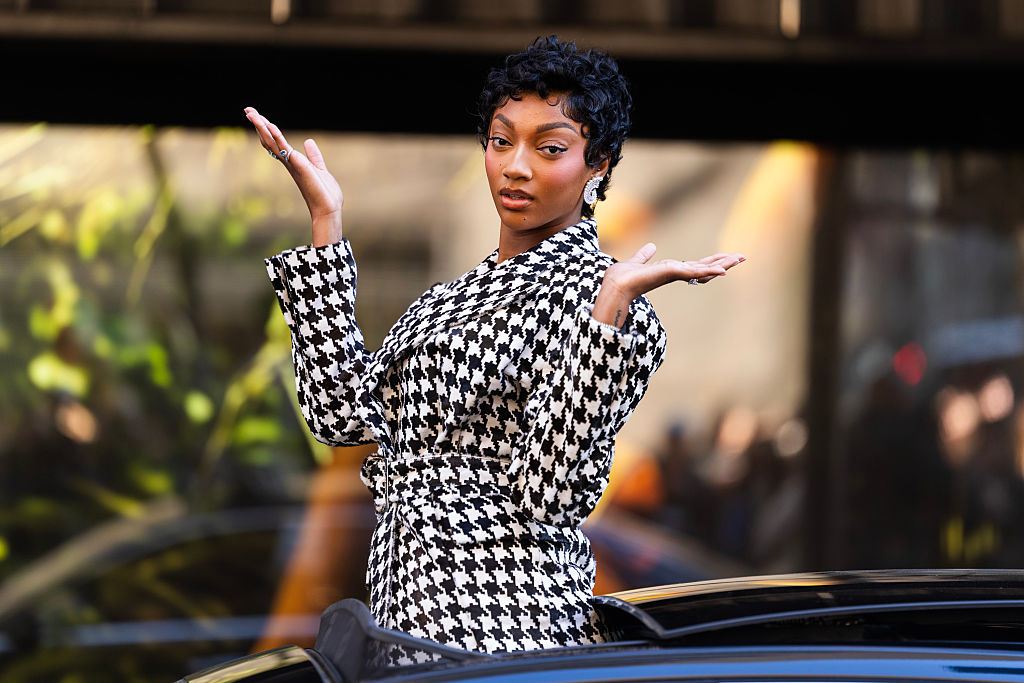
I’ve been cheering for Angel Reese since she was in college playing at LSU, and I have kept a close eye on her moves both on and off the court. If you’re the kind of fan I am and want to see your favorite players winning, happy, and supported while doing it, you’re probably just as overjoyed as I am that Reese is getting a fresh start with a new team.
I will leave all the prognostications about how Angel Reese’s unique talents as a basketball player will be an asset for the Atlanta Dream to the ESPNs of the world.
The reality is, Angel Reese is a star both on and off the court.
On the court last season, Reese averaged 14.7 points and 12.6 rebounds a game, and she holds the WNBA record for longest double-double streak (15) in WNBA history. She proved to be an overachiever off the court, too. Reese’s debut shoe line with Reebok sold out in multiple colorways within hours; her highly rated “Unapologetically Angel” podcast continues to release new episodes; and she has appeared in two feature films, “Goat” and “A House of Dynamite.”
Reese, who is often referred to adoringly as the “Bayou Barbie,” turned heads when she became the first pro athlete to collect her angel stripes walking in the highly coveted but rigidly selective Victoria’s Secret fashion show.
Suffice to say, Angel Reese’s addition to the Dream will be mutually beneficial.
The Atlanta Dream is a team she can reach new heights with. Last season, the Dream earned the number 3 seed in the playoffs and posted its best winning percentage in team history. With a fan base that is growing by leaps and bounds, last month the Dream announced it will be playing 5 games this season at the State Farm Arena, which accommodates 21,000 fans, compared to its usual home venue, the Gateway Center in College Park, which fits around 3,500.
Angel Reese is a transcendent talent, a cultural force, and one of the most magnetic players in the game. When critics joked that her rebounds were mostly off her own missed shots, dubbing them “Me Bounds,” she took that stat-based taunt and named one of the shoes in her successful Reebok line, “Me Bounds.” Reese is as much a cultural moment as she is an athlete, and she’s straddled both arenas with great skill and marketing savvy that belie her youth. The superstar phenom turns 24 next month.
Among my group of friends who are WNBA fans, the Angel Reese trade was happy news in large part because we all understood what it feels like to work for an organization where you don’t feel supported and where your growth is not made a priority no matter how talented you are.
Reese’s unhappiness in Chicago was well documented and widely understood. The Sky fired the one coach (Teresa Weatherspoon) that Reese trusted, failed to build a competitive roster around their franchise player, and then suspended her for publicly calling out the front office for not doing so. In essence, they were punishing her for having standards and for wanting the best possible chance to win.
In her social media posts announcing her departure from the Sky, she graciously posted a heartfelt video to Chicago and Sky fans, thanking them for their support and the impact they’ve had on her.
Now that Angel has her dream, we are all bracing for free agency trades and the WNBA draft, and collectively hoping that our favorite Black women players don’t end up with the Indiana Fever.
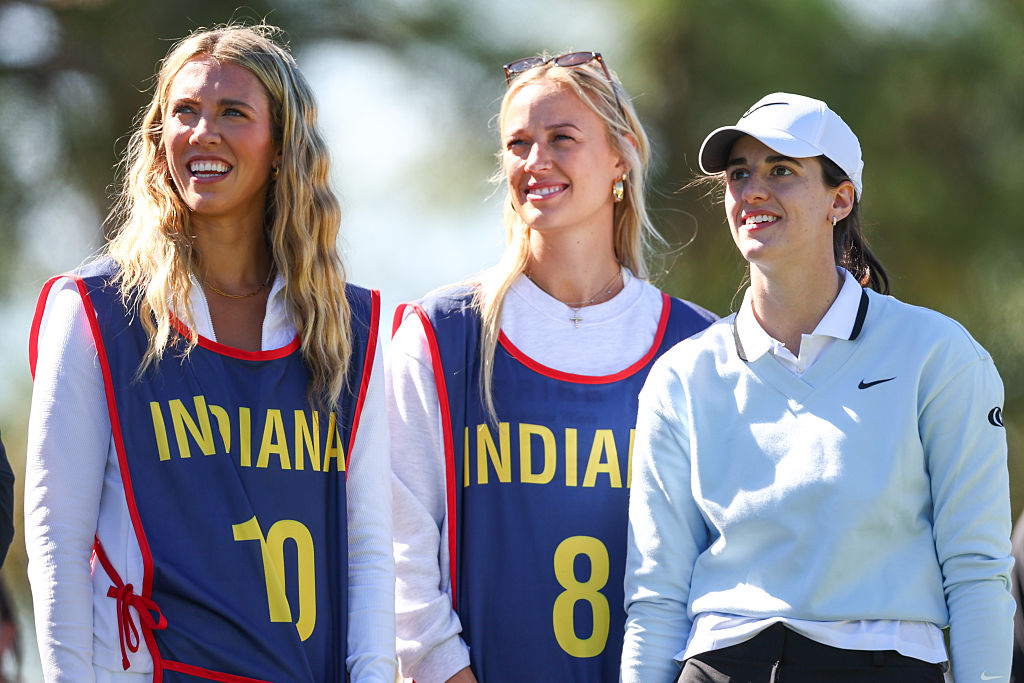
Since former University of Iowa player Caitlin Clark joined the Fever, the team has come to be defined by a very distinct racial architecture that has brought legions of fans in while alienating many of the team’s Black fans and some of the Black players who have been on their roster.
I know several Black women who were longtime Indiana Fever season ticket holders who chose not to renew because of the racial animus they witnessed during home games and from players who have proven not to be allies to the Black women they play with in the league.
One needed only to watch Fever games last season to understand why. On more than one occasion, Fever fans sitting courtside were ejected from their home arena for harassing Black players from opposing teams. Players have also weighed in. In 2024, WNBA player, Alyssa Thomas, who was playing for the Connecticut Sun at the time, shared with reporters, “I think that in my 11-year career I never experienced the racial comments like from the Indiana Fever fan base,” she said. “It’s unacceptable and honestly there’s no place for it. We’ve been professional throughout the whole entire thing, but I’ve never been called the things that I’ve been called on social media, and there’s no place for it.”
The seemingly loudest, and by measure of actual harm, most destructive segment of Clark’s fan base has brought racism into a league where the majority of its players are Black. Their racism, deployed openly in comments sections, has come paired with the confidence of people who believe wholeheartedly that their favorite player is the reason why people are watching women’s basketball. To put it plainly, they think both Clark’s performance on the court and what they see as a larger cultural moment is on their side.
The singular-savior narrative around Clark collapses fairly quickly when we consider the success of Unrivaled, the 3×3 basketball league founded by two WNBA stars, Napheesa Collier and Breanna Stewart. The league, founded in 2023, before Clark set foot on a basketball court as a professional player, just raised $340 million in its second year, sold out arenas in Philadelphia, and did it all without Clark playing on any of its rosters.
Unrivaled has done more for women’s basketball than Clark has. In fact, its success had a ripple effect at the negotiating table for the WNBA’s new collective bargaining agreement. It is widely understood that a significant selling point of higher player salaries was the leverage Unrivaled’s success gave players.
It’s been an open secret in the league that Black players who have cycled through the Indiana Fever have also been unhappy and have seemed traumatized in a “blink two times if you need to be saved” sort of way. Most who have left have been tight-lipped about the origins of their unhappiness in ways all too familiar to any Black woman who has faced racial discrimination and for whom concerns mount about our reputations being tarnished as difficult to work with or being ostracized as a whistleblower should we speak up. Also, most times, HR policies prevent us from speaking publicly about what we are experiencing.
To any avid fan who is paying close attention, the signs of the discomfort some Black players on the Indiana Fever must feel have been there all along, leaving a permanent stain on Clark’s legacy and the legacy of the Fever franchise she represents.
A clear and troubling pattern has emerged in how Clark and her close on-court circle have presented themselves and interacted with others in the organization.
In June of 2025, ahead of the Indiana Fever’s match-up with the Aces, Fever player Sophie Cunningham showed up to the game wearing a custom-made t-shirt with a picture of herself, Caitlin Clark, and Lexie Hill on it, accompanied by the phrase “tres leches” (Spanish for three milks). Tres leches is best known as a Latin American dessert.
While, in this context, the trio might have meant the “tres leches” nickname as something light and playful, the imagery and language carry racial weight. I viewed it immediately through the history of milk symbolism in certain extremist white supremacist subcultures, where memes and videos have circulated using milk as a sign promoting racial purity. In white supremacist circles, milk is used as a marker to point out that people with pure white DNA have lower rates of lactose intolerance and are therefore superior to other races, who historically have higher rates.
While the players were not asked directly by reporters if they intended to invoke that history by wearing the shirt, symbols don’t operate solely at the level of intent, and they most certainly don’t neutralize the impact. Instead, the branding of a white trio through that imagery registers as isolating, exclusionary, and reflective of racism and deeper cultural blind spots for them as players and for the team they represent.
Moments captured on broadcasts and circulating online with Clark and her “tres leches” crew have shown them being dismissive in tone towards Black team staff and game personnel, including security. Whether each individual moment is interpreted differently is less important than the cumulative effect. Racism is rarely black or white and patterns like this signal a hierarchy and mirror broader racial dynamics. They also build a dynamic that’s difficult to work in if you are a Black woman.
The league seems to enjoy the attention from the rivalries the larger racial hierarchy has spawned between WNBA players involving Clark, Black women players, and among fans. In a 2024 interview with CNBC, WNBA Commissioner Cathy Engelbert downplayed one of the more viral rivalries as a “Bird/Magic moment” and said it was good for business: “You need rivalry. That’s what makes people watch.”
Englebert’s comments weren’t well-received. She later apologized, saying she “missed the mark” and that she regretted she “didn’t express, in a clear and definitive way, condemnation of the hateful speech that is all too often directed at WNBA players on social media.”
PAIGE BUECKERS WOULD NEVER…..
Some have excused Clark’s role in this, saying that she’s too young to shoulder the weight of combatting racism and educating her fans on how not to be racist.
Another WNBA player, Paige Bueckers, has illustrated that it’s actually quite easy to be a white woman in a majority Black-dominated sport like women’s basketball. Bueckers, who is just 3 months older than Clark, established the blueprint years before the controversy and before either player entered the WNBA.
In her acceptance speech at the 2021 ESPN ESPY Awards, Bueckers, then just a 19-year-old college student, said about Black women basketball players, “They don’t get the media coverage that they deserve. They’ve given so much to the sport, the community, and society as a whole, and their value is undeniable.” She acknowledged her unique position as a white woman in a Black woman led sport and committed to showing up as an ally, “and to those names who are not yet learned, but I hope to share, I stand behind you and I continue to follow you, follow your lead and fight for you guys so I just want to say thank you for everything.”
Basketball is a team sport. Every player should aim to bring their teammates and fans together toward a common goal: winning.
Sports wouldn’t be sports without a healthy dose of trash talking. But to tarnish the league, its teams, and players by allowing racist digs is reprehensible and incredibly lazy. The only rivalries that should exist are the healthy ones that naturally develop between opposing teams.
All I know for sure is that this week I will be keeping a close eye on all player movements. I will continue to pray that my favorite players land (or remain) with teams that support them and provide a healthy environment that sets them up for success. On draft day, I will be rooting for my Dallas Wings in hopes that they choose Azzi Fudd as their No. 1 pick.
SEE ALSO:
On Dawn Staley, Black Women, And Disrespect In The Workplace
Does The WNBA Have A Racism Problem?