Strait Of Hormuz Still At Standstill Despite Ceasefire
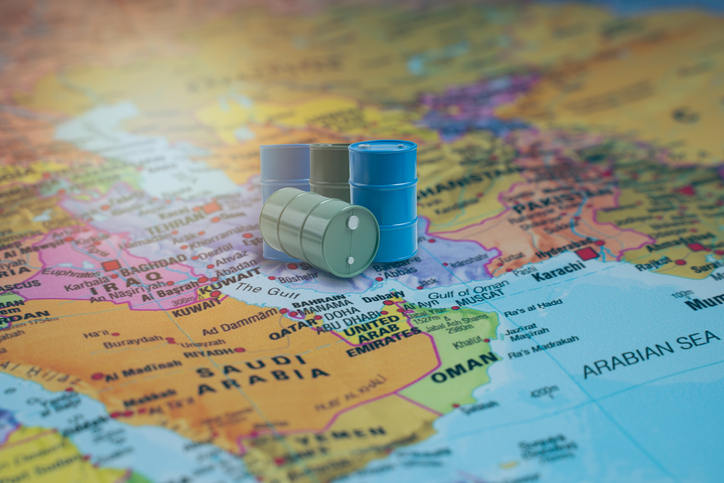
The Iran war has objectively been terrible for everyone. The United States and Israel’s decision to bomb Iran over nuclear weapons they don’t have, nor were close to having, has had a widespread, negative impact on the global economy. While the U.S. agreed to a two-week ceasefire with Iran on Tuesday, the Strait of Hormuz is still closed as Iran’s Islamic Revolutionary Guard Corps (IRGC) has told ships to continue using alternate routes.
The New York Times reports that only five ships passed through the Strait of Hormuz on Wednesday. That is significantly down from the 10 ships that passed through over the last five days, and the prewar average of 140 ships a day. The IRGC said that it would allow “safe passage” of ships through the strait, but that ships must coordinate their passage with the IRGC due to “technical limitations.” The IRGC added that there may be anti-ship mines planted within the Strait of Hormuz, so it should come as no surprise that there isn’t a line of ships queuing up to pass through.
In addition to Iran’s tightening grip on the Strait of Hormuz, another major obstacle to restoring the flow of shipments is the relative instability of the ceasefire. Iran has already accused Israel of violating the terms of the ceasefire with its continuous strikes on Lebanon. “It’s too unstable for anyone to commit,” Oscar Seikaly, chief executive of NSI Insurance Group, a maritime insurance brokerage, told the Times.
Shipping companies aren’t terribly optimistic about a swift return to the prewar status quo. “Returning to normal for our industry is weeks away,” Nils Haupt, communication chief at Hapag-Lloyd, one of the world’s largest shipping firms, told CNBC.
The company is “currently refraining” from transiting the Strait, based on its latest risk assessment. “It will take weeks, if not months, to reintroduce the original shipping schedules that we had before the start of the war,” Haupt added.
While the main talking point around the Strait of Hormuz’s closure has been oil prices, which are still high despite the ceasefire, there’s also concern that food prices will dramatically increase as much of the world’s fertilizer supply goes through the Strait of Hormuz. The longer it takes for the U.S. and Iran to bring a definitive end to the conflict, the risk of a global recession only increases.
Both Iran and the U.S. have declared victory following the ceasefire. In a statement released to Iranian media, Ayatollah Mojtaba Khamenei said the Iranian people are the “definitive victors” in the conflict.
“Today, it is clear before everyone’s eyes, the dawn of the Islamic Republic’s emergence as a great power, while the evil is facing the downhill slope of weakness,” Khamenei said in a statement read by an anchor on state TV.
Likewise, Defense Secretary Pete Hegseth declared the U.S. military campaign on Iran a “historic and overwhelming victory” during a news conference on Wednesday. He added that the U.S. armed forces “achieved every military objective” set out at the start of the war. If those objectives were to give Iran even more leverage over the Strait of Hormuz and make the Iranian people feel like building a nuclear weapon is necessary to deter U.S. and Israeli aggression, then job well done, folks.
SEE ALSO:
Everything We Know About The Conflict In Iran
Iran War Already Increasing Gas Prices, Mortgage Rates
From Groceries To Cyberattacks: How The Iran War Is Affecting The US