Karmelo Anthony Trial: Everything You Need To Know
Karmelo Anthony Murder Trial: Teen Found Guilty For 2025 Stabbing
- Possibility of video evidence may be a game-changer, as defense argues Anthony acted in self-defense.
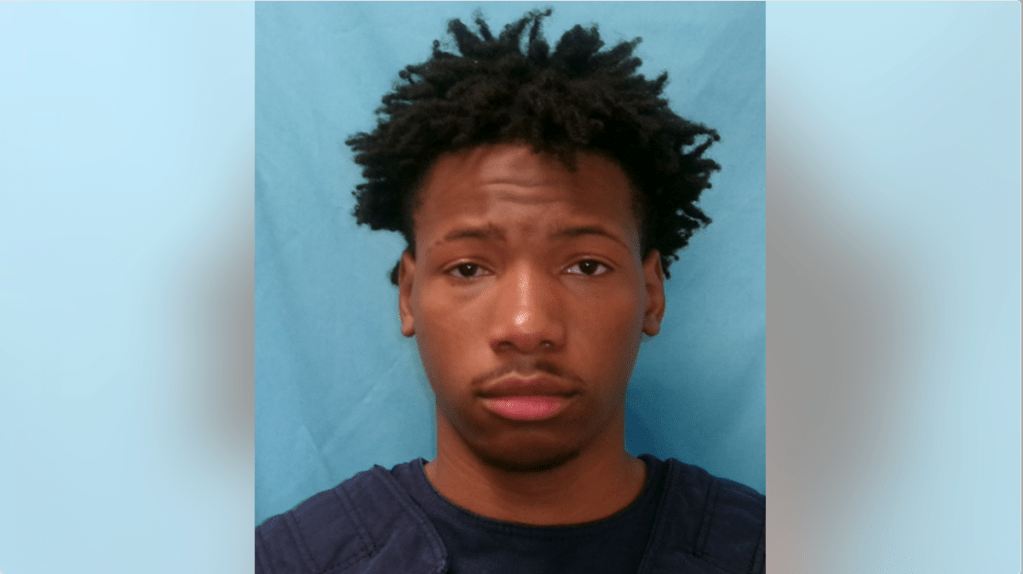
UPDATE — Tuesday, June 9, 2026, 4:45 p.m. EST
A verdict has been reached in the trial of Karmelo Anthony.
June 9, 2026: Karmelo Anthony Found Guilty of Murder:
After nearly three hours of deliberation, a jury on Tuesday found 19-year-old Karmelo Anthony guilty of fatally stabbing 17-year-old Austin Metcalf in 2025, according to NBC DFW.
Anthony showed little visible emotion as the verdict was announced and was escorted from the courtroom shortly afterward. The same jury will now determine his sentence. Under Texas law, a murder conviction carries a prison term ranging from five to 99 years.
As the case entered into the sentencing phase, Anthony’s mother, Kala Hayes, took the witness stand. Defense attorney Mike Howard offered her water and tissues before questioning her.
“He’s my oldest,” Hayes said. “He’ll always be my baby. I love him very much.”
Hayes became emotional and began crying while testifying. Observers in the courtroom noted that Anthony also appeared to be in tears.
As sentencing proceedings continue, the defense is expected to argue that the killing occurred under the immediate influence of “sudden passion.” Prosecutor Dewey Mitchell referenced the legal concept during jury selection, describing it as “a situation when someone is in such a state of emotion, based on something that just happened, that they don’t have time to cool off.”
If jurors determine that Anthony acted under sudden passion, the offense remains murder but the punishment range is reduced from that of a first-degree felony to that of a second-degree felony, carrying a potential prison sentence of 2 to 20 years.
June 9, 2026: Jury Instructions Take Shape & Closing Arguments Begin.
During closing arguments on Tuesday, defense attorney Mike Howard argued that Austin Metcalf had no legal right to use force to remove Karmelo Anthony from the Memorial High School tent. While Howard acknowledged that Metcalf was within his rights to ask Anthony to leave, he contended that Metcalf had no legal authority to physically touch or eject him, noting that the incident occurred in a public setting. Anthony has pleaded not guilty to the incident.
Collin County First Assistant District Attorney Bill Wirskye challenged Howard’s argument, telling the jury:
“Do not let them turn a threat into a warning,” according to NBC DFW. “Do not let them turn a taunting, provoking threat into some kind of benign warning.”
He added:
“He took a knife to a track meet,” Wirskye said. ‘He had a secret, he kept it hidden… He was the only one with a knife that day. He was always going to come out on top that day.”
Earlier in the morning, Judge John Roach informed the court that he had been working with attorneys on the final jury instructions that will guide deliberations. Howard objected to the inclusion of a “provoking the difficulty” instruction, a legal doctrine that can limit or eliminate a defendant’s right to claim self-defense, according to NBC DFW. Under the rule, a defendant may lose the ability to assert self-defense if jurors determine that the individual intentionally provoked a confrontation as a pretext to use force.
Judge Roach denied the defense’s objection and allowed the instruction to remain.
The court also rejected the defense’s request to include criminally negligent homicide as a possible verdict. However, Roach approved the inclusion of manslaughter as a lesser-included offense.
Under the jury charge, a murder conviction would require jurors to find that Anthony intentionally or knowingly caused death or serious bodily injury through his actions. To convict Anthony of manslaughter, jurors would need to determine that he acted recklessly or consciously disregarded a substantial and unjustifiable risk that resulted in death or serious bodily injury.
Jurors may also conclude that Anthony is not guilty.
June 8, 2026: Defense Rests Its Case.
The jury has a lot to consider ahead of deliberations. The defense concluded its case Monday after prosecutors challenged the credibility of a key witness regarding whether Anthony was surrounded by students before the fatal stabbing of 17-year-old Austin Metcalf.
A Centennial High School student and teammate of Anthony testified that the defendant appeared visibly emotional in the aftermath of the incident.
“He was crying and there was a coach comforting him,” the witness said. “I would say distraught is the best way to describe it.”
The student testified that members of Frisco Centennial’s track team (Anthony’s team) had gathered inside a nearby baseball dugout to avoid the rain. According to his testimony, Anthony later walked toward the Memorial High School tent, where Metcalf was stationed. Defense attorneys have maintained that Anthony entered the tent to speak with a friend and acted in self-defense when confronted by Austin Metcalf and his twin brother, Hunter, to leave the area.
“I heard loud voices over there and when I looked, people were not facing the field anymore,” he said. “They were looking back.”
The witness said he moved toward the Memorial tent after noticing the commotion.
“What I saw was Austin pull up his shirt and say he got stabbed,” he testified, adding that he did not witness the actual stabbing.
During cross-examination, Wirskye challenged the witness’s earlier claims that Anthony had been surrounded before the stabbing occurred. Prosecutors presented surveillance footage that appeared to show the witness was not looking toward the tent during the critical moments.
“My impression when we first met you was that you thought when you saw Karmelo surrounded it was before the stabbing?” Wirskye asked.
“Yes, sir,” the witness said.
“That was actually after the stabbing?” Wirskye asked. “When you and I met you told me you thought it was before the stabbing?”
“I could not really tell,” the witness responded. “I thought it was as the stabbing was happening.”
“You know you’re wrong?” Wirskye asked.
“Yes, sir,” the witness said.
The defense also called Frisco Police Detective Beau Riley, who responded to the scene and interviewed witnesses. Riley testified that the knife Anthony carried was legal to possess in Texas, including at athletic venues.
June 6, 2026: Prosecutors Focus on Alleged Provocation before resting.
Earlier in the trial, prosecutors presented testimony suggesting Anthony provoked students after being asked to leave the Memorial High School tent during the weather delay.
During Saturday’s trial, a 16-year-old Memorial High School student testified that Anthony became confrontational when asked to leave. According to the witness, Anthony referred to students as “a bunch of pussies” and claimed they were “not going to do nothing about it.”
When questioned by prosecutors about who initiated the confrontation, the witness testified:
“Yes, Karmelo put his hand in the bag and said five times, ’touch me and see what happens,” the witness testified. “Austin said he was not going to touch the guy; he was calm.”
The same witness later testified that Metcalf “did not deserve” to be killed and characterized Anthony’s actions as murder.
Another 17-year-old Memorial High School student testified that Anthony was unknown to those gathered inside the tent.
“If you are a guest, you are supposed to be on the other side of the stadium,” the witness said.
Wirskye then asked whether it appeared Anthony was intentionally provoking Metcalf.
“Yes,” the witness testified. “He put his hand on his shoulder … you do not expect to see someone get stabbed at a track meet.”
“Was there any reason you saw for Karmelo Anthony to stab Austin Metcalf?” Wirskye asked. “Was Karmelo Anthony acting in self-defense?”
“No,” the witness said. “That’s lethal force against non-lethal force.”
With testimony now complete, jurors will soon begin deliberating over a case that has attracted national attention and sparked intense public debate. Neither prosecutors nor defense attorneys have publicly commented on the proceedings due to a gag order that remains in effect.
If convicted of murder, Anthony faces a sentence ranging from five years to life in prison.
June 4, 2026: Trial Kicks Off.
According to CBS, the first day of testimony featured coaches, an athletic trainer, and other individuals who rushed to help Metcalf in the moments after the stabbing. Jurors were also shown video footage from the track meet, shedding new light on the events leading up to the deadly encounter while raising additional questions about what transpired before the incident.
Before testimony began, Anthony, now 19, entered a not guilty plea. The defense maintains that Anthony acted in self-defense, while prosecutors argue the stabbing was an excessive and unjustified response to a physical altercation.
Inside the packed courtroom, members of both the Anthony and Metcalf families sat on opposite sides of the gallery, underscoring the emotional weight of the proceedings. The tension only intensified as prosecutors and defense attorneys delivered sharply contrasting opening statements.
Addressing the jury, prosecutor Bill Wirskye rejected the notion that race or self-defense were central issues in the case. He claimed Anthony “provoked” Metcalf’s death.
“This case has nothing to do with race, this case has nothing to do with self-defense … This was an unprovoked, unjustified murder, it is senseless,” Wirskye said, according to CBS.
Defense attorney Mike Howard offered a sharply different perspective, acknowledging that there had been a great deal of “noise” surrounding the case before shifting the focus to Anthony’s character. Referring to his client by the nickname “Melo,” Howard tried to paint a picture of the teenager beyond the headlines and public controversy.
“Melo is a son, he’s a brother, the oldest of four,” Howard said, according to NBC DFW. “He’s a friend, boyfriend, he’s an A student with a 3.7 GPA. He’s holding down two jobs while being an athlete and student… baseball, football, track.”
Later in the day, the prosecution called expert witness Mark Porter to analyze surveillance footage from the track meet. Porter walked jurors through a timeline of the events captured on video, noting that Anthony first appeared on camera at approximately 9:52 a.m. and was later seen approaching the entrance of Kuykendall Stadium.
Additional footage showed Metcalf arriving at his school’s tent around 9:54 a.m. Porter testified that at approximately 10 a.m., movement could be seen beneath the tent where the confrontation occurred. According to Porter, the video appeared to show one person pushing another under the tent. However, he acknowledged that viewers could not determine from the footage whether a verbal argument had begun prior to the physical interaction.
The state’s next witness, Robert Starr, head track coach at Memorial High School and an assistant football coach, provided context about the district track meet. Starr explained that the event featured seven competing schools and served as a qualifying meet for future competitions.
Starr told jurors that Austin and his twin brother, Hunter Metcalf, competed in shot put and discus events. As the host school, Memorial High School relied on several student-athletes to assist with setup and logistics throughout the day. Starr testified that he specifically asked Austin and other athletes to step into leadership roles that morning by helping transport equipment and set up tents.
He later recalled noticing a “commotion” near one of the tents and attempted to make his way toward the area.
One of the day’s most emotional testimonies came from athletic trainer Tiffany Whiteaker, who described the moments immediately following the stabbing. Whiteaker testified that she initially heard screaming and commotion from the stands before rushing toward a crowd gathered on the field.
She said a student, Hudson Dean, informed her that Anthony had stabbed Metcalf and “threw the knife into the stands.”
Whiteaker testified that she immediately recognized Metcalf and began lifesaving efforts. While her partner performed chest compressions, Whiteaker administered rescue breaths and continued CPR until paramedics arrived.
Although she observed Metcalf regain some color, Whiteaker said she quickly realized the severity of his injury.
The prosecution also called Joshua Rebmann, an Army veteran and Liberty High School defensive coordinator, who was working as a throwing coach at the meet. Rebmann testified that he rushed to assist after hearing the commotion and used his military medical training to apply pressure to what he described as a “good-sized wound” in Metcalf’s abdomen.
He recalled having to move Hunter Metcalf away from his brother in order to provide treatment, describing Hunter as “freaking out.”
Rebmann further testified that Austin’s gasping breaths indicated his brain was being deprived of oxygen. Though he recognized the signs, he chose not to voice his concerns aloud because he did not want to extinguish the hope others still held for Metcalf’s survival.
According to Rebmann, he already knew Austin was gone.
During cross-examination, defense attorney Toby Shook highlighted Anthony’s behavior immediately following the incident. Whiteaker agreed that Anthony did not attempt to flee the scene, remained near the track, and appeared visibly upset and emotional.
The final witness of the day was Heritage High School head football coach Vincent Hooper, who testified that students alerted him that someone had been stabbed. Hooper said Whiteaker brought Anthony to him and instructed him not to allow the teenager to leave.
According to Hooper, Anthony immediately admitted what had happened.
“He put his hands on me. I stabbed him,” Anthony allegedly told the coach.
Hooper testified that he tried to explain the gravity of the situation, warning Anthony that if Metcalf died, he “had changed the rest of his life.”
Anthony responded, “He’s not going to die,” but Hooper said the teen became emotional and started crying when he replied, “But if he does…”
Hooper told jurors it appeared the reality of the situation was “not registering in his mind” at first. He said the two embraced as they stood together near the track. However, after seeing Metcalf lying in a pool of blood, Hooper said the seriousness of the situation finally appeared to sink in.
The trial is expected to continue with additional witness testimony and evidence in the coming days as jurors work to determine whether Anthony acted in self-defense or committed murder.
Karmelo Anthony Trial: June 1, 2026: Jury selection began.
The trial officially kicked off on June 1 at the Collin County Courthouse in McKinney, where attorneys began the difficult task of selecting 12 jurors from a pool of roughly 250 candidates, according to reports from ABC News and WFAA. Anticipating heavy public interest, Judge John Roach Jr. has taken extraordinary measures to control the proceedings. Cameras, livestreams, and audio recordings have been banned from the courtroom, a security perimeter has been established around parts of the courthouse to prevent protests from erupting. Notably, video and photos obtained by the Dallas Morning News on June 1 captured protesters chanting in favor of Anthony outside the courtroom.
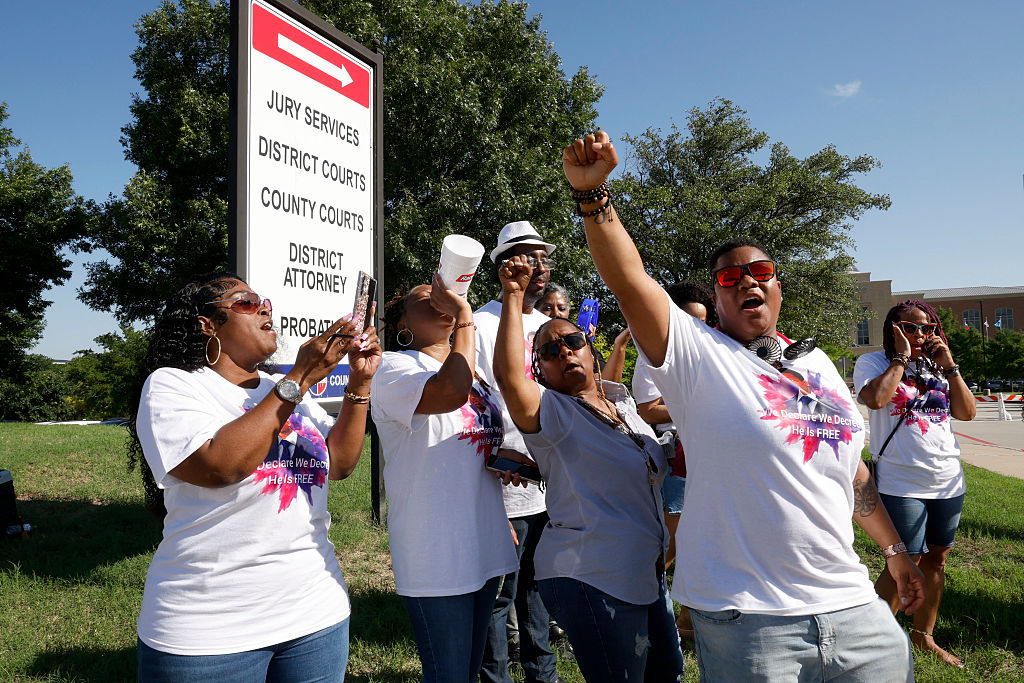
Additionally, a gag order remains in place, preventing attorneys, investigators, witnesses, and others involved in the case from publicly discussing it. Only a team of reporters from WFAA will be allowed to cover the case from inside the courtroom, the outlet noted.
“Due to the significant public and media interest in this case, the Court finds that specific procedures are necessary to ensure the Defendant’s right to a fair and impartial trial, the orderly administration of justice, the safety and security of all participants, and reasonable public access consistent with constitutional requirements,” Roach wrote in an order governing the proceedings, according to ABC News.
Karmelo Anthony’s age has already become a big challenge among potential jurors.
Almost immediately, jury selection revealed one of the biggest challenges facing both sides: Anthony’s age. Although he is now 18, he was only 17 when the stabbing occurred. Under Texas law, however, 17-year-olds are prosecuted as adults. Per WFAA, on day two of jury selection, which took place Wednesday, prosecutors reminded potential jurors that Anthony faces a first-degree murder charge carrying a punishment range of “five to 99 years to life” if convicted.
“Is there anybody who cannot consider life for a punishment?” chief felony prosecutor Dewey Mitchell asked prospective jurors.
The question exposed a clear divide among the panel. Several jurors struggled with the idea of imposing such a severe sentence on someone they viewed as a teenager. Some remarked that “he looks like a child,” while others admitted they would have difficulty considering a life sentence regardless of the evidence.
One prospective juror acknowledged the internal conflict many seemed to share, saying: “People are going to think I’m a monster but…I have a hard time just considering five [years].”
As questioning continued, concerns about Anthony’s youth surfaced repeatedly. Mitchell asked potential jurors whether the defendant’s age would affect their ability to fairly judge the case.
One panelist responded: “I don’t think I can make a decision about somebody so young. One mistake, one argument, one conflict, you can’t say he’s a bad person.”
Another prospective juror drew a visible reaction from observers when he stated: “I don’t know if I feel right putting a brother in jail.”
Mitchell also appeared to hint at a central prosecution argument by challenging the boundaries of self-defense. “You don’t get to provoke someone and then use force,” he told the jury panel.
What happened between Karmelo Anthony and Austin Metcalf?
At the center of the case is what happened on April 2, 2025, at David Kuykendall Stadium. According to investigators, Anthony, then a student-athlete at Frisco Centennial High School, was sitting beneath a Memorial High School team tent when Metcalf approached him and told him to leave. Police say the encounter quickly escalated. Anthony allegedly reached into his backpack, produced a pocketknife, and warned Metcalf, “Touch me and see what happens.”
Authorities allege that Metcalf then pushed or grabbed Anthony while attempting to remove him from the tent. Seconds later, prosecutors say, Anthony stabbed Metcalf once in the chest. The wound pierced Metcalf’s heart. He was rushed to a nearby hospital but died shortly afterward. Anthony has consistently maintained that he acted in self-defense and feared for his life, while prosecutors argue the stabbing was an excessive and unjustified response to a physical confrontation.
One lawyer claimed there was video evidence of the incident, which could be a game-changer.
Adding another layer of intrigue to the trial is the possibility that video evidence exists. During an interview with Fox Live Now on Monday, Defense attorney Jaqueline Goodman suggested that footage of the altercation may have been reviewed by the court but remains unseen by the public.
Goodman also stressed the importance of finding jurors capable of setting aside preconceived opinions in a case that has become a lightning rod for public debate. She noted that jurors must be able to “set aside their own biases” in order to reach a fair verdict.
Other concerns.
Outside the courtroom, the case has become a flashpoint in broader discussions about race, self-defense, and the criminal justice system. Anthony’s family reportedly moved from their home after facing harassment tied to the case. His supporters have frequently compared his situation to that of Kyle Rittenhouse, arguing that Anthony deserves the same presumption of innocence and opportunity to argue self-defense before a jury. Rittenhouse was acquitted in 2021 after jurors found he acted in self-defense during the fatal shootings that occurred amid unrest in Kenosha, Wisconsin.
While the legal battle plays out, Anthony remains free on bond. His original $1 million bond was later reduced to $250,000 by a Collin County judge. Court records show he remains under strict conditions, including house arrest, constant supervision by a parent or designated adult, and a prohibition on contacting Metcalf’s family. He must also obtain court approval before leaving his home.
Now, after months of legal filings, public debate, and national attention, the case is finally moving toward the moment that matters most: 12 jurors weighing whether Anthony’s actions amounted to murder or self-defense.
SEE MORE:
Op-Ed: I Get Karmelo Anthony, I Carried A Knife To School Too


