Claudette Colvin, Civil Rights Heroine, Dies At 86
Claudette Colvin, Early Resister In Civil Rights Movement, Dies At 86
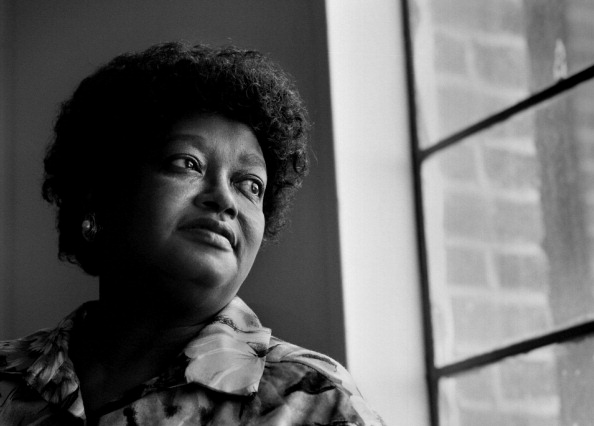
Claudette Colvin, whose name is forever tied to the Montgomery Bus Boycott that began in December 1955, has died at the age of 86.
A statement published on the Claudette Colvin Foundation website announced her passing.
It is with profound sadness that the Claudette Colvin Foundation and family announce the passing of Claudette Colvin, a beloved mother, grandmother, and civil rights pioneer. She leaves behind a legacy of courage that helped change the course of American history.
At age 15, Ms. Colvin was arrested on March 2, 1955, in Montgomery, Alabama, for violating bus segregation ordinances, nine months before Rosa Parks. Ms. Colvin was made a ward of the State and placed on indefinite probation.
Ms. Colvin is one of the two survivors of the Browder v. Gayle United States Supreme Court Case. She is known for her significant role in desegregating buses in Montgomery, Alabama, in 1956. She is one of the four black female plaintiffs, along with Aurelia Browder, Susie McDonald, and Mary Louise Smith, who filed a lawsuit challenging segregated bus seating in Montgomery, Alabama. Their attorney was Fred D. Gray. The case was successful, thus impacting public transportation throughout the United States, including trains, airplanes, and taxis.
To us, she was more than a historical figure. She was the heart of our family, wise, resilient, and grounded in faith. We will remember her laughter, her sharp wit, and her unwavering belief in justice and human dignity.
We are grateful for the love and respect shown to her throughout her life. Details for memorial arrangements will be shared at a later time by the Claudette Colvin Foundation and Roseboro Holdings.
Colvin was just 15 years old on March 2, 1955, when she boarded a city bus in Montgomery, Alabama. The city bus system was segregated at the time, and Black people were forced to sit at the back of the bus.
Just because the seats in the back were designated for Black people doesn’t mean they always got to keep them. In Claudette’s case, the bus driver demanded she give up her window seat so that a white woman passenger could be more comfortable.
From the Washington Post:
When the driver ordered her to give up her seat so a White woman could be more comfortable, Ms. Colvin — who had been studying Black history in class, learning about abolitionists like Harriet Tubman and Sojourner Truth — did not budge.
“History had me glued to the seat,” she said later, recalling how it felt as though Tubman and Truth had their hands on her shoulders, giving her “the courage to remain seated.”
While history would make Rosa Parks synonymous with the movement, Claudette Colvin’s act of resistance came a full nine months before Rosa Parks’.
More from WaPo:
While Parks’s stand proved far more consequential, leading to a year-long bus boycott that thrust the Rev. Martin Luther King Jr. to national prominence, Ms. Colvin’s arrest inaugurated what King described as a pivotal period for Black people in Montgomery. Community leaders formed a committee to meet with city and bus company officials, calling for improved treatment for Black passengers. Those discussions proved fruitless, King recalled in a memoir, but “fear and apathy” gradually gave way to “a new spirit of courage and self-respect.”
Historian David Garrow said in an interview for this obituary that “Colvin’s experience proved a major motivating force for adult Black activists” including Jo Ann Robinson, who helped launch and sustain the bus boycott. Another leading figure in the boycott, lawyer Fred Gray, brought the federal lawsuit that overturned bus segregation, with Ms. Colvin serving as a plaintiff and star witness.
“I don’t mean to take anything away from Mrs. Parks,” Gray said, “but Claudette gave all of us the moral courage to do what we did.”
In a 2009 interview with the New York Times related to a biography written about her winning a National Book Award, Colvin said, “Young people think Rosa Parks just sat down on a bus and ended segregation, but that wasn’t the case at all. Maybe by telling my story, something I was afraid to do for a long time, kids will have a better understanding about what the civil rights movement was about.”
Montgomery, Alabama, Mayor Steven Reed released the following statement, according to WAKA:
“Today, Montgomery and the nation mourn the passing of a civil rights icon, Claudette Colvin. We extend our deepest condolences to her family, loved ones, and all who drew strength from her courage and conviction. Before the world fully understood the power of the Montgomery Bus Boycott, a 15-year-old Claudette Colvin refused to give up her seat on a city bus. She did so with clarity, courage, and an unshakable belief in her own dignity.
“Her action helped lay the legal and moral foundation for the movement that would change America. For decades, her bravery was too often overlooked.
“Claudette Colvin’s life reminds us that movements are built not only by those whose names are most familiar, but by those whose courage comes early, quietly, and at great personal cost.
“Her legacy challenges us to tell the full truth of our history and to honor every voice that helped bend the arc toward justice.
“May she rest in peace, and may her courage continue to inspire Montgomery and the nation to stand for what is right—even when the world is not yet ready to listen.”
It’s worth noting that despite the gains made by the Montgomery Bus Boycott, Claudette Colvin’s arrest on that day in March 1955 was not expunged from her record until nearly 67 years later, in 2021, when Colvin was 82.
Rest in power, Claudette Colvin.
SEE ALSO:
5 Things You May Not Know About The Montgomery Bus Boycott
Claudette Colvin’s 1955 Bus Protest Arrest Finally Expunged
Black History Month: The Women Behind The Veil
Anthony Mackie Directing Biopic About Iconic Claudette Colvin