After Trump's Attacks On DEI, Where Do We Go From Here?
A Year Into Trump’s Attacks On Equity, Diversity And Inclusion, Where Do We Go From Here?
For Black people sensitive to cruel ironies, this week requires a lot of deep breaths.
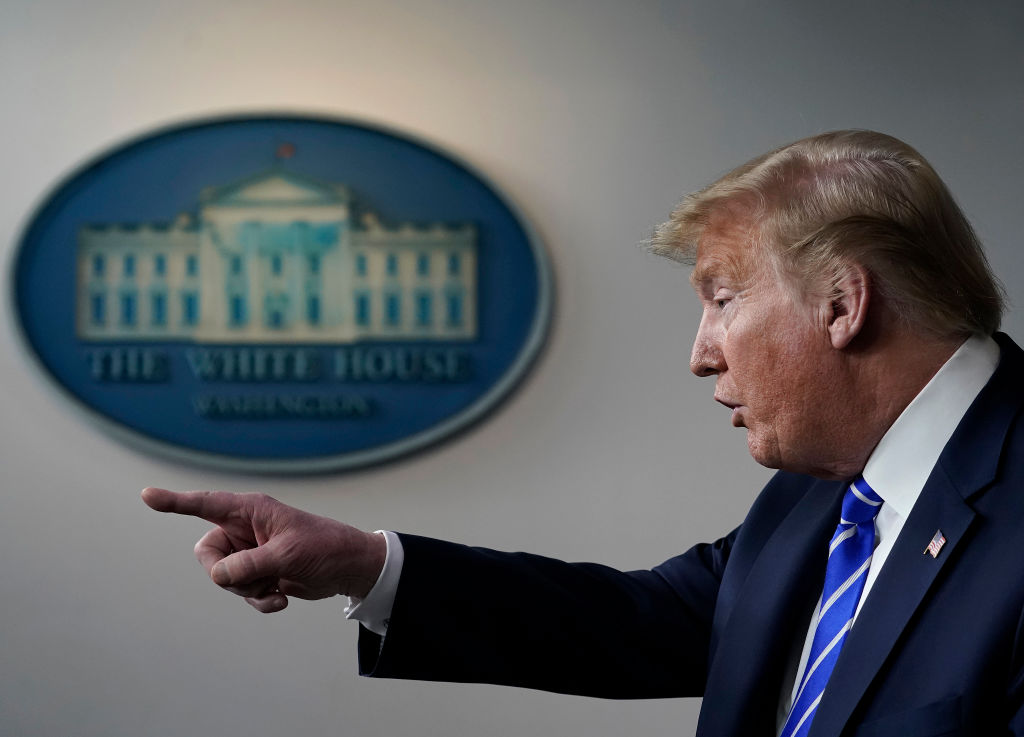
Monday was the federal holiday dedicated to Rev. Dr. Martin Luther King, Jr., and the larger struggle for equality and freedom his name represents to most of us. But Tuesday, Jan. 20, marked the one-year anniversary of the large-scale attack on everything he embodied and stood for. It’s the day President Trump was inaugurated for a second time and almost immediately signed an Executive Order aimed at punishing anyone and anything that had to do with advancing diversity, equity, and inclusion in our country. (Months later, he also attacked the foundation of the Civil Rights Act, another attempt at making anti-Black discrimination legal again.)
Where We Are Now
In December, the top anti-discrimination authority in the country, the EEOC, issued this message by video: “Are you a white male who has experienced discrimination at work based on your race or sex? You may have a claim to recover money under federal civil rights laws. Contact the E.E.O.C. as soon as possible.” The video linked to a fact sheet on “DEI-related discrimination.”
Hitting Employment


Trump’s Executive Order was cleverly designed to take aim first at civil servants. In the months following this oppressive EO, around 300,000 Black women lost their jobs. The Department of Education, which had a majority non-white staff, saw a 46% reduction in staff. More than one-hundred years after Woodrow Wilson did something eerily similar, here we are.
In the face of private-sector workforce exclusion, federal employment was a pathway for many Black families to ascend to the middle class, secure health care, pensions, and stability for the future. Trump attempted to dismantle this as one of his first acts in office. He even directed federal agencies to investigate private companies for their DEI efforts, pressuring many corporations to eliminate or curtail their DEI initiatives.
Colleges and Universities
The same holds true for colleges and universities, with many caving in to the administration’s will. Even before Trump’s EO, in 2023, the Supreme Court struck down Affirmative Action in college admissions, declaring that race cannot be a factor for consideration — while leaving programs like legacy admissions in place — thereby upending decades of progress, the number of Black students enrolling at many colleges has since significantly dropped, leaving some campuses with Black populations as small as 2% of their freshman class.
At some elite universities, the share of Black students has fallen by nearly half since SCOTUS’s decision, and on almost all campuses, Black students account for a smaller portion of new students. In addition to all of this, the Trump administration froze billions of dollars in federal research grant money. More than 50 universities were also investigated as part of Trump’s push to end DEI. Many schools struggled to fill the gap left by the elimination of federal support, directly hurting students – especially minority students. Many universities have ended their DEI programs, scrapped scholarships that assisted applicants of color, and even scrubbed their websites of any mention of DEI.
Attacking All Of Us
One year on from Trump’s detrimental Executive Order, and the resulting ramifications are everywhere. In addition to direct job losses, significant drops in enrollment at colleges/universities, and a reduction in opportunities for upward mobility, the EO has altered protections for Black and Brown communities, women, the LGBTQIA+ community, and other marginalized groups. Because the requirements to comply with federal anti-discrimination laws while advancing equity have been abandoned or altered, the door to discrimination is now open.
They’re Just Getting Started
If 2025 was about canceling progressive programs and reversing civil rights gains, year two of Trump’s term will likely be about implementing mechanisms that actively encourage and legalize inequality and disparity.
When Defense Secretary Pete Hegseth talked about “male standards” and uttered phrases like “clean-shaven” skin, he was, in effect, laying the groundwork for establishing proactive discriminatory policies against Black people, women, and others. Without ensuring that every service member has an equal opportunity to perform their duties and thrive, not only is the possibility of bigotry very real, but it also impacts the overall morale and unity of members.
The Trump administration is also weaponizing immigration to go after certain groups of people, while terrorizing everyone in these neighborhoods. One need only look at the state of Minnesota. Trump is simultaneously attacking Black communities by using the excuse of immigration to go after money for essential services – trying to starve us of vital programs.
His administration is cutting funding for SNAP benefits, Obamacare subsidies, childcare programs, science research, and the Environmental Protection Agency. Trump said he wants to halt federal payments to several blue states and cities over their immigration policies beginning as early as Feb. 1. Such actions would result in cuts to nutrition programs, housing subsidies, health care initiatives, and so much more.
What We Can Do About It
The question before all of us in these unstable and dangerous times is simple: where do we go from here? The answer is not a single protest or a single election. It is a commitment to building leverage, because what we are up against is not just a president or a party; it is a project. And that project is trying to make unearned opportunity the operating standard of this country. Not ending discrimination, but normalizing it. Not “leveling the playing field,” but rewriting the rules so the powerful can shut doors, punish truth-tellers, and make exclusion the default.
That is why our response cannot stop at outrage. We have to create rewards and consequences, especially for corporations that ask us to buy their products and services by day, then attack our rights by night. Over the past year, we have watched companies quietly roll back commitments, cut DEI teams, scrub language from websites, and choose political comfort over community responsibility. They did it because they believed there would be no cost. We have to prove them wrong.
We have already seen what that looks like in real time. The Target boycott showed that everyday people can turn a corporation’s brand into a battlefield. It showed that we can quickly organize consumer power and public pressure, and that companies feel it when the story changes and the dollars move. The lesson is not that boycotts are easy or perfect; the lesson is that corporate behavior is not inevitable. It is responsive to incentives. And our job is to get smarter and more coordinated about how we set those incentives.
We also have to widen the fight beyond the checkout line. If corporations are going to bankroll, platform, and normalize this agenda, we have to engage the institutions that bankroll them. That means investors. It means pension funds, endowments, and foundations. It means asking who our money is backing, what our retirement systems are invested in, what our universities are holding, and whether any of it is helping underwrite people like Bill Ackman, who have placed themselves at the center of fueling these attacks while still donating to institutions that want to appear “above the fray.” There is nothing neutral about financing a backlash. Transparency is a start, but it is not the finish line. The point is to create pressure inside the financial system so that enabling discrimination becomes reputationally risky and financially costly.
We should take inspiration from what we’re seeing in Minneapolis right now. People there are not only demanding accountability from government – they are confronting businesses and corporations willing to enable abuse on the ground. That kind of local energy matters because it is tangible, specific, and harder to ignore. When communities organize where they live, where they shop, where they work, and where local officials and businesses have names and addresses, we can move faster and win more. Local fights can become national signals when they are connected and amplified.
None of this replaces the need to protect neighbors, support mutual aid, defend schools, and elect leaders who will fight. We need all of that. But we also need a strategy that matches the scale of what is happening. A strategy that changes the rules, builds infrastructure, and expands our capacity to act together. Dr. King understood that power is built, not wished for. If year one of this administration was about canceling programs and intimidating institutions, year two will be about making discrimination look normal and permanent. Our job is to make their agenda expensive, unpopular, and unsustainable – and to build something stronger in its place.