2 White Women Get Fired, Media 'Notices' Trump's Misogyny
Funny How It Took 2 White Women Getting Fired For Media Outlets To Notice Trump’s Misogyny. Black Women Always Knew
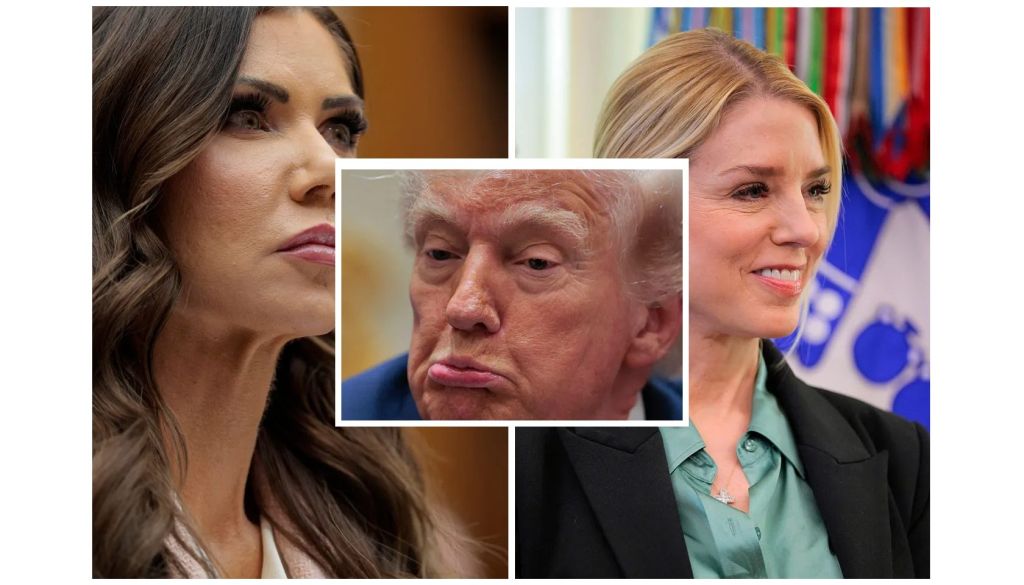
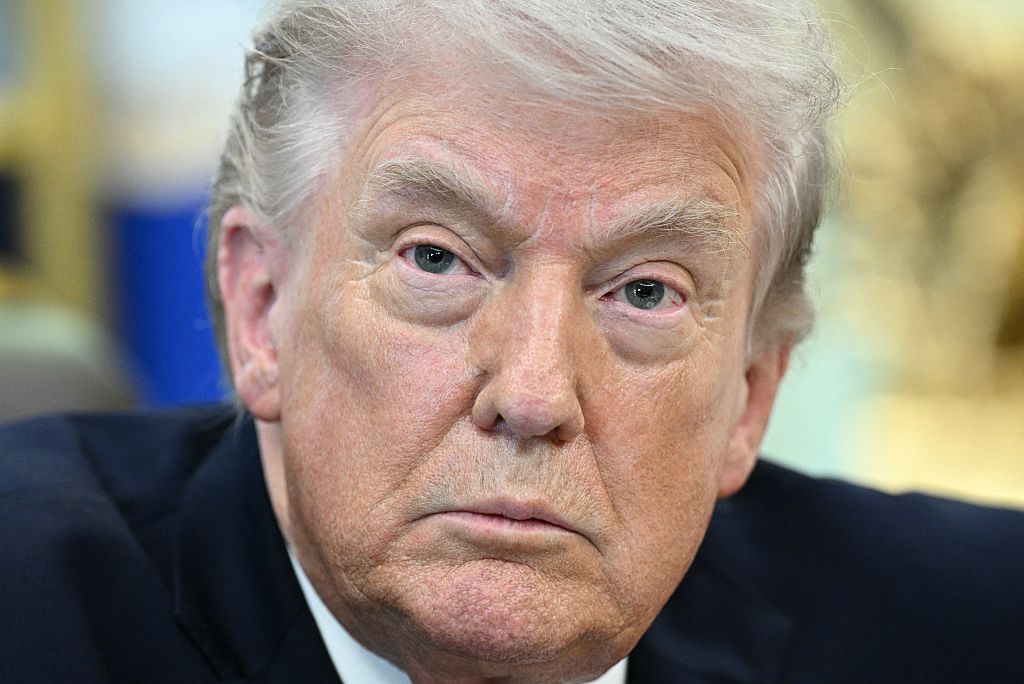
It ain’t a mystery that Donald Trump is a pathological misogynist, and always has been. This is a man whose misogyny is compulsive, chronic, and foundational to how he moves through the world. It is fixed in him and it will die with him.
He told a woman journalist, “quiet piggy.” He has been found liable for sexual assault. He was caught on tape bragging about grabbing women by the genitals without consent. He has cheated on multiple wives and paid hush money to an adult actress to cover it up. He has publicly ranked women’s bodies, mocked their appearances, and reduced them to objects for humiliation or use. He has kept company with one of the most notorious sex traffickers of our time.
None of this is new or hidden. And none of it required a breaking news alert.
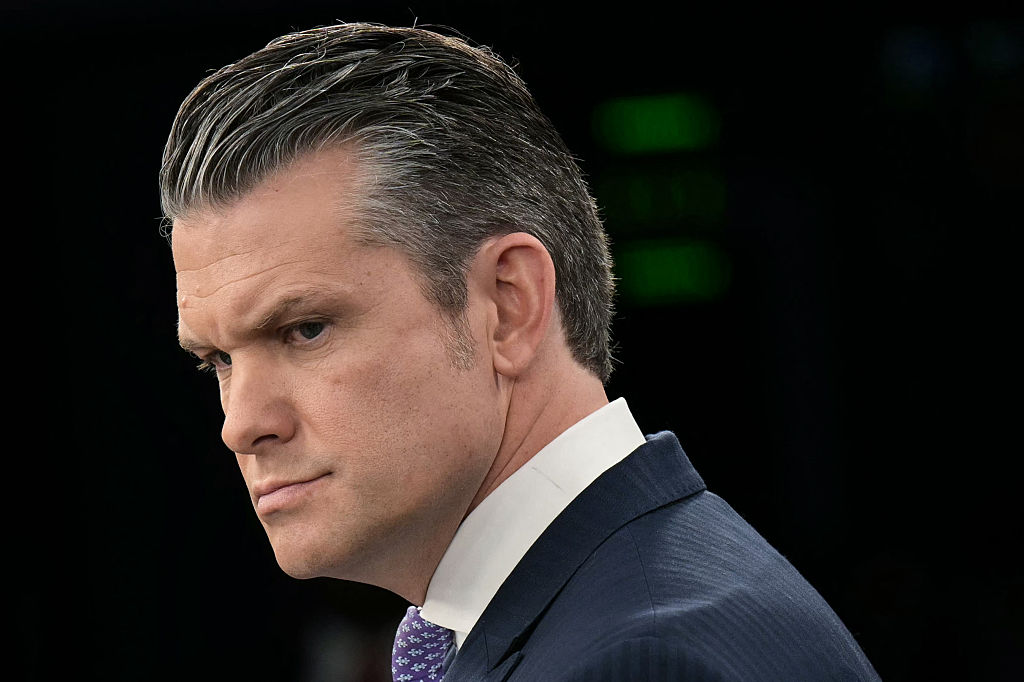
And yet, in the wake of Pam Bondi and Kristi Noem being fired, we’re suddenly being handed headlines that declare loudly, confidently, and with the urgency of a fresh discovery, that his administration is misogynistic, as if this is the moment the evidence finally came into focus.
The headlines are doing the most by stretching, reaching, and contorting themselves to rediscover Trump’s sexism like it just materialized yesterday. One headline announces, “Trump Administration Labeled ‘Misogynistic’ Following Dismissal of Pam Bondi and Kristi Noem,” Another declares,“‘Trump Targeting Women’: Tulsi Gabbard, Karoline Leavitt To Be Fired Next?.” Others follow suit: “Bondi Firing Fuels Gender Bias Claims As Midterms Loom,” “All the President’s Women Scapegoats,” “Trump Using Women As ‘Scapegoats’ For His Presidency’s Biggest Failures,” and “Trump Faces ‘Misogynistic Cabinet’ Claims After Firing Bondi, Noem.”
Take a look at what those headlines are actually doing.
They are not asking questions. They are issuing declarations and announcing that this is the moment misogyny has been confirmed, this is the evidence, this is when it becomes undeniable.
There’s a kind of wide-eyed tone running through this coverage—a performative realization that reads like: Wait . . . could this be misogyny? As if we are just now noticing. As if the story begins with two white women being fired, instead of a long, well-documented pattern of who gets degraded, used, and discarded by a powerful white man.
The Guardian ran this headline: Trump accused of running “misogynistic administration” after Bondi dismissal. Check the use of the word ‘after.’ That word is doing a lot of work.
Because “after” suggests a turning point or a moment where the evidence finally becomes clear enough to name. It reframes Trump’s misogyny as something newly revealed, rather than something long established. It’s not decades of his documented behavior, but two firings of white women in rapid succession. As if that’s the threshold. As if misogyny only becomes legible once it touches a certain kind of woman in a certain kind of position.
“After” only works if you were inside long enough for something to happen to you. It only works if you were ever considered useful, promotable, or protectable. For other women, especially Black women, there is no “after.” There is no shocking moment of recognition or delayed realization that something is wrong.
There is only the before and the through line.
Because if we’re being honest, Donald Trump did not suddenly become hostile to women the moment Pam Bondi and Kristi Noem were shown the door. Black women have been dealing with that hostility from the very beginning—without the benefit of proximity, without the illusion of protection, and without the courtesy of being “used” first.
Trump didn’t “turn” on Maxine Waters. He called her a “low-IQ individual” and made her a public punching bag. He didn’t gradually sour on Kamala Harris. He questioned her racial identity, called her “slow, low IQ,” and tried to reduce her to a diversity hire. He didn’t have a falling out with Letitia James or Fani Willis. He moved to discredit them the moment they exercised power over him, casting them as illegitimate, biased, and dangerous for daring to hold him accountable.
And it wasn’t limited to elected officials or prosecutors. Black women journalists April Ryan, Yamiche Alcindor, and Abby Phillip were dismissed, talked over, insulted by being called “losers” and “second-rate,” and treated as if asking questions was itself an act of aggression. He told a group of congresswomen of color to “go back” to the countries they came from. This is language pulled straight from the oldest playbook of racial exile. He amplified lies about Ruby Freeman and Shaye Moss, two Black women election workers, unleashing a mob that terrorized them, threatened their lives, and forced them into hiding. The pattern repeats: question their intelligence, undermine their legitimacy, cast them as hostile, and invite the MAGA hordes to turn on them.
None of this was a fallout. Nor was it an aftermath of a relationship that had deteriorated. All of this was the starting point. There is no entry phase for Black women in Trump’s world. There is no moment where they are embraced, elevated, or even tolerated before being discarded. They are not brought into the fold and then betrayed. They are marked, immediately, as adversaries, targets, and problems to be dealt with.
So when headlines hinge on the idea that misogyny has been revealed “after Bondi,” they are not just late, they are fundamentally misreading the structure of power.
And the question is: why?
Why does misogyny only become visible when white women are pushed out, but not when Black women are targeted from the outset?
Because the media still treats white women’s proximity to power as the default frame of womanhood. Because harm is only recognized as harm when it disrupts access to power, not when it enforces exclusion from it. Because it is easier and safer to tell a story about white women being used and discarded than to tell the truth about Black women being preemptively marked for attack.
So they wait.
They wait until white women fall out of favor. They wait until there is a clean, contained narrative about two firings, a pattern you can count, and a headline you can write without naming race. And then they call it misogyny. But for Black women, there was nothing to wait for. It was always there. But even that framing, the sudden rush to name misogyny once Bondi and Noem are out, comes with another sleight of hand. Because now we’re being asked to see them as victims.
On the heels of their firings, the commentary has shifted into something almost sympathetic: Trump uses women, then discards them. And just like that, Bondi and Noem are recast, not as villains and enforcers of power, but as casualties of it. But these women are not some random targets caught in the crossfire of a misogynistic system. Nor are they unsuspecting participants who were misled or manipulated.
They are willing actors.
They chose proximity to Trump. They defended and amplified him, and they helped carry out the very agenda that has harmed Black people, immigrants, women, children, and other marginalized communities. They benefited from his power while it served them. They stood beside him while he targeted others. They did not object when Black women were being degraded by him. They did not sound alarms when that hostility was the starting point.
And that’s the part that the media headlines and framing conveniently skip.
Because while these women are now being folded into a story about victimhood, Black women were never granted that narrative. When Trump attacked Maxine Waters, Kamala Harris, Letitia James, Fani Willis, April Ryan, Yamiche Alcindor, and Abby Phillip, there was no soft pivot to sympathy. No reflective headlines about misogyny. No collective pause to name harm. The attacks were immediate, normalized, and often treated as politics as usual.
So what people are reading as “he’s getting rid of the women first” is not a story about gender solidarity. It’s not even, at its core, a story about misogyny. It’s a story about disposability.
Trump does not operate on principle. He operates on utility. People are brought in, elevated, and discarded based on how useful they are in any given moment. Loyalty is transactional. Visibility is strategic. And the second someone becomes a liability, a distraction, or no longer serves the narrative, they are gone.
White women stand out in that cycle not because they are uniquely targeted, but because their presence is more visible and their exit is more narratively convenient and feeds a familiar storyline. But centering that storyline does something dangerous. It strips these women of agency and transforms them into victims. And it redirects attention away from the people who were actually harmed by the policies and actions they helped advance.
Misogyny is present in the Trump administration. Of course it is. But it is not the primary engine here. The engine is power, how it is accessed, performed, and revoked. It is loyalty theater, usefulness, and disposability And in that system, nobody is safe. But not everybody is a victim.
SEE ALSO:
Trump’s Obsession With And Against Black Women In Power
When Humbling Black Women Is A Political Game