To Caitlin Clark, From A Black Woman Who Loves The WNBA
An Open Letter To Caitlin Clark From A Black Woman Who Loves The WNBA
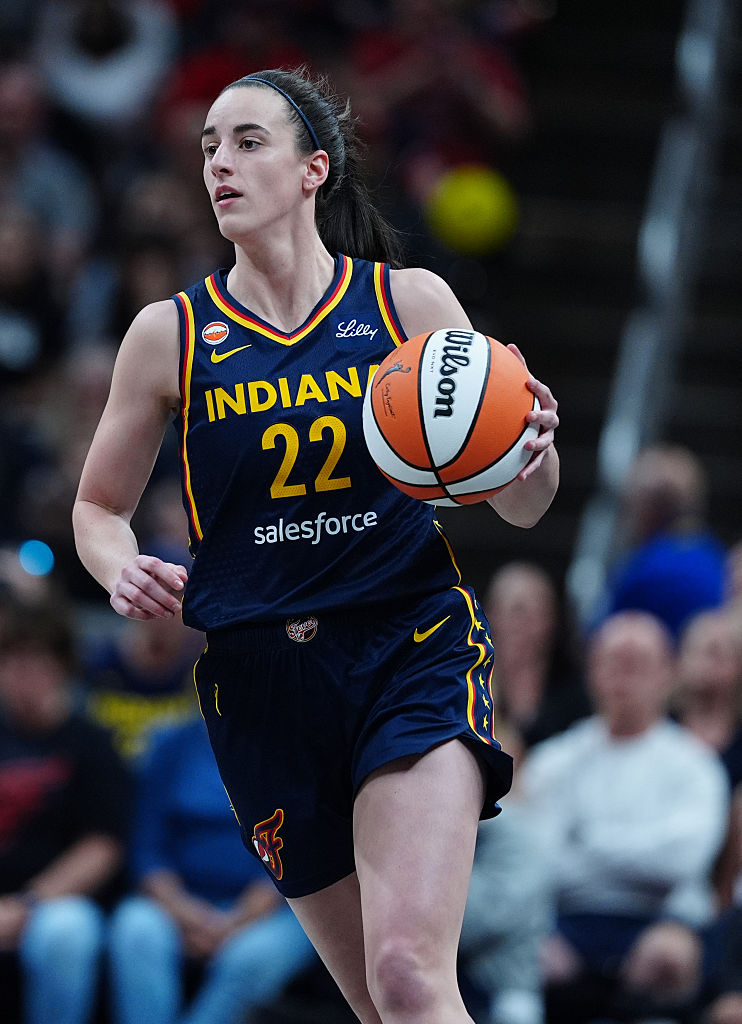
Dear Caitlin Clark,
I have been watching you play since you were a college student at Iowa. I am going to be transparent with you about why I’m writing to you now. I think you are mishandling a career and a platform that very few athletes in any sport are ever handed.
I am going to share some hard truths with you, but from a place of love—in my case, a love of basketball—and my hope that women’s basketball, in particular, has a bright future.
I am a Black woman who has loved basketball since I was a kid. I love the WNBA, and I have been watching since before the money and deluge of fans started flowing in.
I want you to think of this as the conversation a relative pulls you aside for, who has patiently watched you make the same mistakes so many times that they are forced to stop assuming you will course-correct on your own.
I will admit up front that I have my doubts about your capacity or desire to make adjustments. I recall a widely circulated clip from your March Madness run in 2024 that shows your father, sitting in the stands, yelling at you to stop barking at officials; you ignored him and kept going. If a man who has loved you your whole life can’t get a message through to you from the stands, I hold no illusions about the reach of an open letter from a stranger like me.
I want to start with your performance on the court. Your shooting splits in many games have not kept pace with the billing the league touts. The straight route through a great deal of the criticism you receive is a markedly unglamorous one, which is for your game to get demonstrably, undeniably better. This would require you to put in the joyless hours on the parts of your game you have dumbfoundedly been allowed to skip because your point totals, your crafty passes to your teammates, and your range from deep in three-point territory have been enough to dominate the highlight reels.
You have said you model your game on and admire players like Luka Doncic, Steph Curry, Maya Moore, and Jimmer Fredette. It’s a great shelf of players to reach for, but it’s also the shelf that regularly exposes your distance from those greats.
Curry’s excellence can in part be attributed to a decade of relentless off-ball movement and conditioning, a unique brand of off-the-court work you haven’t taken seriously. Doncic is a generational talent widely lauded for being an elite passer and rebounder, and his ability to create space for shots by changing his speed on the floor. Maya Moore was perhaps one of the best, if not the best, complete two-way players and a champion.
Then there’s Jimmer Fredette. You’ve called him one of your favorite players, the shooter you studied on YouTube as a kid until your shot mirrored his. The similarities don’t end there. Fredette was the most hyped player in college basketball, a National Player of the Year, and a one-man scoring machine and phenom. His game centered on his deep off-the-dribble shots, but his defense was a standing question mark. Sound familiar?

His NBA career was brief because his game leaned heavily on shooting, which didn’t hold up against competitors. The hype that had been built around him only led to a louder fall. It’s what happens when your hype outruns your production.
For the bulk of your career so far, analysts have lauded all the things you are getting right: your elite passing, your ability to make entertaining shots deep from 3-point land, and your ability to rack up points. What has frequently been absent from the analysis is your high turnover rate, your temper tantrums during games, your weaknesses on the defensive end, and your low field-goal percentages. All of these things cost your team, and they are all things that could end a post-season championship run for you.
Reggie Miller gave you feedback during your guest appearance on NBC’s NBA coverage. When asked who he’d compare you to in the NBA, he named Payton Pritchard, a genuinely good NBA guard who makes big shots late in the game.
No sooner had Miller answered than the cameras caught your smile fall. You wanted him to say “Steph Curry.” Maybe even LeBron. Everyone watching understood that you wanted to be compared to a higher caliber player, but wanting doesn’t mean getting. Reggie Miller’s answer was the feedback you needed to hear.
Feedback is a crucial part of growing, and so is being coached. You refuse both. You’ve walked away from coaches who’ve tried. Just this week, you were seen engaging in another seemingly heated back-and-forth with Indiana Fever assistant coach Briann January. There is the recurring scene of players, coaches, and their assistants having to physically move you away from referees. How did you get here?
Then, this week, in the hours leading up to the Fever matchup against the Tempo, there was the late notice that you were not playing because you needed to rest your sore back. Your coach, Stephanie White, spoke up for you, and your team ultimately received a warning from the league for failing to properly disclose your injury status earlier.
Reporters then reported that your back might not have been injured after all, but that the decision not to play was part of a broader strategic management plan to conserve your energy for a 44-game season.
During the game you sat out, footage circulated of you on the sidelines, moving with fluid, full-range-of-motion comfort alongside your teammate, Aaliyah Boston, which seemed to confirm that you may not have been injured after all. You seemed entirely at ease, your movement confident and seemingly unrestricted.
The contradiction between the injury or discomfort severe enough to keep you off the court and the ease with which your body moved when you believed the moment casual enough to go unnoticed, naturally raises questions that your team’s protective stance doesn’t quite resolve.
The wariness I feel about all of this goes deeper than whether you play in a game, what the box score says, or what it, by definition, doesn’t capture. Injuries are part of any professional sport and require time to heal. Physical intensity is part of your job, and the W has never lacked for women who are aggressive on the court with a mouth to match.
There are people who have a lot at stake when they end up in a viral clip with you. Last season, you got into it with a camera operator who you felt passed too close to you during a timeout. You swiped at his equipment, held him in a stare, and exchanged words with him. There was another incident when you and Sophie Cunningham seemed to challenge a security guard who was attempting to back you up.
How a person treats the staff around them is one of the more revealing tests of character. The broadcasting teams, including that camera operator, are the people who carry your deep three-pointers to the world. The security guards are the people who stand between you and the crowd that has, more than once, posed a threat to women in the league you play in. They are very often Black and brown, earning in a week what you likely clear from a single sponsored post on Instagram.
We also have to talk about the people who follow you, because most fan movements tend to mirror the person at their center. When footage of you shoving an opponent or cursing over a call makes waves online, your fans receive it as an appropriate response. They see you as a victim who is perpetually aggrieved.
Angel Reese has talked openly about the racism and death threats she’s received from your fans. So has your new teammate, Raven Johnson. DiJonai Carrington received death threats over an accidental eye poke. Alyssa Thomas said she had never been called the racist things she was called by Indiana Fever fans. You have called the behavior unacceptable, yet a wide distance still separates condemning racism casually and using your enormous platform to defend specific Black women by name. You have chosen to address the bare minimum.
Online trolls are often anonymous, which makes it easy for you to wave them away. The rest of the ecosystem you’ve built around yourself has names and faces, and you have chosen not to wave any of them away. You remained silent when you and two of your white teammates were nicknamed “Tres Leches” or three milks, a joke whose punchline is rooted in a white supremacist dog whistle. It needs to stop.
Country singer Morgan Wallen was recorded in 2021 shouting the “n-word,” a slur that has been aimed at Black women across the whole span of American history, including Black women who put on a WNBA jersey to go to work alongside you. That is the same slur your teammates have found in their inboxes and heard drifting down from the stands in your home arena.
Wallen titled his current tour “Still the Problem,” which lands as a confession and a brag, and you chose, on the night your team lost its home opener, with your entire evening free, to walk out of one Indianapolis arena and into another less than a mile away to help him kick off his show. You lent your face, your name, and the goodwill of a Black-built league to a man whose comeback runs directly through his use of a racial epithet.
You are allowed to enjoy country music and to believe in second chances. What you cannot do is pretend the choice sent no message. In a country this fluent in racial signals, the message of your allegiance was crystal clear. I have already written about this walkout in greater detail, so I will not restate the whole argument here.
What I will say is that your legacy is being written right now through the choices you are making. There are people paying attention to what you are saying and what you are not saying. Who you are standing up for and who you aren’t. This league handed you a platform it spent 30 years building, mostly on the backs of Black women who are extremely talented yet never were rewarded with even a fraction of your spotlight.
So what am I asking of you? I am asking you to do the work. Not just to shoot better or defend better or turn the ball over less, though all of those things do matter. I am asking you to do the hard work of listening to the people around you and allow them to help you get better. I am asking you to defend the women who play alongside you, especially the ones who don’t look like you. I am asking you to have a basic amount of respect for everyone you encounter along your journey. To think about what your legacy will look like while you still have the chance to shape it, because the moment is now, and it will not wait for you to decide when you are ready.
Do this for the love of a sport that gave you everything. Do this because the women who built the WNBA deserve better than watching you squander what is only possible now because of the work they started putting in before you were born. Do this because the future of basketball is worth more than your ego or comfort, and the league that has protected you deserves your protection in return.
SEE ALSO:
Caitlin Clark Was On Stage With Country Music Singer Morgan Wallen
WNBA: Free Raven Johnson, Or At Least Protect Her


