New York Passes Medical Aid In Dying Act For Terminally Ill
New York Passes Medical Aid In Dying Act Terminally Ill Patients, Despite Fierce Opposition
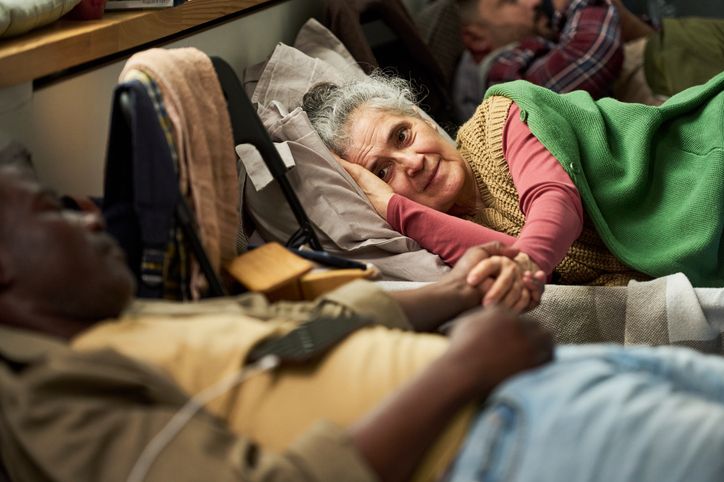
The state of New York became the 14th state to legalize medical aid in dying for the terminally ill on Wednesday, after a decade-long fight between advocates for the new policy and those who have vehemently opposed it.
According to Politico, the new law, titled the Medical Aid in Dying Act, allows New Yorkers who have no more than six months to live and meet a strict set of requirements to qualify to request life-ending medication from their health care providers. It’s a practice that had already been legalized in 13 states and Washington, D.C., and advocates are pushing similar legislation in more than a dozen additional states.
But New York’s version of the legislation reportedly has the strictest requirements, which likely has to do with fierce opposition by the Catholic Church, disability rights advocates, some healthcare providers, and New York citizens who believe the sanctity of life should outweigh a dying individual’s desire to be euthanized.
In fact, according to the National Catholic Reporter, last week, a federal judge temporarily exempted four orders Catholic nuns — the Carmelite Sisters for the Aged and Infirm, the Dominican Sisters of Hawthorne, the Missionary Sisters of St. Benedict and the Little Sisters of the Poor — from enforcement of the act, arguing that it would force them to facilitate what is commonly known as assisted suicide, which would violate their faith. So, U.S. District Judge Anne Nardacci issued a temporary restraining order, which gives New York Attorney General Letitia James until Aug. 20 to respond to the emergency motion.
“Families entrust their loved ones to us because they know our homes will be places of tenderness, dignity, and faithful care,” Mother Mary Rose Heery, prioress general of the Carmelite Sisters for the Aged and Infirm, said in a statement following the ruling. “We are grateful that we can continue honoring that trust and remain beside every resident until the very end.”
Before that ruling, plaintiffs, including eight disability rights advocacy groups and two individual advocates, filed a lawsuit alleging the legislation violated state disability rights laws, but that suit was dismissed by a federal judge last week.
Still, according to Politico, Gov. Kathy Hochul took many of these concerns into account when negotiating amendments to the bill before signing it into law in February.
To qualify for the Medical Aid in Dying Act, patients, who have to be at least 18 and have a medically confirmed terminal illness, must file multiple requests, undergo a mental health evaluation to prove they are of sound mind, and they have to be physically capable of administering the medicine themselves. There’s also a residency requirement, meaning the patient must be a permanent resident of New York.
Advocates for the law may not have been happy with the added requirements, but they’re still praising officials for making it happen in general.
From Politico:
Kevin Diaz, president and CEO of Compassion & Choices, a national end-of-life advocacy group, said while they were disappointed by additional safeguards added through negotiations — such as the residency requirement and mental health evaluation — his organization has worked closely with the state on the implementation process.
“Our relationship with the officials in New York has been good, and a collaborative one. There are a lot of people, a lot of organizations who are really trying to make sure that this is one of many options that exist for people who are facing end-of-life decisions,” Diaz said. “The goal is really to make sure that people have that full array of options because medical aid in dying ultimately is something that very few people pursue, but it gives people comfort knowing that it’s available.”
Diaz also said he hopes other states with pending medical aid in dying legislation, including Maryland, Massachusetts, Virginia and Minnesota, have the same outcomes.
“We are pushing everywhere, and we really want to make sure that people’s wishes are respected and known,” Diaz said. “What we want them to have is those options to have the best possible care, whether that’s hospice or palliative or whatever.”
So, this is a tough one. What do y’all think of the Medical Aid in Dying Act and similar legislation? Is it a dying person’s right to die on their own terms, or is it wrong, and who should get to decide?
SEE ALSO:
Capital One Closed Trump Accounts Over Suspicion Of Money Laundering
Jeanine Pirro Admits That Contractors Caused Reflecting Pool Damage


