Montgomery Bus Boycott: Lessons In The Power Of Organized People
Montgomery Bus Boycott Offers Lessons In The Power Of Organized People
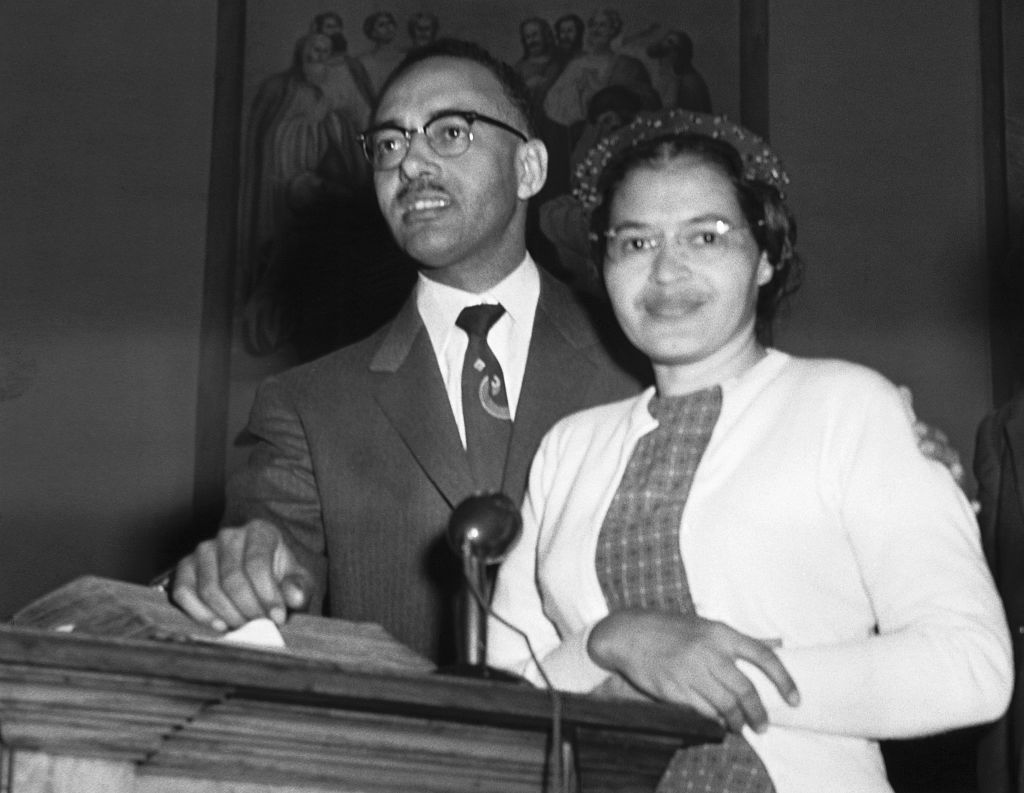
With increased energy in economic boycotts and talks of general strikes, the lessons of the Montgomery Bus Boycott are more critical than ever. Economic boycotts remain a core part of the people’s response to unchecked corporate power.
At 70, the Montgomery Bus Boycott remains the gold standard for economic boycotts. Arguably the most successful economic boycott in U.S. history, the Montgomery Bus Boycott was a year-long mutual aid project and mass movement.
What started as a one-day call to action became a year of sustained community organizing, coordination, and care. It rejected injustice in the city’s bus system and built an alternative network to resource and empower the local Black community.
Local leaders E.D. Nixon and JoAnn Robinson seized the moment and ushered in a new community organization, the Montgomery Improvement Association. They understood that sustaining a direct action, such as a mass boycott, required organized people.
It takes more than radical imagination to sustain energy and activity. Keeping people engaged and organized requires organization. Through the Montgomery Improvement Association’s efforts, they kept the momentum and organized alternatives to the city’s bus system.
Building on the carpool model used during the 1953 bus boycott in Baton Rouge, the Montgomery Improvement Association coordinated 300 rideshares. It’s estimated that, between carpooling and taxis, organizers provided 20,000 free rides daily. Other people walked when they could.
“One of the things that made our movement so very significant because we were banding together on a common cause,” Rosa Parks said in a speech at the Cleveland City Club. “As long as we were divided and fearful, we were defeated.”
The Montgomery Bus Boycott is an example of the importance of narrative power
Over the last several decades, fact became folklore with the true genius of the boycott. In many ways, the Montgomery Bus Boycott also reminds us of the importance of narrative power.
By reducing the story to a tired “old woman” who just couldn’t take it anymore, the boycott’s biggest lessons have been pushed aside. The strategic framework of the Montgomery Bus Boycott affirmed self-determination and cooperative action to address a collective grievance.
As an article published by Learning for Justice explained, the boycott also served as a “consciousness-raising, galvanizing experience.” Boycotts are a tactic to achieve a particular outcome.
Tactics alone are not a strategy and will not sustain the win once it is achieved. The Montgomery Bus Boycott was a part of a larger strategy to end segregation.
But the individual experiences helped document the injustice and specific harms caused by the system. These experiences also formed the foundation of the litigation strategy that ran in parallel with the boycott.
Boycott leaders tried unsuccessfully to negotiate with the city. But four Black women from Montgomery, including Aurelia Browder and Claudette Colvin, carried the boycott’s energy into the courtroom.
Browder v. Gayle ultimately led to the desegregation of buses in Alabama. Both the boycott and the litigation proved that overcoming systemic injustice requires more than individual accounts of mistreatment.
Mass actions require sustained engagement and political education
Given the shifts in society and culture over the last 70 years, it takes more to help people understand the shared importance of these efforts. The Montgomery Bus Boycott was directly connected with people’s lived experiences. And there was a shared interest in the outcome, desegregating city buses.
Today, the connections are not as direct, and the challenges are plenty. The multilayered structures of oppression require deep conversations and political education. Boycotting companies over federal policy shifts requires more than outrage.
Even with a clear call to action, boycotts require a well-defined strategy and a political analysis shared and understood by the people being mobilized. Yet without political education and mass organizing, we will end up with people selling out our communities on Black Friday for empty bags of nothing in hopes of getting something for free.
During an August panel discussion on sustaining organizing for economic boycotts, former Florida State Sen. Dwight Bullard called for Black consumers to engage in more cooperative activities.
“Whatever you want to call the cooperative economics that Black folks have been doing forever, we need to do that more often and with greater regularity,” he said. “We have to tap more into this notion of being more cooperative with our economics.”
The cooperative economics of the Montgomery Bus Boycott directly contended with the abuse of power by the city and the racist power structure behind it. We can’t just take the old tactics and strategies and simply rinse and repeat.
Still, boycotts remain a viable tool for leveraging our physical presence and capital to advance an agenda in the interest of our families and communities.
There is a more profound cultural shift that needs to happen in the 21st Century. Unlike 70 years ago, there is no longer the same shared experience or belief in outcomes and conditions.
Pockets of commonality are not enough. Overcoming contemporary injustices requires deepening cultural and civic engagement and participation that extends beyond voting and elections.
We must learn from the past and refresh our strategies to meet the moment.
SEE ALSO:
Timeline: The History Of The Montgomery Bus Boycott


