We love our Black celebrities. Period. No matter how famous they get or how big the stages become, there’s always a different kind of pride that comes with seeing Black folks win. It feels personal, like their success is proof that we can make it too, that our stories matter, and that our voices deserve to be heard on the biggest platforms possible. We root harder, celebrate louder, and feel more connected because their journeys often mirror our own struggles, dreams, and come-ups.
That’s exactly why it hurts so much when we lose them. These aren’t just entertainers, athletes, or public figures; they’re cultural markers. They’re the songs that got us through hard times, the roles that made us feel seen, the moments that inspired us to aim higher. When someone who helped shape the culture is gone, it feels like a piece of our collective memory leaves with them. It reminds us how fragile life is, even for the people who seem larger than life.
So when the culture was rocked by the losses of heavyweights like Malcolm-Jamal Warner, Roberta Flack, Angie Stone, D’Angelo, George Foreman, Assata Shakur, and Isiah Whitlock Jr. last year, it shook us to the core. Figures who gave us timeless music, unforgettable performances, historic achievements, and revolutionary energy reminded us just how deep Black excellence runs. At the same time, those losses sparked something else: motivation. Motivation to keep building, keep creating, and keep pushing our own legacies forward in ways that would make them proud.
Love NewsOne? Get more! Join the NewsOne Newsletter
Honoring our legends isn’t just about reposts or tributes, though those matter too. It’s about how we move, how we show up, and how we pour into the future. Still, giving people their flowers—loudly and often—is necessary. The same love we show while they’re here should echo just as strongly when they’re gone. Remembering them is painful, but celebrating their lives, their impact, and their contributions helps soften that hurt.
Thinking about the greats we lost in 2026 is heavy, no doubt. But one way to ease that weight is by highlighting the incredible lives they lived and the doors they opened for generations to come. Here is a list of the notable Black people who have died in 2026—gone, but never forgotten.
NOTABLE BLACK FOLKS WHO DIED IN 2026
Joey Browner
Joey Browner passed away March 28, 2026, from undisclosed causes. He was 65 years old. A dominant safety and one of the greatest defensive players in Minnesota Vikings history, Browner defined an era of hard-hitting, instinctive secondary play throughout the 1980s. A six-time Pro Bowler and four-time First-Team All-Pro, he anchored one of the league’s most respected defenses and finished his career with 37 interceptions, cementing his place among the franchise’s all-time greats. Browner’s physical style, leadership, and consistency earned him a spot on the NFL’s All-1980s Team and later induction into the Vikings Ring of Honor. His legacy lives on as one of the premier safeties of his generation and a player who helped set the tone for defensive excellence.
KiKi Shepard
KiKi Shepard passed away March 16, 2026, from a heart attack. She was 74 years old. Shepard was a beloved television host, actress, and cultural figure best known for her long-running role as co-host of Showtime at the Apollo, where she brought elegance, charisma, and warmth to millions of homes from 1987 to 2002. Often referred to as the “Apollo Queen of Fashion,” she became a staple of the iconic Harlem stage, helping introduce rising talent while sharing the spotlight with legends and comedians alike. Beyond television, Shepard had a rich background in theater and film, with appearances in productions like The Wiz, A Different World, and Baywatch, showing her versatility across entertainment. Off-screen, she was also a passionate advocate for sickle cell disease awareness, using her platform to uplift and support families impacted by the condition. Kiki Shepard’s legacy lives on through the culture she helped showcase, the artists she helped elevate, and the grace she carried in every room she stepped into.
Judy Pace
Judy Pace passed away March 11, 2026, in her sleep while visiting family in Marina del Rey, California. A pioneering actress and model, Pace was one of the first Black women to consistently land prominent roles on television during the 1960s and ’70s, helping break barriers in an industry that often sidelined Black talent. She made history as one of the first Black actresses to portray complex, non-stereotypical characters on shows like Peyton Place and The Young Lawyers, the latter earning her an NAACP Image Award. Beyond television, she starred in films like Cotton Comes to Harlem and the iconic TV movie Brian’s Song, bringing depth and presence to every role she touched. Judy Pace’s legacy lives on as a trailblazer who helped open doors for Black actresses, proving that representation on screen could be powerful, nuanced, and unapologetically real.
Lord Sear
Lord Sear passed away March 11, 2026, from undisclosed causes. He was 53 years old. Born Steve Watson, the New York DJ, radio personality, and Hip-Hop historian became a respected voice in the culture through decades of work behind the scenes and on the air. Best known for his role on Shade 45’sThe All Out Show with Rude Jude, Sear helped shape conversations around Hip-Hop, interviewing artists, breaking down the culture’s history, and giving listeners an unfiltered perspective on the industry. Beyond radio, he was a fixture in New York’s Hip-Hop scene for years, known for his deep knowledge of the music and his close relationships with artists across generations. His passing prompted an outpouring of tributes from DJs, rappers, and fans who recognized him as someone who helped preserve Hip-Hop’s stories while keeping the culture alive on the airwaves.
Dominiq Ponder
Dominiq Ponder passed away on March 1, 2026 in a single-car crash in Boulder County, Colorado; he was 23 years old. Ponder lost control of the 2023 Tesla he was driving on a curve, the vehicle struck a guardrail and electrical pole, then rolled down an embankment and caught fire. He was pronounced dead at the scene, and speed is suspected as a factor in the crash. A 6-foot-5 sophomore quarterback originally from Opa-Locka, Florida, Ponder began his college career at Bethune-Cookman before transferring to the University of Colorado, where he was art of the Buffaloes’ program for two season and earned respect from teammates and coaches alike. Head coach Deion Sanders and teammates mourned a young leader whose presence, work ethic, and spirit significantly impacted the team, leaving a legacy far beyond the numbers on a stat sheet.
Roscoe Robinson
Roscoe Robinson passed away on February 26, 2026, from undisclosed causes. He was 94 years old. A gospel music legend, Robinson was a longtime member of the Blind Boys of Mississippi and a pioneering voice in the quartet-style gospel singing. His rich, soulful delivery helped define the sound of traditional gospel for decades, influencing generations of artists across gospel, soul, and R&B. Beyond music, he was a spiritual figure whose work uplifted communities and carried messages of faith, perseverance, and hope. His legacy lives on through the timeless recordings and the foundation he helped build within gospel music.
Oliver “Power” Grant
Oliver “Power” Grant passed away Feb. 23, 2026, at the age of 52; no official cause of death has been disclosed. A visionary, entrepreneur, producer, and early architect of one of Hip-Hop’s most influential legacies, Grant was a close friend and foundational force behind the legendary Wu-Tang Clan. He helped finance their earliest projects, served as executive producer on their classic albums, and launched the Wu Wear clothing line, turning the group’s brand into a cultural and economic powerhouse. Beyond music and fashion, he also appeared in film and helped shape the business side of Hip-Hop, making him a respected figure not just within Wu-Tang but across the culture; his death drew heartfelt tributes from members of the Clan and the broader music community.
Robert Cosby Jr.
Robert Cosby Jr. unfortunately passed away Feb. 23, 2026, at the age of 23 after authorities were called to a medical emergency at his family’s home in Salt Lake City, Utah, where he was reported to be “not conscious and not breathing.” The Salt Lake City Police Department said the situation began as a response to a possible overdose, and his death is under investigation. Cosby Jr. was known to fans of The Real Housewives of Salt Lake City as the son of cast member Mary Cosby, and he had previously spoken publicly about his struggles with addiction and mental health. Though his life was marked by personal challenges, his passing prompted an outpouring of love and grief from friends, family, and the reality TV community, with many remembering him as a young man with a story still unfolding.
Rondale Moore
Rondale Moore passed away Feb. 21, 2026, in his hometown of New Albany, Indiana, at just 25 years old. Authorities reported that he was found in a garage with a suspected self-inflicted gunshot wound, and his death remains under investigation. Moore first rose to prominence as an electrifying multi-sport star in high school before becoming a consensus All-American wide receiver at Purdue University, where his extraordinary speed and versatility earned him national acclaim. Drafted in the second round of the 2021 NFL Draft, he played for the Arizona Cardinals and later the Minnesota Vikings, overcoming injuries and bringing hearts, resilience, and joy to every locker room; his sudden loss has deeply shaken the football community and reminded many of the pressures athletes face.
Kara Braxton
Source: Tim Clayton / Getty
Kara Braxton passed away Feb. 21, 2026, at the age of 43. No official cause of death has been disclosed, but her passing was confirmed by the WNBA and her family, sending shockwaves through the basketball world. A two-time WNBA champion with the Detroit Shock and an All-Star standout, Braxton’s decade-long career showcased her elite talent as a powerful center-forward who helped bring titles home in 2006 and 2008.
Beyond championships, she was known for her leadership, presence, on and off the court, and her roles with multiple teams, including the Tulsa Shock, Phoenix Mercury, and New York Liberty — inspiring young players and leaving a lasting legacy in women’s basketball.
Norman C. Francis
Dr. Norman C. Francis passed away Feb. 18, 2026, at the age of 94. While his official cause of death was not publicly disclosed, his passing marked the loss of one of the most influential figures in Black higher education history. As President of Xavier University of Louisiana for nearly five decades, Francis transformed the historically Black institution into a national powerhouse, producing generations of Black doctors, leaders, and professionals. He led the university through segregation’s aftermath, the Civil Rights era, and even rebuilt it after Hurricane Katrina devastated New Orleans. Norman C. Francis leaves behind a legacy rooted in education, resilience, and an unwavering commitment to opening doors that had long been closed to Black students.
Lil Poppa
Lil Poppa passed away Feb. 18, 2026, after being found dead in Fulton County, Georgia. He was only 25 years old. The cause of his death is under investigation. A rising voice in Atlanta’s hip-hop scene, Lil Poppa was known for his emotional honesty, vivid storytelling, and ability to turn real-life pain into powerful music. He represented the next generation of Southern rap, steadily building momentum and earning respect throughout the city and beyond with his authenticity and presence. His sudden death shook Atlanta’s music community and left behind a legacy defined by raw talent, limitless potential, and a voice that many believed was destined for something even greater.
Jesse Jackson
Reverend Jesse Jackson was more than a civil rights leader — he was one of the most powerful and influential voices Black America has ever produced, a man whose life was dedicated to fighting for justice, dignity, and opportunity for people pushed to the margins. Born in segregated Greenville, South Carolina, Jackson rose from humble beginnings to become a protégé of Dr. Martin Luther King Jr., standing on the frontlines of the Civil Rights Movement during its most pivotal moments and continuing that fight long after King’s assassination. His leadership helped carry the movement into a new era, ensuring the push for equality didn’t stop with one generation.
Through founding Operation PUSH and later the Rainbow/PUSH Coalition, Jackson created pathways for economic empowerment, corporate accountability, and political representation for Black communities and other marginalized groups. He pushed corporations to hire more Black executives, fought for voting rights, educational access, and fair housing, and built multiracial coalitions rooted in unity and shared progress. His message of empowerment wasn’t just political — it was spiritual, cultural, and deeply personal, inspiring millions with his words, including his iconic call to “Keep hope alive.”
Jackson also broke historic barriers in American politics, becoming the first Black man to mount a truly competitive presidential campaign during the 1984 and 1988 Democratic primaries. His campaigns mobilized millions of voters, expanded the political imagination of what was possible, and helped lay the groundwork for future Black leaders — including Barack Obama — to pursue and achieve the nation’s highest offices. At a time when many systems were still closed to Black leadership, Jackson didn’t wait for permission—he kicked down doors.
Beyond politics, Jackson’s activism extended globally, helping negotiate the release of American hostages and advocating for peace, democracy, and human rights. He received the Presidential Medal of Freedom in 2000, recognizing a lifetime of service to others and the ongoing fight for equality. Even as he battled Parkinson’s disease and other serious health challenges later in life, he remained a symbol of resilience, courage, and unwavering commitment to the people he represented.
Reverend Jesse Jackson wasn’t just part of history — he helped shape it. His voice gave strength to the voiceless, his presence opened doors that had been locked for generations, and his work transformed what leadership could look like in America. His legacy lives on in every movement that demands justice, every young leader who dares to dream bigger, and every person who refuses to accept inequality as the final answer.
Tracy Scroggins
Tracy Scroggins was a fierce pass rusher and beloved member of the Detroit Lions community whose career left a lasting mark on the NFL. Over more than a decade in the league, he became one of Detroit’s top sack leaders, known for his relentless motor, tenacity off the edge, and ability to shift a game with a single play. Beyond stats, Scroggins was admired for his leadership, work ethic, and connection to teammates and fans alike. His impact on and off the field — especially in a city that lives and breathes football — means he’ll always be remembered as one of the Lions’ great defenders.
DJ Young Slade
DJ Young Slade was a dynamic Atlanta DJ and cultural connector who helped set the tone for parties, moments, and the rise of Southern hip-hop energy. As the son of crunk icon Lil Jon, he carried a musical legacy while carving out his own identity behind the turntables, earning respect in the Georgia music scene on his own terms. With a reputation for bringing heat to every set, he amplified local talent and helped shape the soundtrack of a generation. His creativity extended beyond the turntables, fostering community and inspiring young artists who saw him as both mentor and hype man. Young Slade’s legacy will live on in the beats he dropped, the stages he rocked, and the influence he had on the culture he loved.
LaMonte McLemore
LaMonte McLemore was a legendary singer, photographer, and founding member of the Grammy-winning vocal group The 5th Dimension, whose smooth blend of pop, soul, and psychedelia became the soundtrack for a generation. For decades, his warm bass voice helped carry timeless hits like “Up, Up and Away,” “Aquarius/Let the Sunshine In,” and “One Less Bell to Answer,” songs that crossed racial and cultural boundaries while reshaping the sounds of the ’60s and ’70s.
Source: Michael Ochs Archives / Getty
Beyond music, McLemore was a trailblazing photographer whose work appeared in major magazines and helped document the culture he helped define. His life was a testament to creativity, resilience, and breaking barriers — and his legacy lives on in the joyful harmonies and uplifting spirit he gave the world.
Ron Kenoly
Ron Kenoly was a beloved American gospel singer, worship leader, and pastor whose powerful voice and spirit helped shape contemporary praise music for generations. With iconic songs like “Ancient of Days” and “Jesus Is Alive,” he didn’t just make music—he led worship that connected churches and believers worldwide. Kenoly’s ministry went far beyond performance, as he used his gift to bring people into heartfelt praise and strengthen communities through faith. His legacy lives on in the voices he lifted, the worship he led, and the countless hearts he touched through his lifelong devotion to praise.
Grady Demond Wilson
Actor Grady Demond Wilson died Jan. 30 at his home in Palm Springs, California, at the age of 79, according toTMZ. His death was confirmed by his son, Demond Wilson Jr., who told the publication that his passing was due to complications related to cancer.
“I loved him. He was a great man,” Wilson Jr. told TMZ.
Grady Demond Wilson was best known for his role as Lamont Sanford, the son of Fred Sanford, on the very popular NBC sitcom Sanford and Son. Wilson co-starred on the show alongside the famed comedian Redd Foxx. The two of them shared an unforgettable chemistry that established them as icons in the world of sitcoms.
Wilson also starred in the sitcom Baby…I’m Back, The New Odd Couple, and Girlfriends. He also became an ordained minister in 1984 and authored Christian books on the New Age Movement, as well as faith-based children’s books, according to HipHopWired. In addition to his acting and ministry work, Wilson wrote a memoir titled Second Banana: The Bittersweet Memoirs of the Sanford & Son Years, published in 2009.
Rest in peace, legend.
Shirley Raines
Shirley Raines—fondly known as “Ms. Shirley”—was a beloved activist, social media creator, and nonprofit founder whose life was rooted in compassion and dignity for others. She used her massive platform to bring food, hygiene supplies, beauty services, and hope to people living on Skid Row and other unhoused communities, greeting those she served with respect and warmth. Driven in part by her own personal pain, she turned grief into purpose and made millions around the world see the humanity in people often overlooked. Raines’ legacy of love, service, and advocacy will live on through the countless lives she touched and the movement she helped fuel.
Lowell “Sly” Dunbar
Lowell “Sly” Dunbar was a legendary drummer and one-half of the iconic duo Sly & Robbie, whose sound helped define reggae and Caribbean music worldwide. His rhythms powered countless classics, influencing generations of artists across reggae, hip-hop, R&B, and pop. More than just a musician, Sly was an innovator whose style reshaped how drums were heard and felt in modern music. His legacy lives on in the timeless records he helped create and the undeniable imprint he left on the culture worldwide.
Kevin Johnson
Kevin Johnson was a former NFL player whose life reflected both the highs and complexities that often come with professional sports. Known for his athleticism and time in the league, he represented a generation of Black athletes who reached the highest level through discipline and sacrifice. Beyond the field, his story reminded many of the pressures athletes face once the lights dim. Kevin Johnson’s legacy lives on in the broader conversation about sports, identity, and life after football.
Dr. Gerald Deas
Dr. Gerald Deas was a respected physician and community figure whose work centered on healing, advocacy, and uplifting Black lives. Throughout his career, he was known for his commitment to service, mentorship, and making quality healthcare more accessible. His presence extended beyond medicine, touching families and communities in meaningful ways. Dr. Deas leaves behind a legacy rooted in care, purpose, and the lasting impact of helping others live better lives.
Gladys West
Dr. Gladys passed away on January 17, 2026, from natural causes. She was 95 years old. A pioneering mathematician, West’s groundbreaking work with satellite data and complex mathematical modeling helped lay the foundation for GPS, a technology billions rely on every day. Beginning her career in 1956 as one of the first Black employees at the U.S. Navy’s Naval Proving Ground, she quietly revolutionized navigation while breaking barriers for Black women in science. Her brilliance reshaped the modern world, and her legacy lives on every time someone uses GPS to find their way.
Claudette Colvin
Source: Julie Bennett / Getty
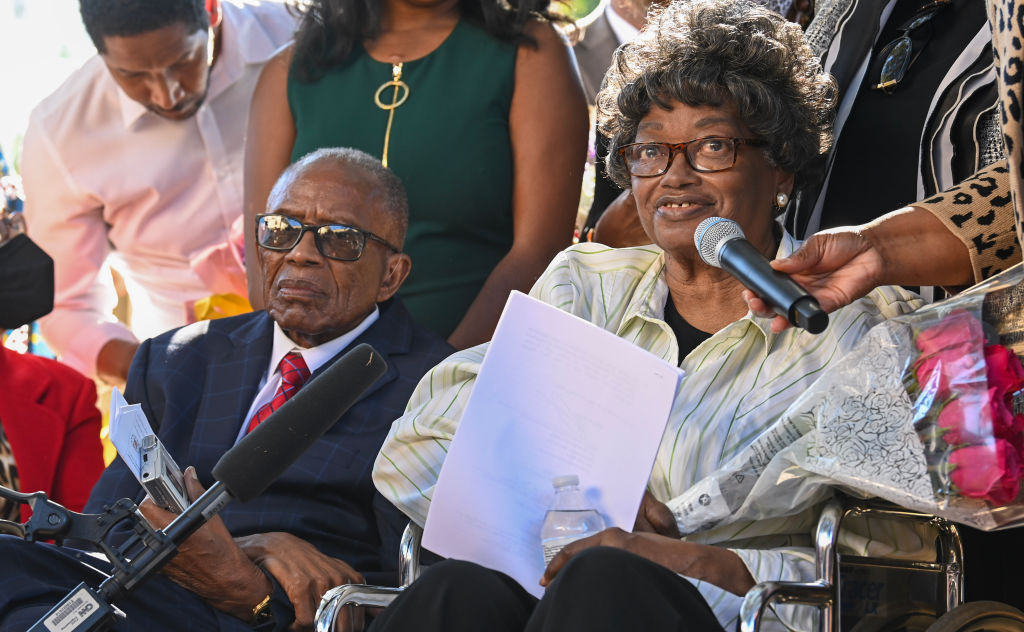
Claudette Colvin was a quiet giant of the Civil Rights Movement whose bravery changed history long before the world was ready to celebrate it. As a teenager, she stood up against segregation with courage well beyond her years, laying the groundwork for the progress that followed. Though her name wasn’t always centered, her impact was undeniable and foundational. Claudette Colvin’s legacy is a reminder that real change often starts with bold acts from those the world underestimates.
John Forté
John Forté was a creative force whose contributions to music and culture extended far beyond the spotlight. Known for his artistry, lyricism, and behind-the-scenes influence, he helped shape moments and movements that still resonate today. His work reflected depth, intention, and a commitment to authenticity that never chased trends. John Forté’s legacy lives on through the art he created and the culture he helped push forward.
T.K. Carter
Thomas Kent Carter was a veteran actor whose decades-long career quietly but powerfully shaped film and television, earning him a lasting place in Black Hollywood history. Best known for his role as Nauls in The Thing, Carter brought depth, relatability, and authenticity to every character he touched, whether in cult-classic films or beloved TV shows like Punky Brewster or The Steve Harvey Show. He was the definition of a working actor—consistent, respected, and deeply woven into the fabric of the culture. T.K. Carter’s legacy lives on through the countless roles that introduced generations to his talent and reminded us that longevity is its own kind of greatness.
Elle Simone Scott
Elle Simone Scott was a trailblazing TV chef, author, and food media personality who broke barriers as a prominent face in a space where Black women were rarely seen. Beyond the kitchen, she was a fierce advocate for representation, mentorship, and community, constantly using her platform to uplift others. Her transparency, creativity, and passion made her more than a chef—she was a cultural voice. Her impact lives on in the doors she opened and the people she inspired to take up space unapologetically.
Dr. Janell Green-Smith
Dr. Janell Green-Smith, widely known as the “Loc’d Midwife,” was a respected nurse-midwife and tireless advocate for Black maternal health. She dedicated her life to ensuring Black mothers were heard, protected, and given the quality care they deserve. Her work exposed systemic issues in healthcare while offering real solutions rooted in compassion and community. Dr. Green-Smith’s legacy continues to fuel conversations and action on maternal justice and the saving of Black lives.