Black Folks Shouldn't Feel Sorry For Candace Owens
Donald Trump And Laura Loomer Dragged Candace Owens. Black Folks Shouldn’t Feel Sorry For Her
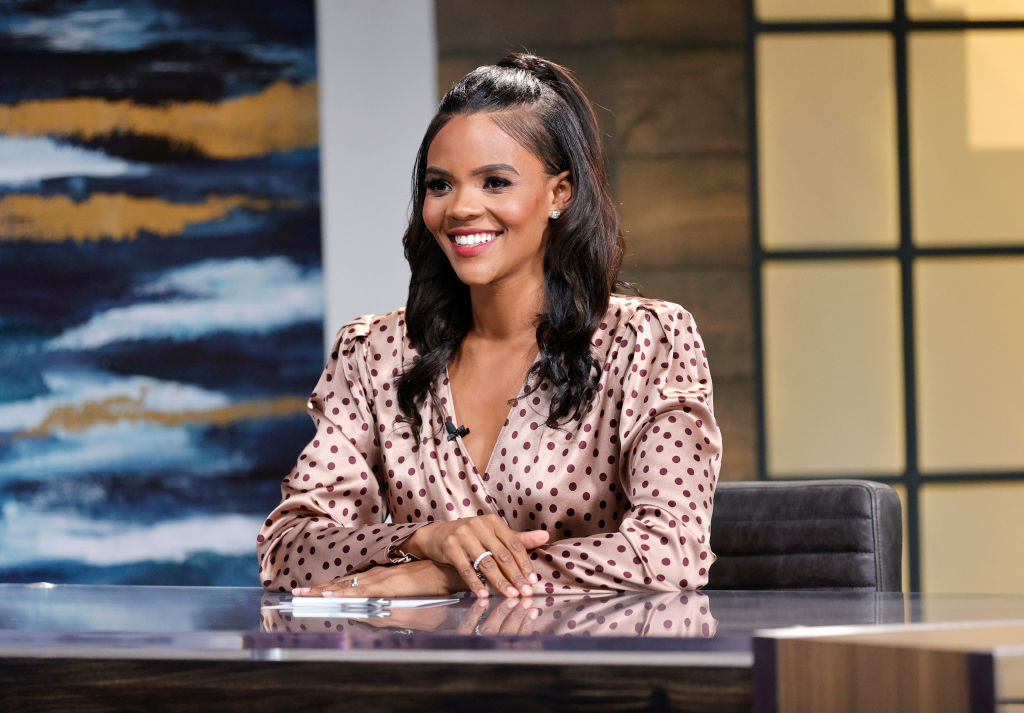
Laura Loomer, the far-right agitator for whom racism is a core personality trait, reportedly called Candace Owens a “nappy-headed Black b—h.” Meanwhile, Donald Trump shared a doctored TIME Magazine image of her labeling her a “vile person” and “extremely low-IQ individual.”
Yeah, all that is racist. And yes, it’s ugly. But this is also Candace Owens. So . . . a whole lot of Black folks are not feeling sorry for her.
When Loomer called Owens a “nappy-headed Black b—h,” it wasn’t creative. It wasn’t new or surprising. All I could hear was Don Imus back in 2007, calling the Rutgers women’s basketball team “nappy-headed h–s” and igniting a national firestorm. It’s the same script and racial shorthand meant to degrade Black women by reducing us to hair, bodies, and something less than human.
This is tired, recycled racism that never really leaves. It just waits for a moment, a target, and an opening. But that’s the vocabulary of the world Candace Owens chose to move through.
What is telling is the reaction. While we recognize that language for exactly what it is, I was unmoved by it being applied to her. Not because I think it’s acceptable, but because the target matters.
Most media coverage on this dragging is falling into familiar lanes. Mainstream outlets are treating this as just another messy feud, noting the racism, calling it inappropriate, and moving on without asking why Black audiences are reacting differently.
Conservative spaces are more concerned with optics and internal discipline and asking whether Trump or Loomer went “too far.” Owens is being reduced to a supporting character in a story about loyalty, not accountability. What’s missing is the deeper reckoning with how Owens helped shape the very response she’s now receiving.
Owens is skin folk, maybe, but certainly not kinfolk. And as our elders have long warned, when you lay down with dogs, you catch fleas. Which means we are not obligated to defend or empathize with a Black person simply because some white racists said ugly things about them, especially when that person has spent years aligning with, excusing, and amplifying the very forces now turning on her..
Owens has built an entire brand around contrarian takes on Black life and racism. She has dismissed systemic inequality as a matter of personal choice, insisted Black Americans are “in the driver’s seat” of their outcomes, and even claimed that our communities have been given “permission to be unbelievably racist.”
After George Floyd’s murder, she said he shouldn’t be held up as a hero and emphasized his past record in ways many people felt were dismissive and dehumanizing, especially in a moment of collective grief and protest. She said she did “not support” him as a martyr and that the very idea “sickens” her.
On Black communities more broadly, she has claimed that Black Americans have been given “permission to be unbelievably racist in society.” In a country built on centuries of anti-Black violence, exclusion, and state-sanctioned harm, she flipped the script and cast the oppressed as the problem. Her rhetoric has been useful to the very people who want racism to disappear without ever being addressed. Because when a Black voice says it, it travels further, hits harder, and gets weaponized faster. It becomes proof, permission, and cover all at once.
Owens has been openly hostile to Black political movements. She called Black Lives Matter divisive, harmful, rooted in “victim mentality,” and described activists as “a bunch of whiny toddlers pretending to be oppressed for attention.”
Think about those words. Sit with them.
Owens said those words during a moment when Black folks were being killed in ways that forced the entire country to look, whether it wanted to or not. Tamir Rice was a child, shot within seconds of police arriving at a playground. Trayvon Martin was stalked and killed for existing while Black in his own neighborhood. Michael Brown was shot and left in the street to bake in the hot sun for hours in front of his grieving family and community.
And in the face of all of that grief, protest, raw and unfiltered pain, Candace Owens had the gall to dismiss it. To mock and reduce it to whining. She told the world that the people crying out were not responding to injustice, but performing victimhood for attention. That’s pure contempt. It’s the kind of contempt that doesn’t disappear when the headlines fade. It lingers, shapes memory, and informs how people respond when the same person suddenly finds themselves on the receiving end of the very forces they once minimized.
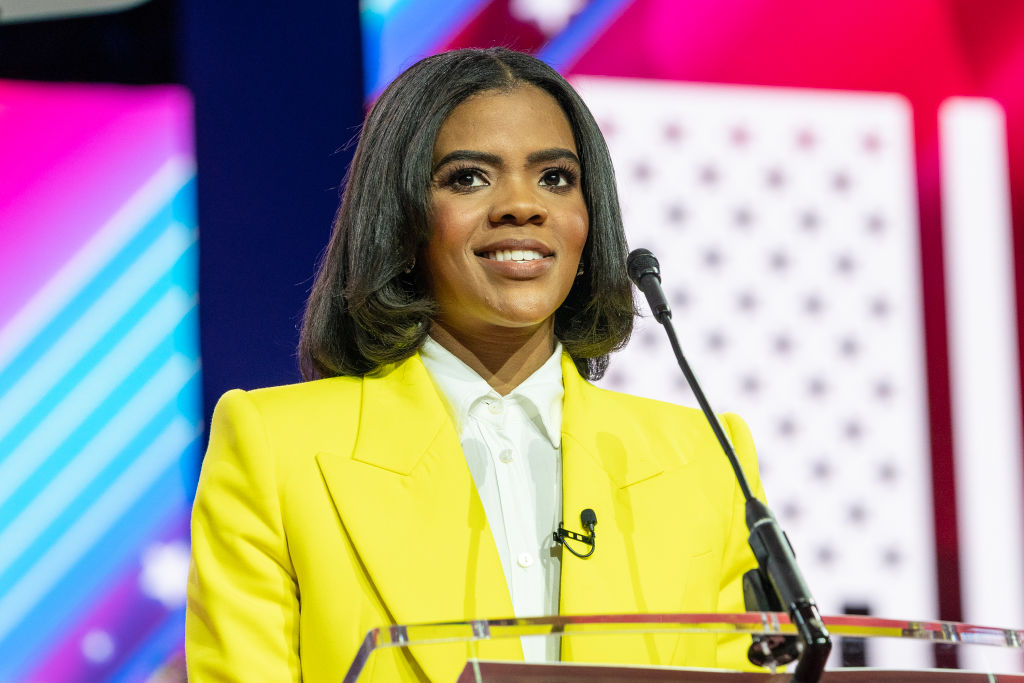
And politically, she has aligned herself with figures and spaces that have long been criticized for minimizing or denying racism. She built her platform inside Trump-aligned media ecosystems and conservative institutions that elevated her as a countervoice to Black political consensus. More recently, even those alliances have fractured.
Following the 2025 killing of the racist activist Charlie Kirk, Owens has spent months publicly questioning the circumstances of his death and pushing conspiracy theories. She’s been pushing claims that he may have been “sacrificed” or that powerful insiders were involved, and fueling controversy with an ongoing, highly public “investigation.” That campaign has drawn backlash from former allies and deepened divisions within the same political spaces that once amplified her.
And somehow, even now, she finds endless energy to center and defend the very white conservative figures who have spent years degrading Black people, including her. The same ecosystem that trades in anti-Black rhetoric, the same spaces that reduce Black life to pathology and punchlines, has become worthy of her outrage, loyalty, and investigation. It’s pathetic. Because at some point, this stops being politics and starts looking like devotion to people who have made it abundantly clear they do not, and will never, see you as anything more than useful.
Because Candace Owens didn’t just offer different opinions, she caused a lot of damage. She helped legitimize narratives that have real consequences for Black people. When you dismiss systemic racism as a myth, you give cover to policies and institutions that refuse to address it. When you mock police violence or minimize its impact, you help blunt public outrage and stall accountability. When you frame Black communities as inherently dysfunctional, you reinforce the very stereotypes that have been used for generations to justify neglect, surveillance, and punishment.
That kind of messaging doesn’t just live on social media. It travels. It shows up in school boards, in legislation, in policing debates, and in the way Black people are talked about and treated in everyday life. And it lands differently when it comes from a Black voice because it gets weaponized, cited as proof, validation, and permission to continue harm.
Again and again, Candace Owens chooses to align herself against Black people, against our history, our grief, our demands for dignity, and in favor of narratives that diminish all of it. You don’t have to guess how she feels about Blackness. You can read it in the positions she takes, the people she defends, and the communities she consistently refuses to stand with. And for a lot of Black folks, that’s more than enough to refuse the expectation that we must rally on cue, perform solidarity, or absorb the blowback for someone who has consistently stood against us. Let her face the consequences of the alliances she chose without us rushing in to shield her.
Owens did not suddenly become a victim of the conservative ecosystem. She helped build her influence inside that ecosystem, and now she is learning how quickly it turns on people when loyalty, usefulness, or narrative control becomes inconvenient.
So, what’s next for Owens?
What’s likely to happen next isn’t mysterious; it’s a pattern we’ve seen before. Candace Owens will not suddenly fold under this. She’ll recalibrate. She’ll probably frame the attacks from Donald Trump and Laura Loomer as proof that she’s “independent,” that she’s not owned by anyone, that she’s willing to “tell the truth” even when it costs her. There may be a pivot into grievance by positioning herself as someone who has been mistreated by the very movement she supported. That’s how you preserve brand equity in a space like that: you don’t apologize, you reposition.
But her “stock” in that movement will likely dip. Not necessarily permanently, but noticeably. Because her value has always been tied to usefulness. She was valuable as long as she was reinforcing a narrative that racism is overstated, that Black people are the problem, that conservative ideology is the solution. If she becomes unpredictable and starts turning that same energy inward, she will become a liability. And movements like that don’t reward liability. They sideline it.
Now, could she try to have a Shug Avery “Color Purple” church moment. You know, some kind of dramatic return, or a “y’all were right, I see it now” arc? Highly unlikely, though. Because redemption requires accountability. Not just vague statements about being misunderstood, but a direct reckoning with the harm done by all her rhetoric, dismissals, and the ways her platform was used. And that’s a much steeper climb than a rebrand.
Black audiences, especially the ones she has spent years antagonizing, are not passive. We remember and we archive the receipts. A simple pivot by Owens wouldn’t read as growth, it would read as strategy.
Candace Owens proves, once again, this kind of alignment with whiteness never works out for Black people. Because the relationship is conditional from the start. You are elevated not for who you are, but for what you say. For how effectively you can challenge, undermine, or contradict your own community in ways that serve a broader ideological agenda. The moment that usefulness shifts, or expires, so does the protection.
And when that happens, there’s no real safety net. Not in the movement you aligned with and certainly not in the community you distanced yourself from. You’ll just be out here as the same “nappy-headed,” “low IQ” caricature, and the dog fleas that come with it.
SEE ALSO:
Laura Loomer And Candace Owens Are In A Racist, Problematic Beef
Candace Owens’ MAGA Meltdown Reveals Her Own Hypocrisy


