Georgia Gov. Brian Kemp Announces Redistricting Effort
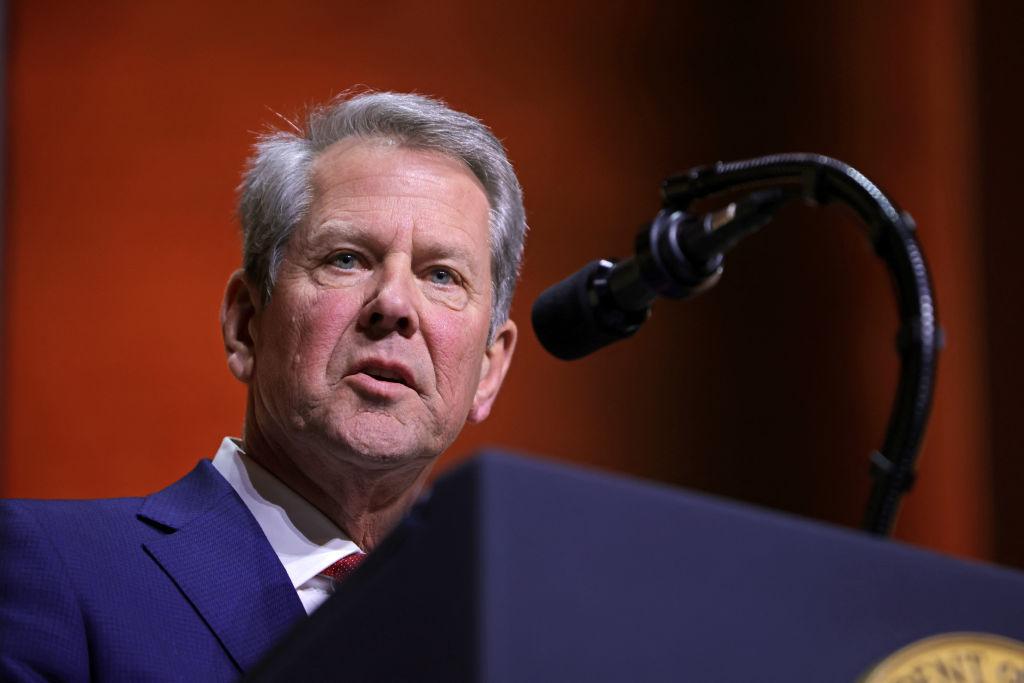
Another day, another southern state announcing its desire to bring back the days of Jim Crow. On Wednesday, Georgia Gov. Brian Kemp called a special legislative session to draw a new congressional map.
CBS News reports that Kemp signaled he would trigger a redistricting effort shortly after the Supreme Court gutted the Voting Rights Act in Callais v. Louisiana. “It’s clear that Callais requires Georgia to adopt new electoral maps before the 2028 election cycle,” Kemp said at the time. Kemp went on to praise the ruling, saying it “restores fairness to our redistricting process and allows states to pass electoral maps that reflect the will of the voters, not the will of federal judges.”
I think Kemp meant to say “maps that reflect the will of white voters.”
In the wake of the Callais decision, several southern states have announced redistricting efforts removing majority-Black districts, and effectively disenfranchising Black voters.
Tennessee was the first state to act after the ruling, passing a new map that eliminates the state’s only majority-Black district.
Alabama is looking to postpone its upcoming primary elections after the Supreme Court effectively set the table for it to use an old map that it previously found was racially discriminatory.
Louisiana Gov. Jeff Landry canceled a primary election already underway to pursue redistricting, eliminating one of the state’s two majority-Black districts.
The key difference between Georgia’s redistricting effort and that of the other states is that this one is focused on creating maps for the 2028 election.
From CBS News:
The regular session of the 2026 General Assembly had adjourned on April 3, making a special session necessary to take up the redistricting work.
According to the proclamation, lawmakers will be limited to two specific purposes during the special session. The first is to consider enacting, revising, repealing, or amending state law for the division of Georgia into appropriate districts for the State Senate, State House of Representatives, U.S. House of Representatives, or any other state office elected by district, with any changes set to take effect for the 2028 election cycle.
The second purpose is to address issues created by a July 1 effective date for changes to the state election code enacted under a 2024 Georgia law.
Charlie Bailey, chair of the Democratic Party of Georgia, called the redistricting effort a “brazen attempt to take away the voting power of Black Georgians.”
“Make no mistake: Republican attempts to strip Georgians of their access to fair representation will only galvanize Georgia voters further. We will show up to the polls in record numbers and power Democratic victories at every level of the ballot,” said Bailey.
According to the New York Times, several political analysts believe that Georgia Republicans won’t be able to implement a map as draconian as Tennessee’s, given how drastically demographics have shifted in Georgia, particularly in the Atlanta suburbs. The new map will likely try to add one extra House seat for Republicans, targeting the district currently represented by Rep. Sanford Bishop.
Redistricting in Georgia may prove tricky, as it’s one of the few southern states that truly remain swing states. The GOP is deeply unpopular right now, with President Donald Trump’s approval ratings underwater. The redistricting effort could hurt Republicans in the short term by spurring higher turnout among Democratic voters in this fall’s midterms.
SEE ALSO:
Gov. Brian Kemp’s New Law Doesn’t Apply To 154 Georgia Counties. Only The Black Ones
Georgia Law Targeting Black Women Electeds Awaits Governor’s Veto


